Every castle remembers a different Scotland.
Scroll to begin
Scotland, by Century
Choose the century you'd like to wake up in.
Choose your century.
Five houses. Each one available, in its entirety, to a single party.
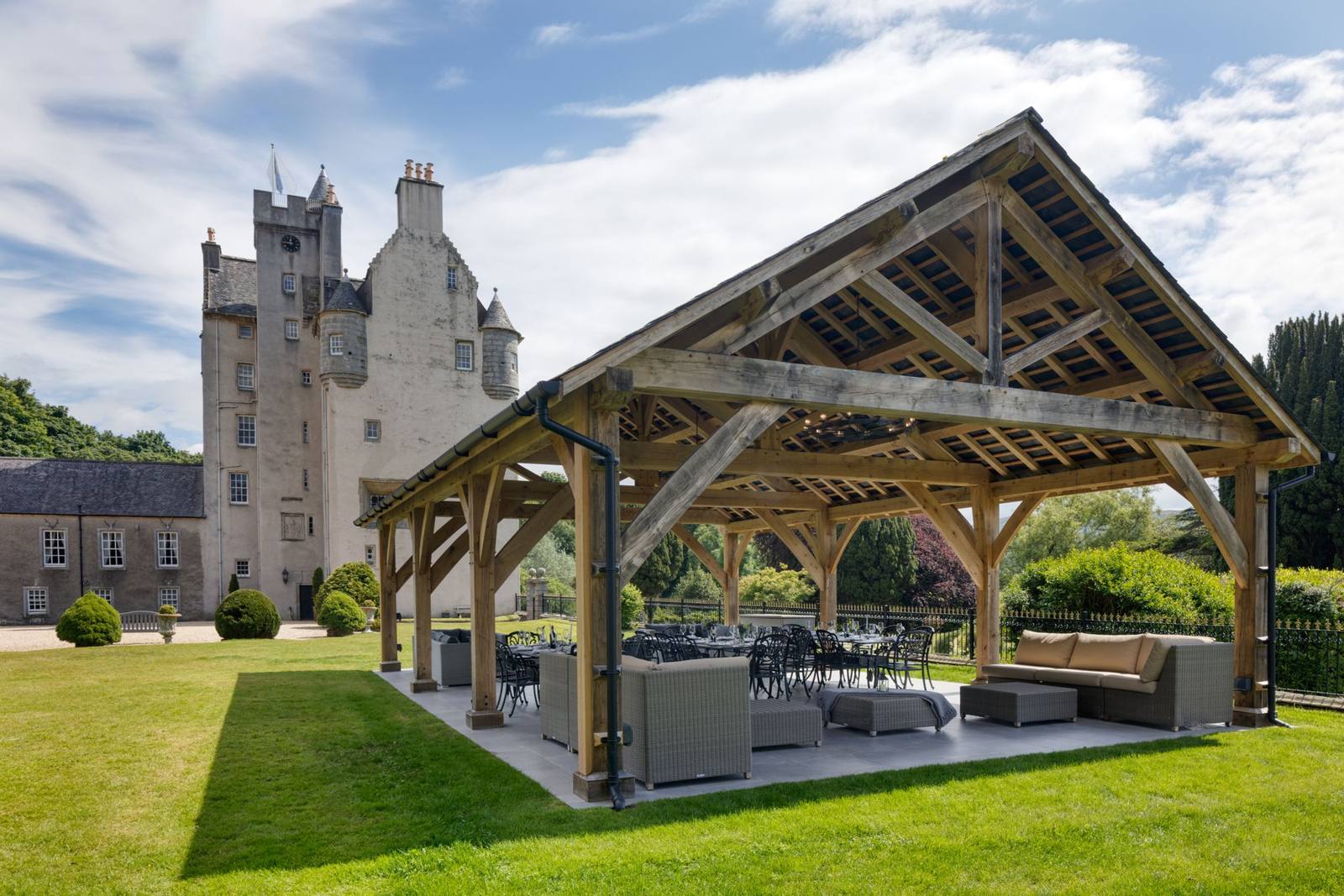
Killochan Castle
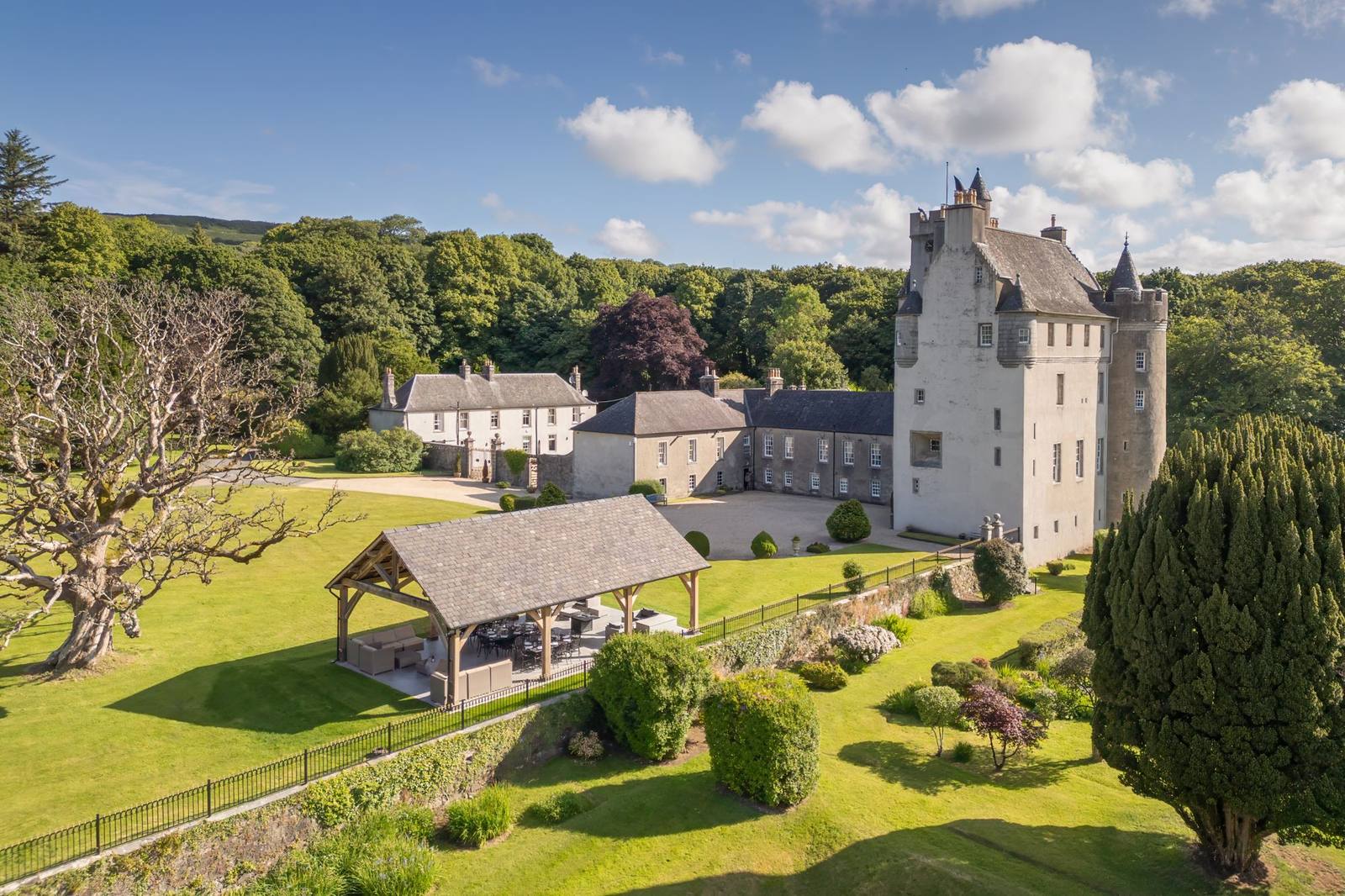
A 1586 tower house, offered for exclusive use.
Above the door at Killochan there is an inscription, and it is unusually precise. The work, it says, began on the first of March, 1586, by Johne Cathcart of Carlton and his spouse, Helene Wallace. Most Scottish towers leave their beginnings to guesswork. This one signed its name.
By then the Cathcarts had already held this land for two centuries, since the fourteenth. A Robert Cathcart of Killochan died at Flodden in 1513. In the long feud between the Kennedys of Cassillis and Bargany, the family stood with their Bargany neighbours, and John Cathcart commanded the rearguard at the Battle of Pennyglen.
In 1678, a force of some hundred and twenty men came for Killochan. The walls held.
The Cathcarts had sided with the Presbyterian cause through the Covenanting years, and the attack came during the Highland Host. The tower that Johne and Helene built did precisely what a tower house was meant to do. In the eighteenth century the old outbuildings were cleared, and a new wing, courtyard and gatehouse were added around it.
- 1300sThe Cathcart family acquire the land at Killochan.
- 1586The present tower house begins, on the first of March, for Johne Cathcart of Carlton and Helene Wallace.
- 1678The castle withstands an attack of around 120 men.
- 1954The family sell, after generations in residence.
- 2021Robert "Rip" and Millie Cathcart buy Killochan; after extensive renovation it opens as an exclusive-use estate.
Manar House
Georgian proportion, restored stone by stone.
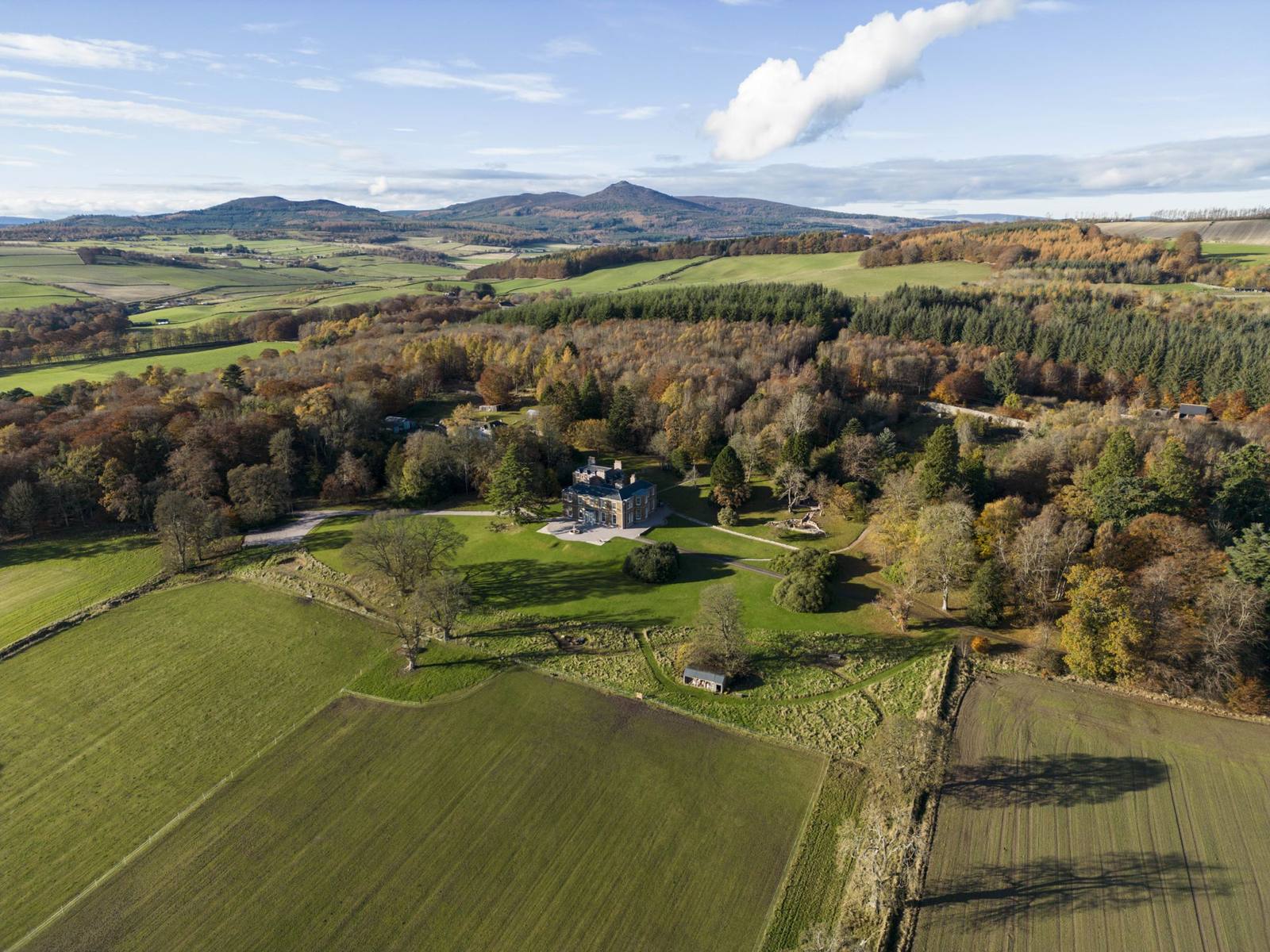
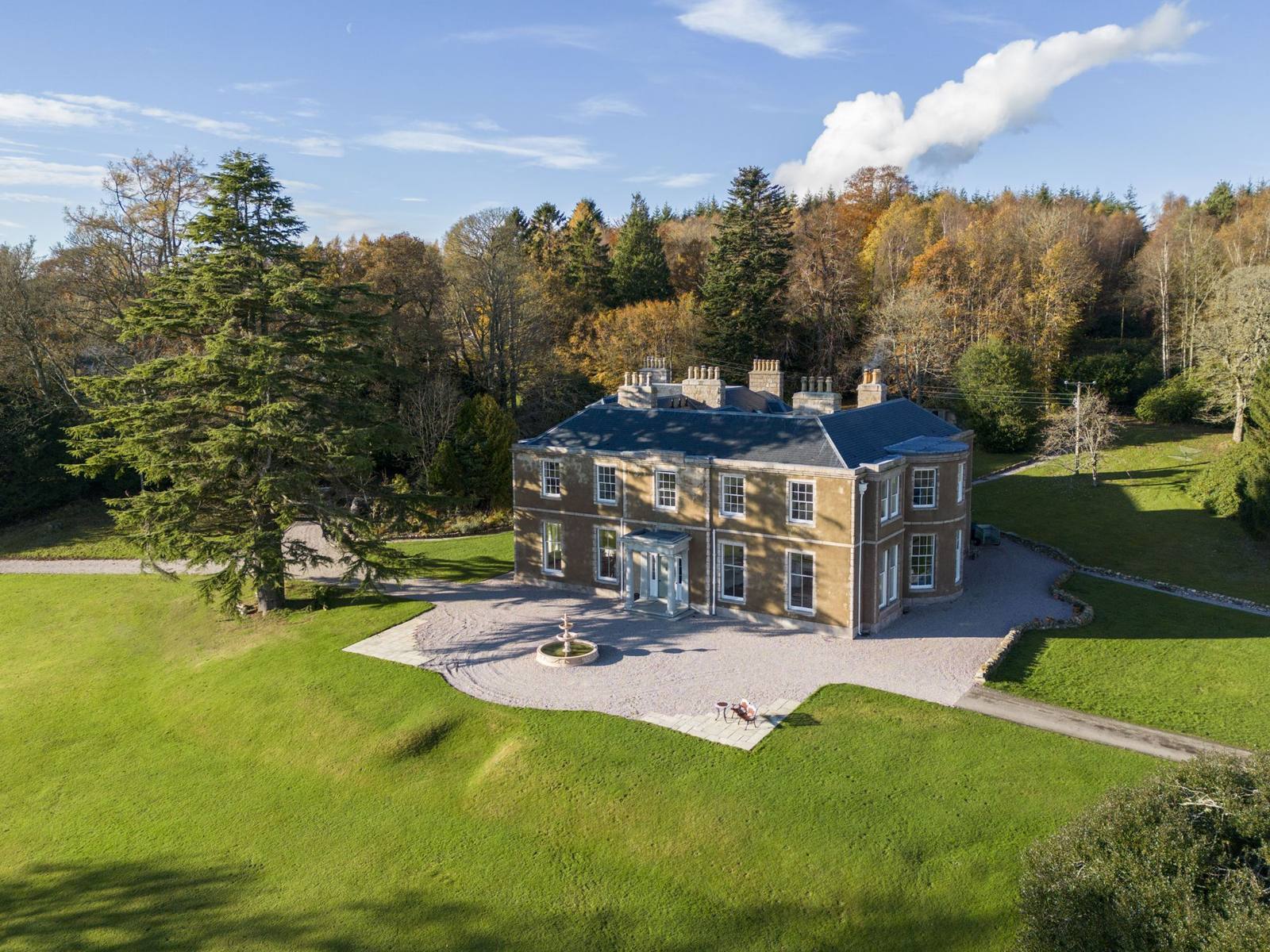
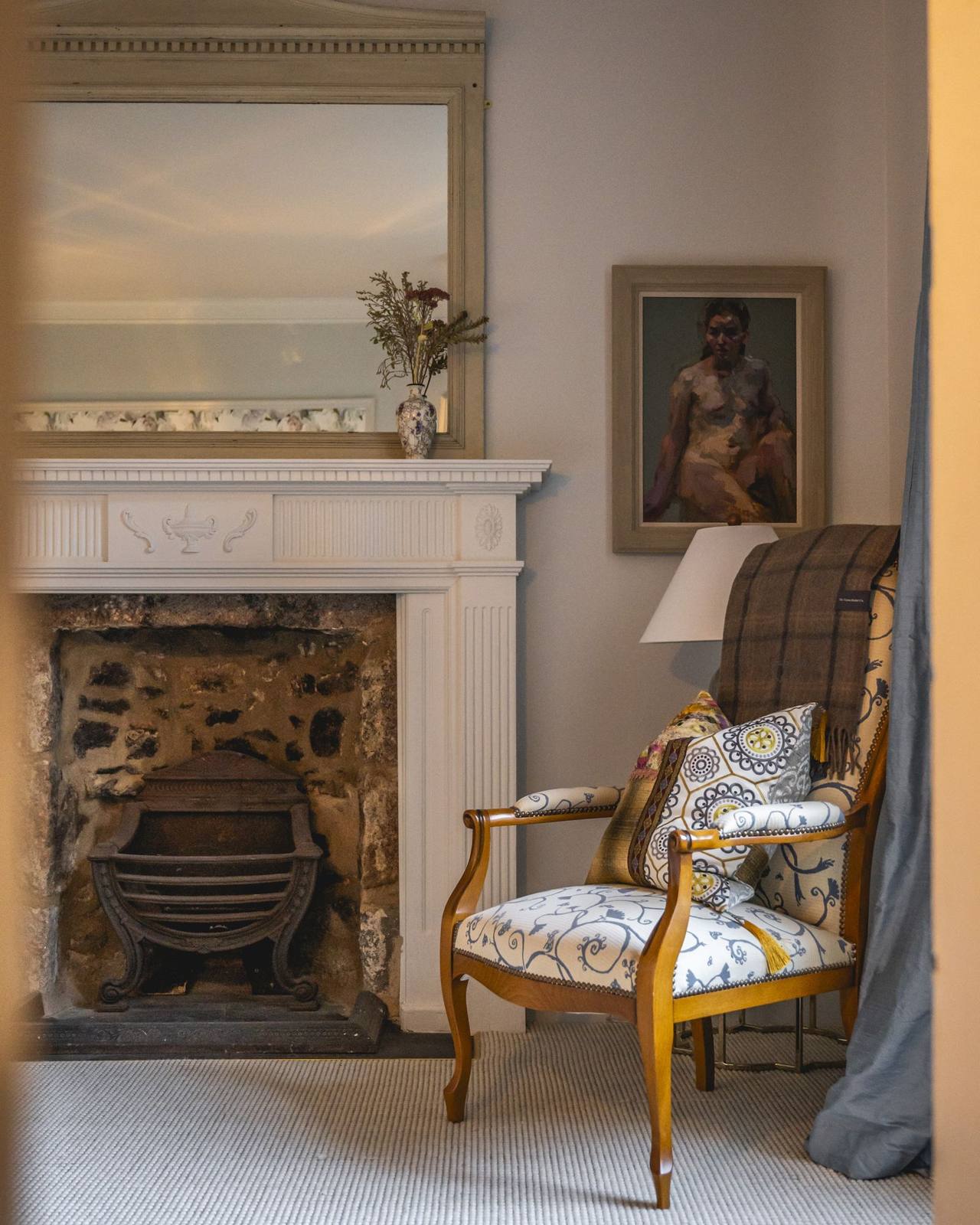
The date is cut into the stone itself: Manar House, 1811. It was the work of John Smith, the Aberdeen architect whose career would reach as far as Balmoral, and it has everything the Georgian age believed a country house owed its guests. Symmetry. Light. Rooms that know exactly how tall they ought to be.
Manar is Grade B listed and sits within sixty-five acres of private Aberdeenshire parkland, woodland and open sky, minutes from the market town of Inverurie and twenty from Aberdeen Airport.
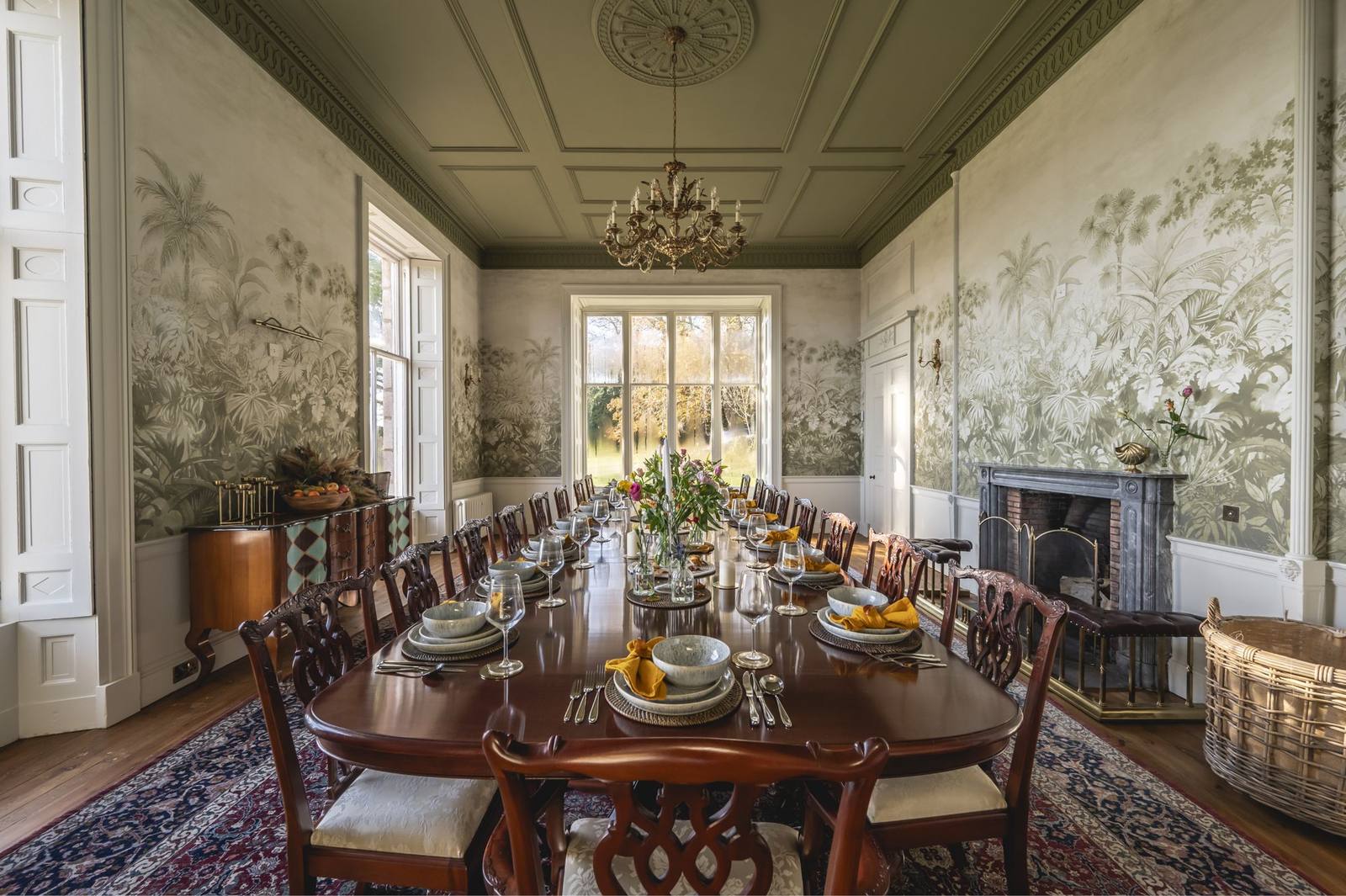
First, rescue the building. Then, and only then, make it comfortable.
Dean and Christina Horspool acquired Manar in 2020 and began, sensibly, with the fabric: safeguarding the historic structure before anything else. The renovation that followed was deliberately sensitive, bringing modern comfort in quietly, without disturbing a line of the Georgian house around it.
Birkhill Castle
The house of the Royal Standard Bearers of Scotland.
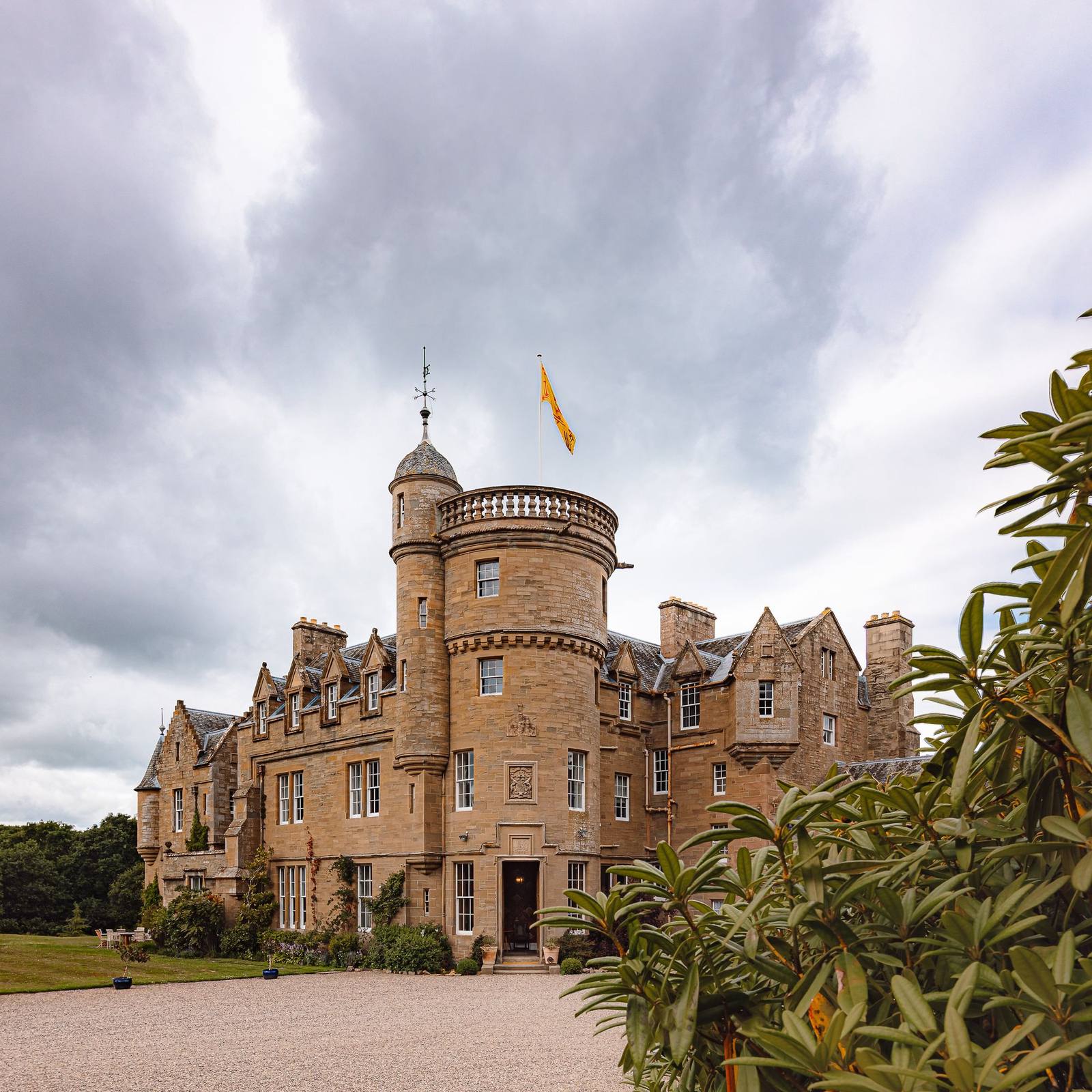
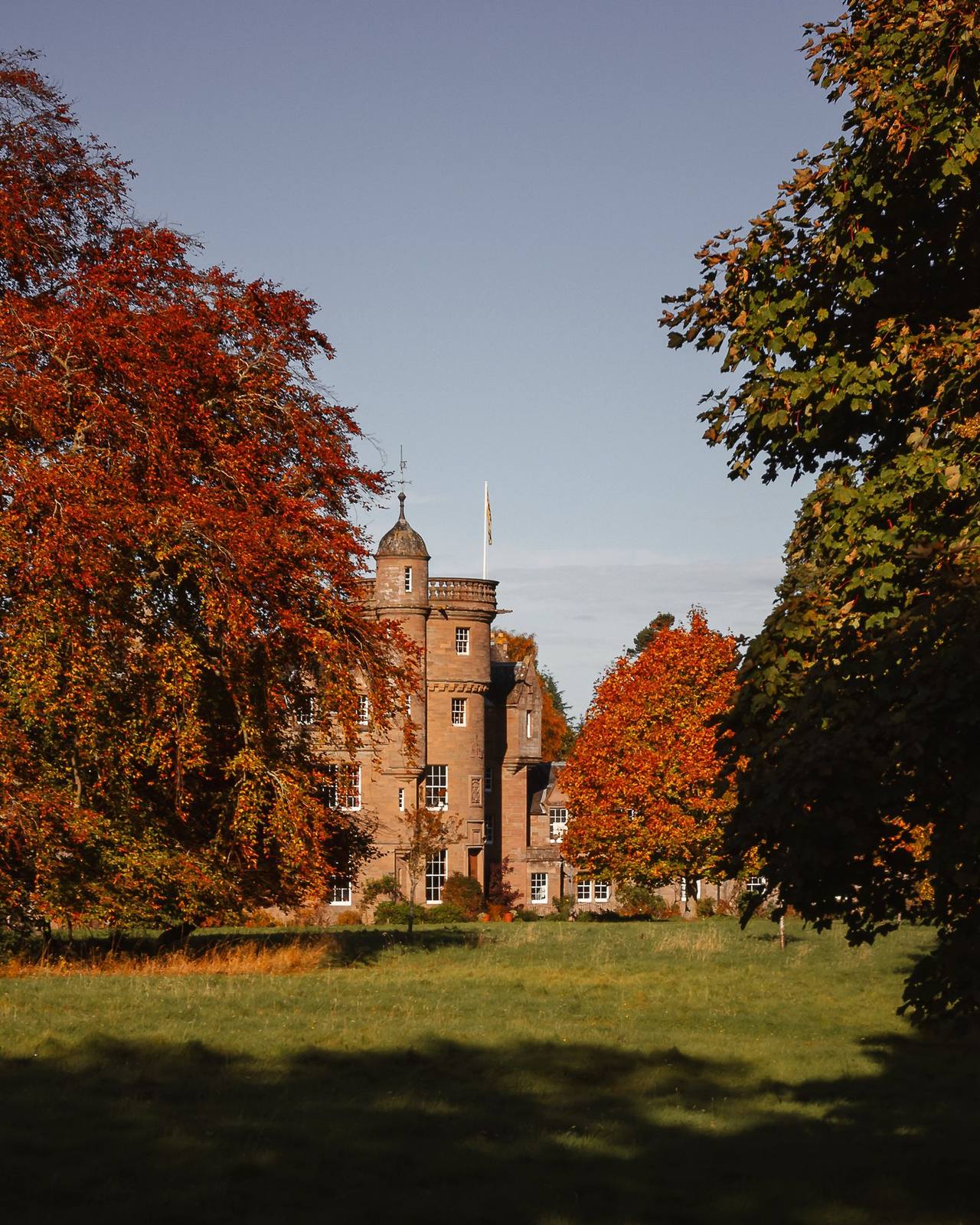
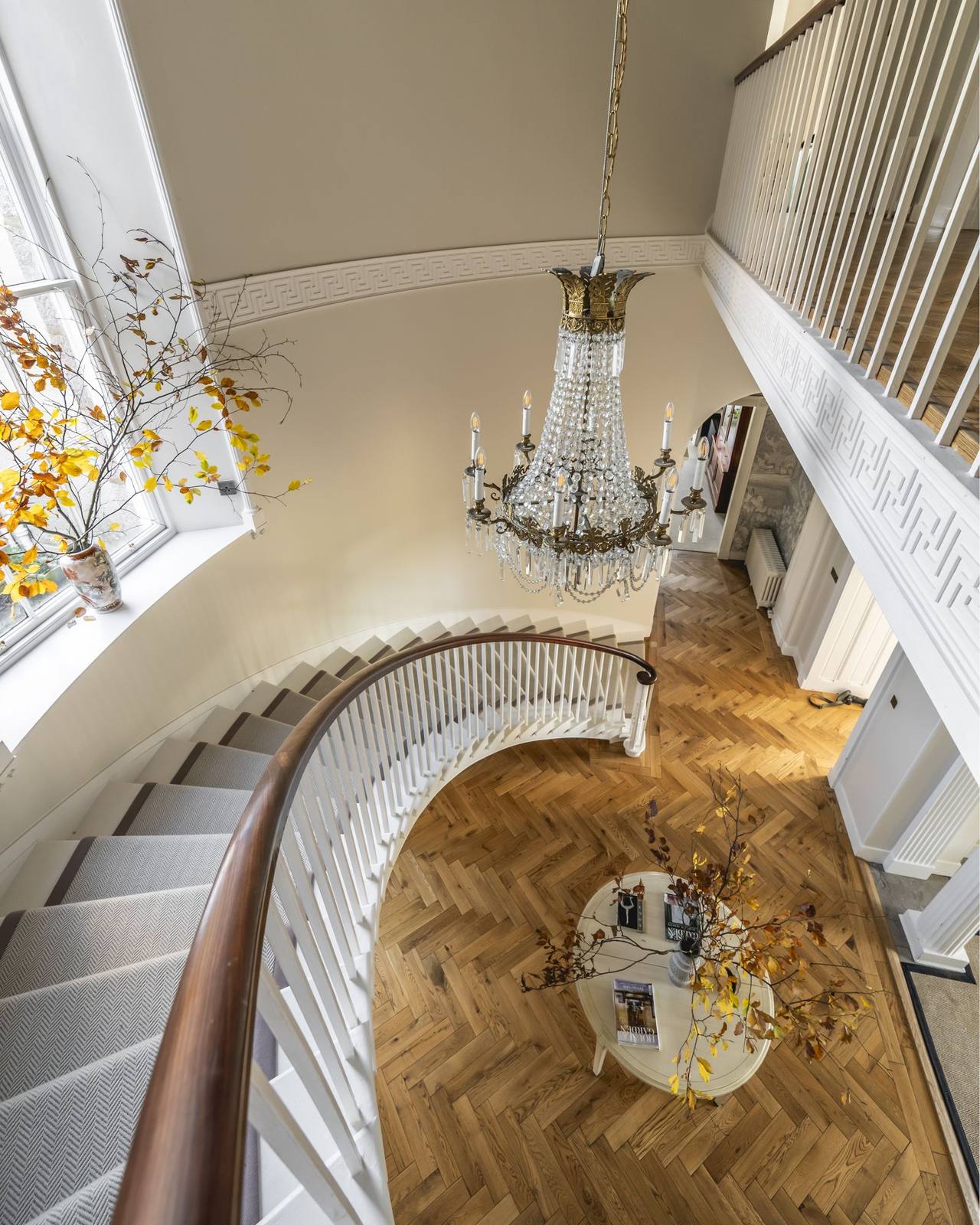
The flag in Birkhill's staircase hall is older than the house by five hundred years. It is a Lion Rampant, and the Scrymgeour family has carried the right to bear Scotland's standard since Robert the Bruce made the honour hereditary after Bannockburn in 1314.
The castle itself was completed in 1858 by David Bryce, the architect who more or less defined what Scottish Baronial looks like, on foundations reaching back to 1780. Turrets, crow-stepped gables, and sixteen bedrooms set within a 1,500-acre estate running down toward the Firth of Tay. Today it is run year-round as an exclusive-use stay.
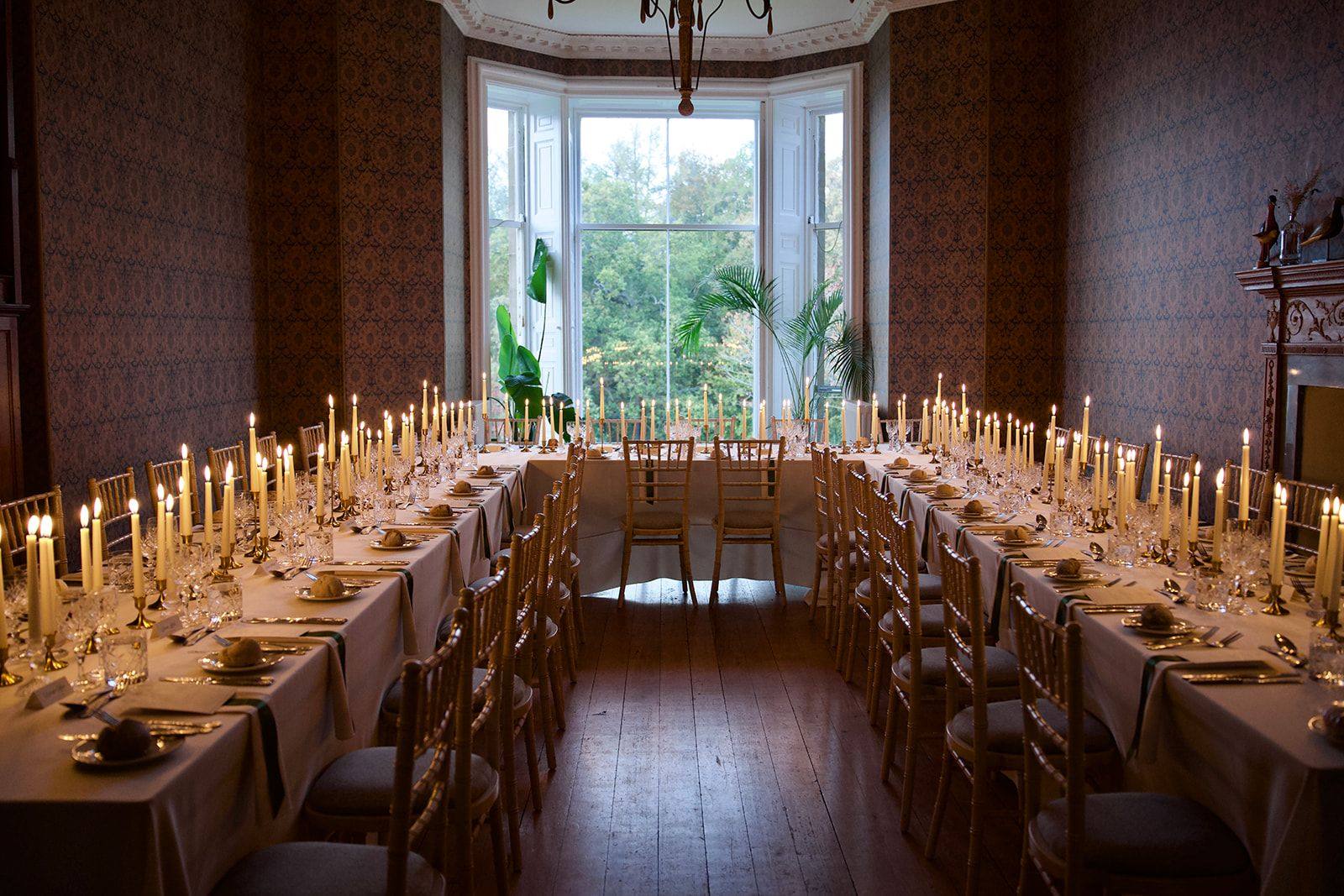
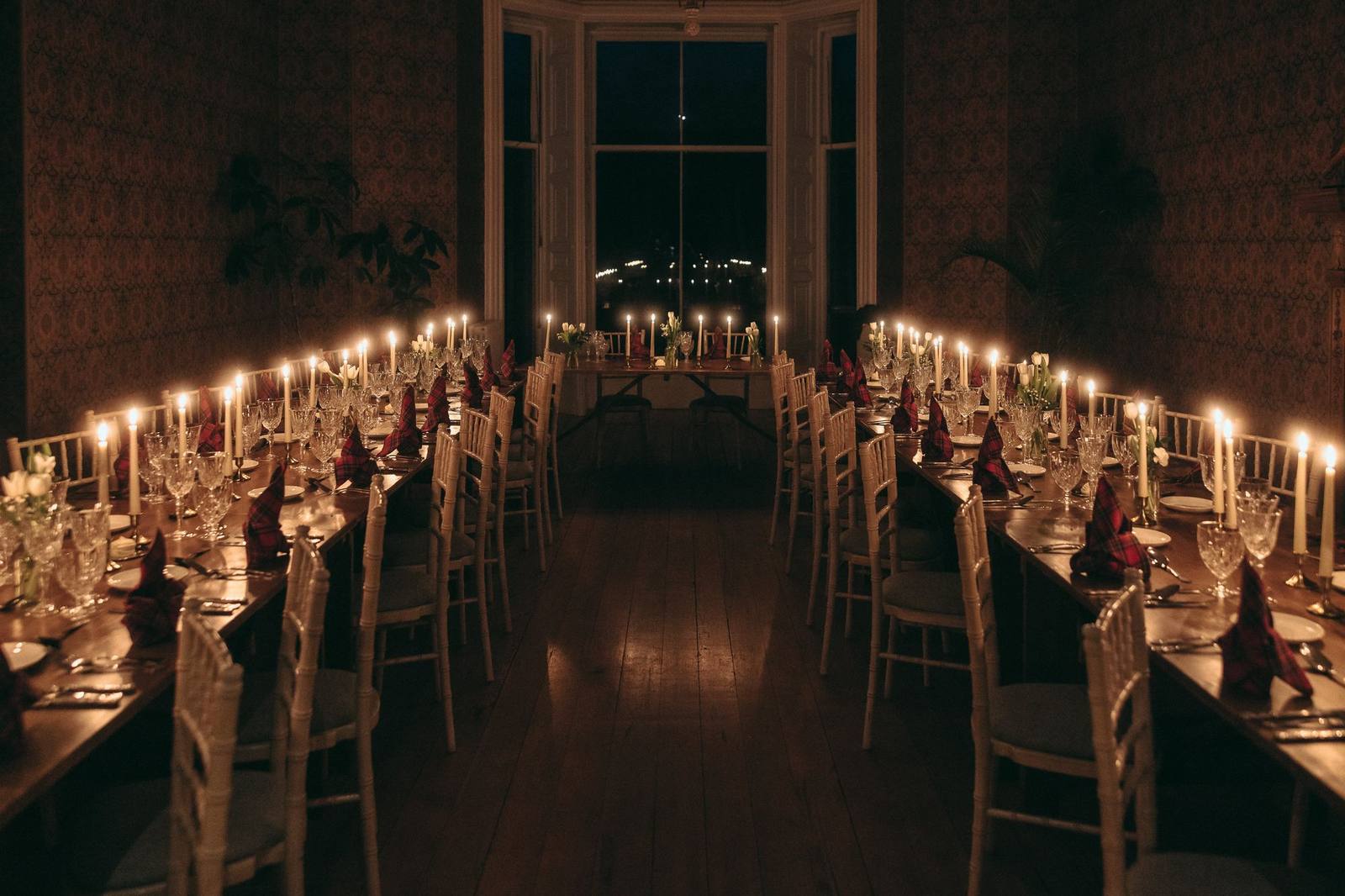 By candlelightBy daylight
The same room, twelve hours apart.
Cairnmore House
Where sea, sky and silence set the pace.
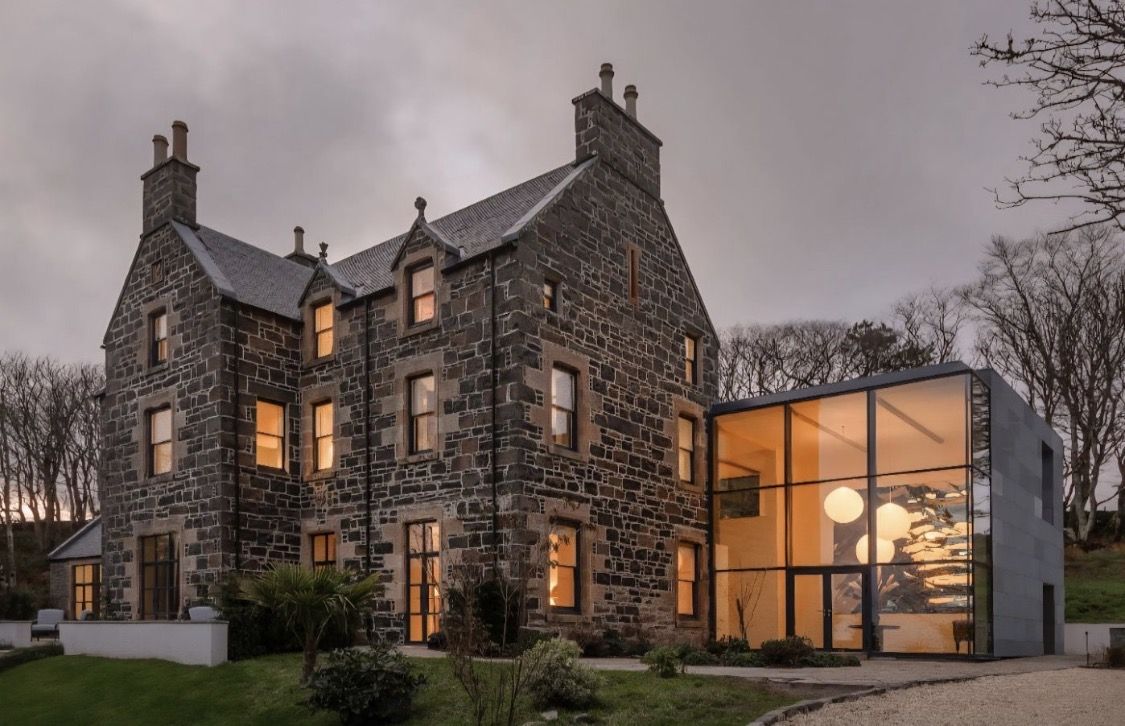
On a gentle slope above the bay of Port Ellen, at the southern edge of Islay, stands a seven-bedroom house built in 1865 as a dower house for the Kildalton Estate. Its builder, John Ramsay, left his initials in the stonework, where they remain.
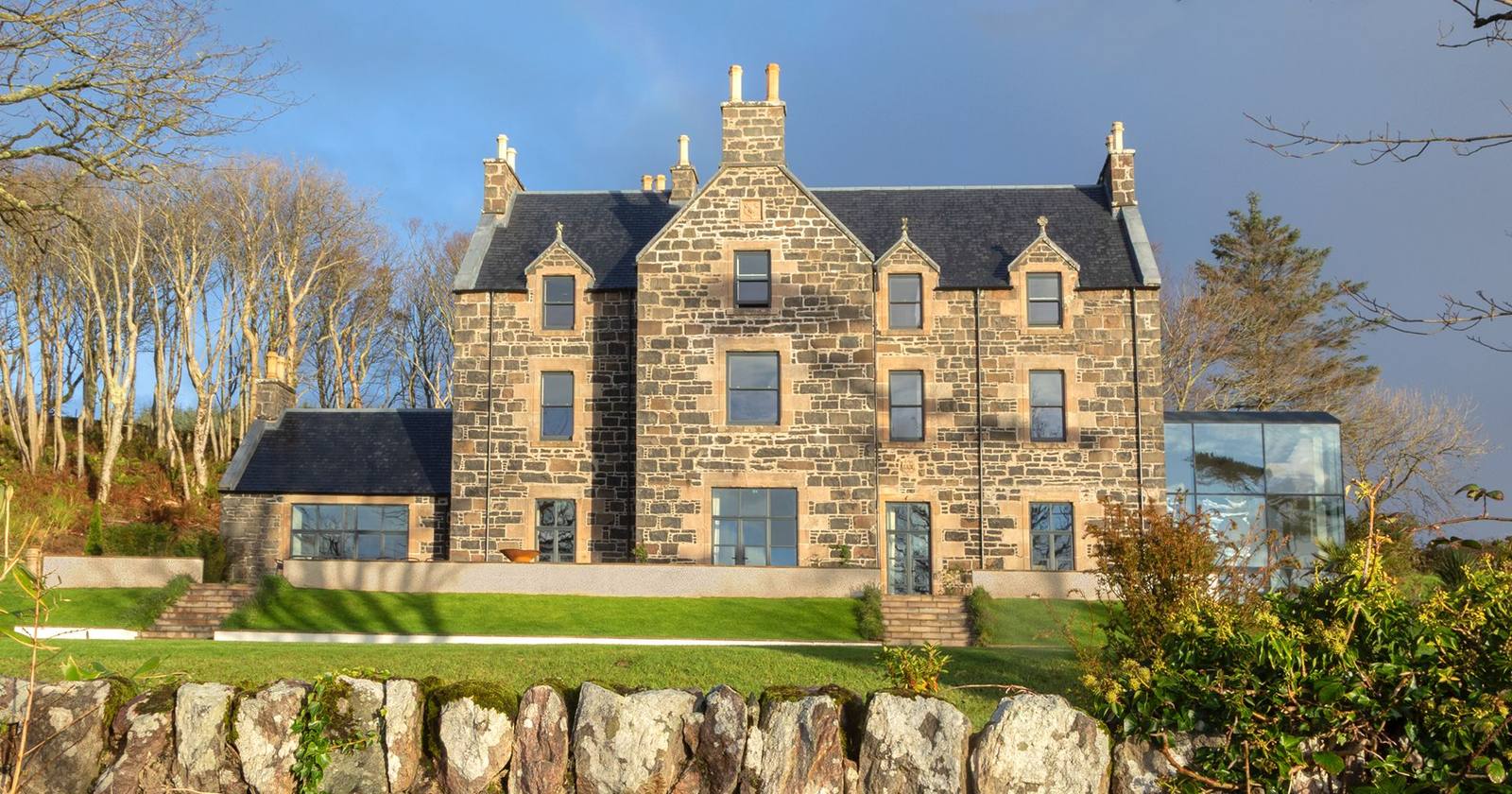
The house passes into private hands, kept by a permanent staff to host the island's seasonal shooting parties.
Judged the finest house in the area, it is requisitioned by the RAF as an officers' mess.
Cairnmore enters its long private ownership. Every modernisation since has been planned around its period character.
Ancient trees and long grasses surround it, and a sweeping sandy beach sits at its doorstep. Inside, it has been reimagined as a private sanctuary, its interiors drawn from Islay's own landscape: peat, heather, weathered stone, the colour of the Atlantic in changing light. The whole house is taken on an exclusive-use basis.
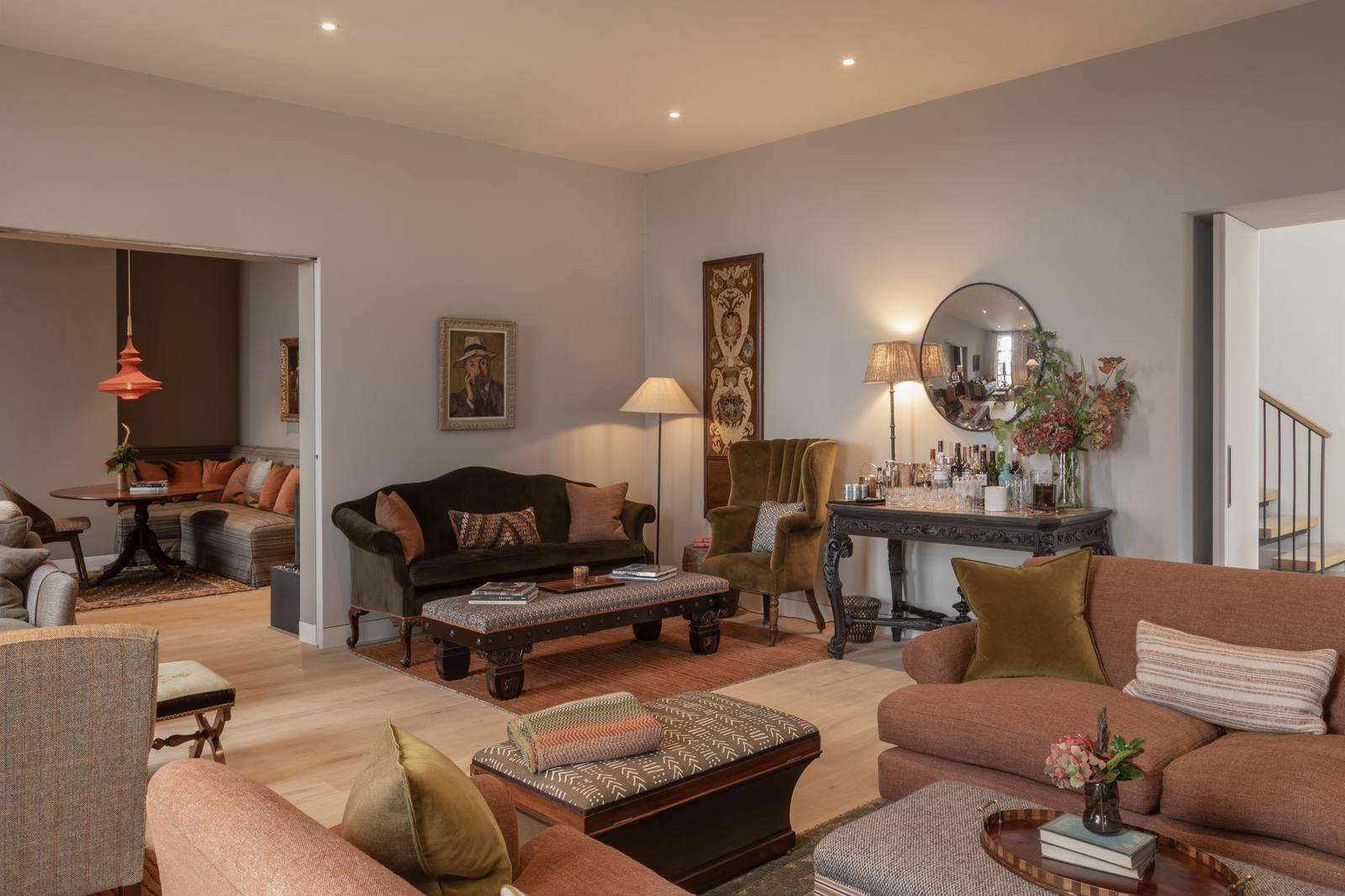
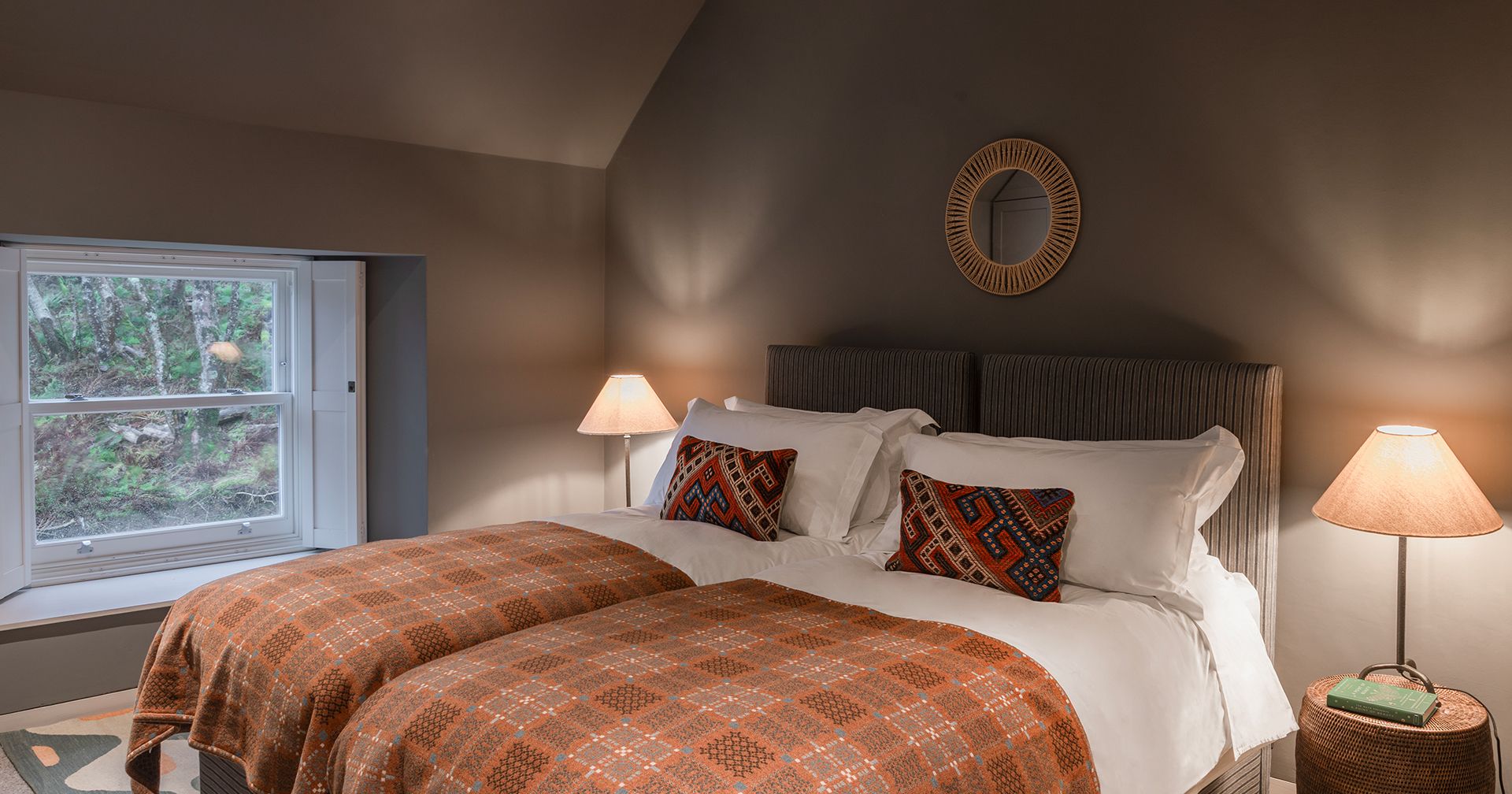
Privacy here is instinctive, and the Atlantic light becomes part of the day.
House of the Northern Gate
Built by the Sinclairs, a retreat for a Queen, now an exclusive-use house.
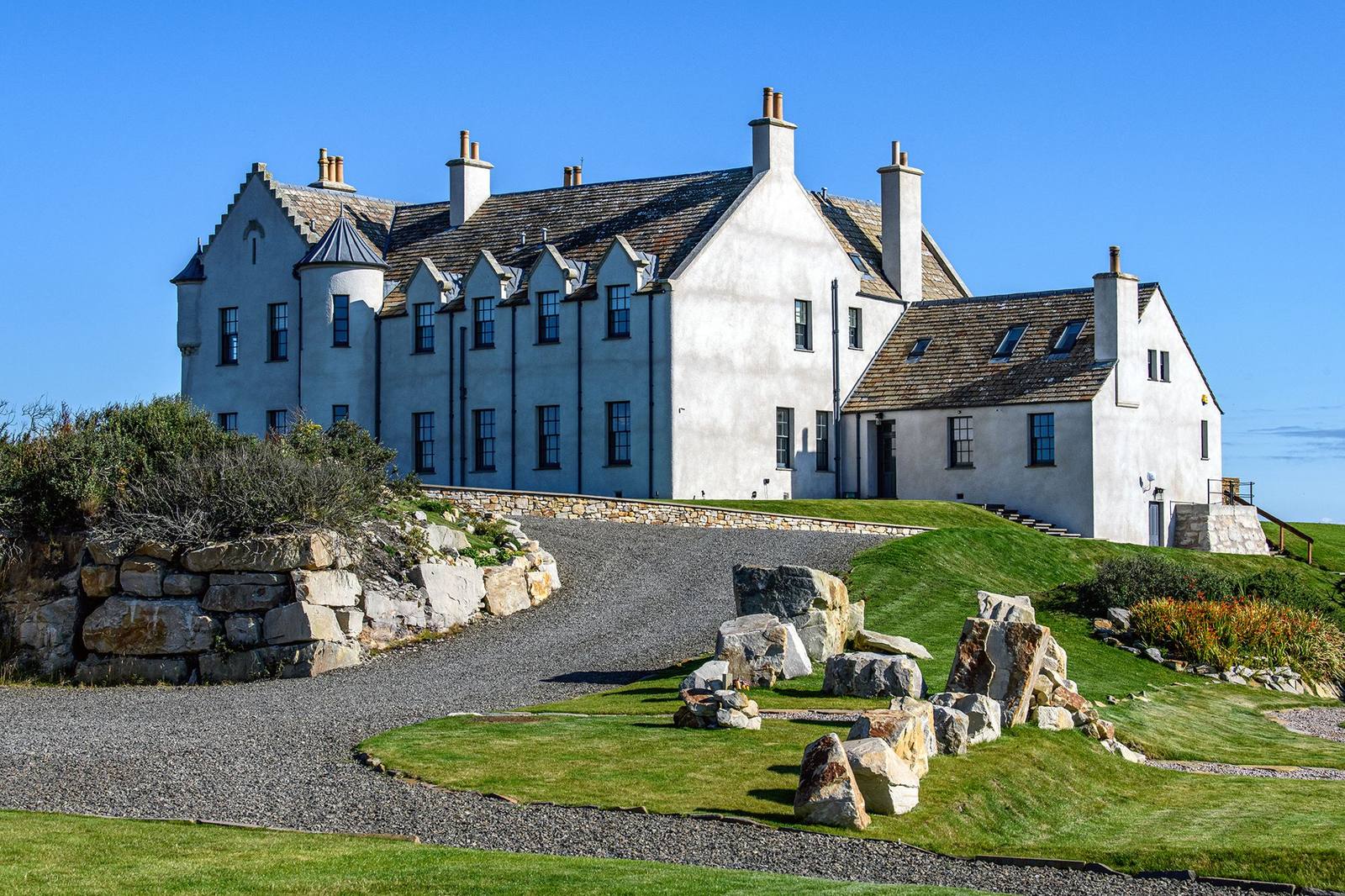
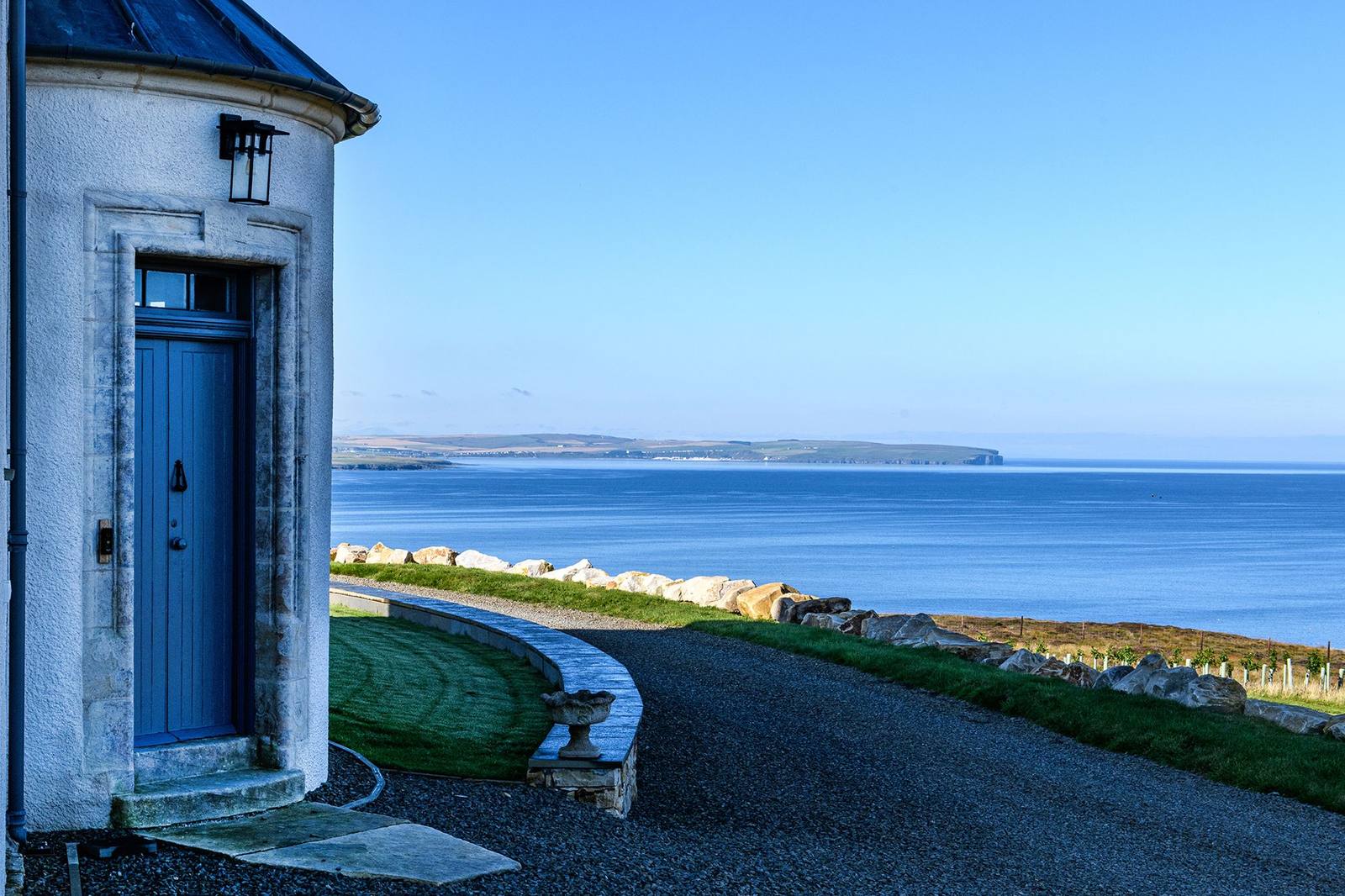
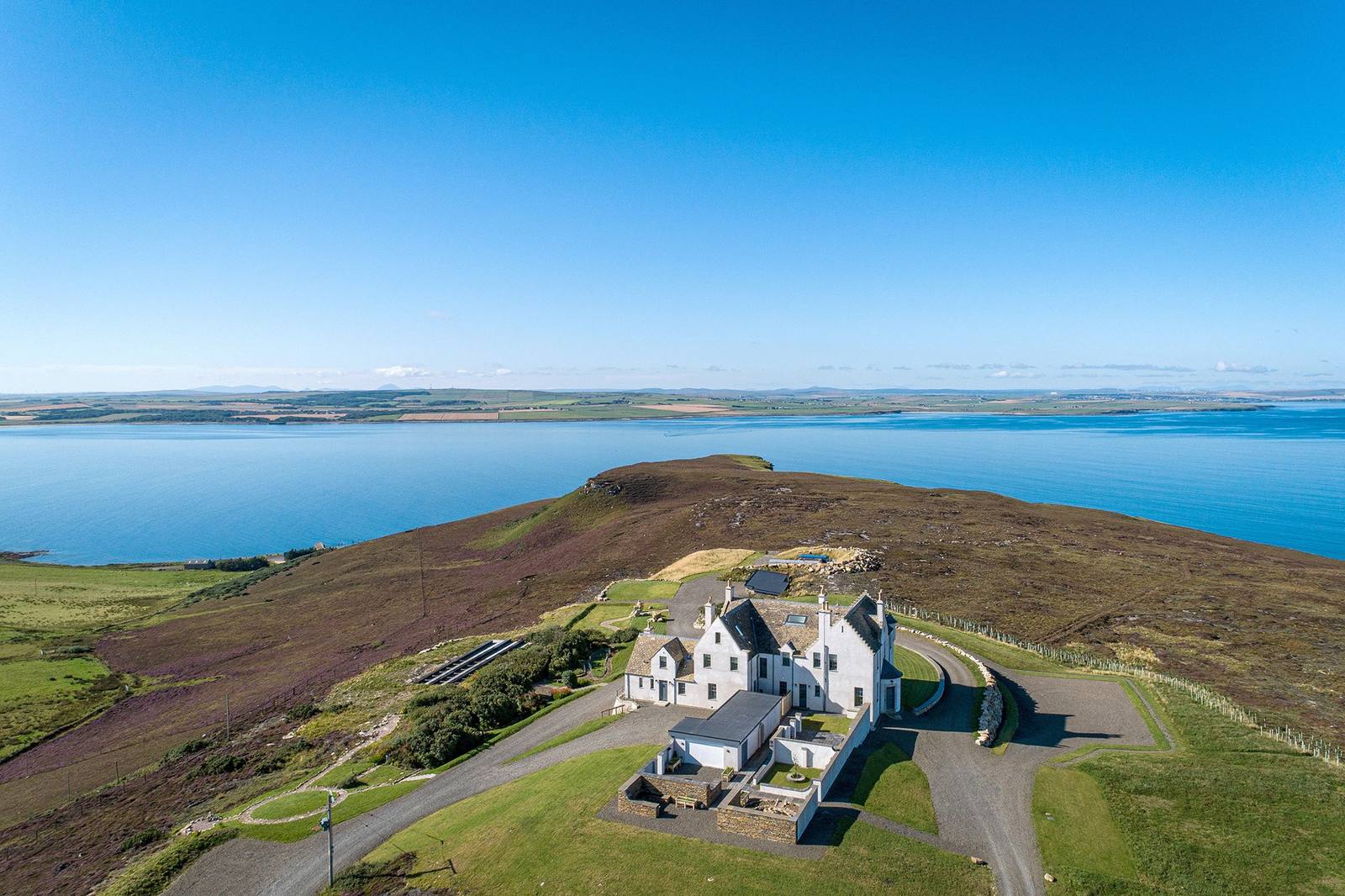
At the very top of mainland Scotland, on Dunnet Head, a white house looks out in four directions at once: north to the lighthouse and Orkney, west to Dunnet Bay and the Atlantic, east across the Pentland Firth, south to St John's Loch and the village of Dunnet.
Mr Thomson-Sinclair of Freswick began building it in 1894, and it was finished around 1906. The Sinclairs are one of the great clans of the north, their chiefs Barons of Roslin and Earls of Orkney and Caithness. The house then passed to his nephew, Admiral Sir Edwyn Alexander-Sinclair, the officer who fired the first shots of the Battle of Jutland. It was the first house in the area to run on electricity, powered by a steam generator in a stone outbuilding that still stands, with water pumped up from the Well of Lerygeo to tanks in the roof.
In 1953, a guest looked east from an upstairs window and saw a castle three miles away.
Commander Clare and Lady Doris Vyner bought the estate in 1948. Lady Vyner was a close friend of Queen Elizabeth, the Queen Mother, and invited her to stay in 1953, after the death of King George VI. From the house she spied the tower of the recently vacated Barrogill Castle, arranged to see it, and bought it. She restored its original name, the Castle of Mey, and spent her summers there, a tradition King Charles continues each August.
In 1955 the Royal Yacht Britannia brought Queen Elizabeth II and the royal family to Dunnet, landing by royal barge at Dwarwick Pier, just below the house. The moment later appeared in the first season of The Crown.
- 1894Building begins for Mr Thomson-Sinclair of Freswick; complete around 1906.
- 1948Commander Clare and Lady Doris Vyner buy the house and estate.
- 1953The Queen Mother stays, and from its windows finds the Castle of Mey.
- 1955The Royal Yacht Britannia brings the royal family ashore at Dwarwick Pier.
- 2018A branch of the Dunnett family, whose ancestors left the area six generations earlier, buys the house.
- 2021After three years of restoration, King Charles, then Duke of Rothesay, visits the house his grandmother once stayed in.
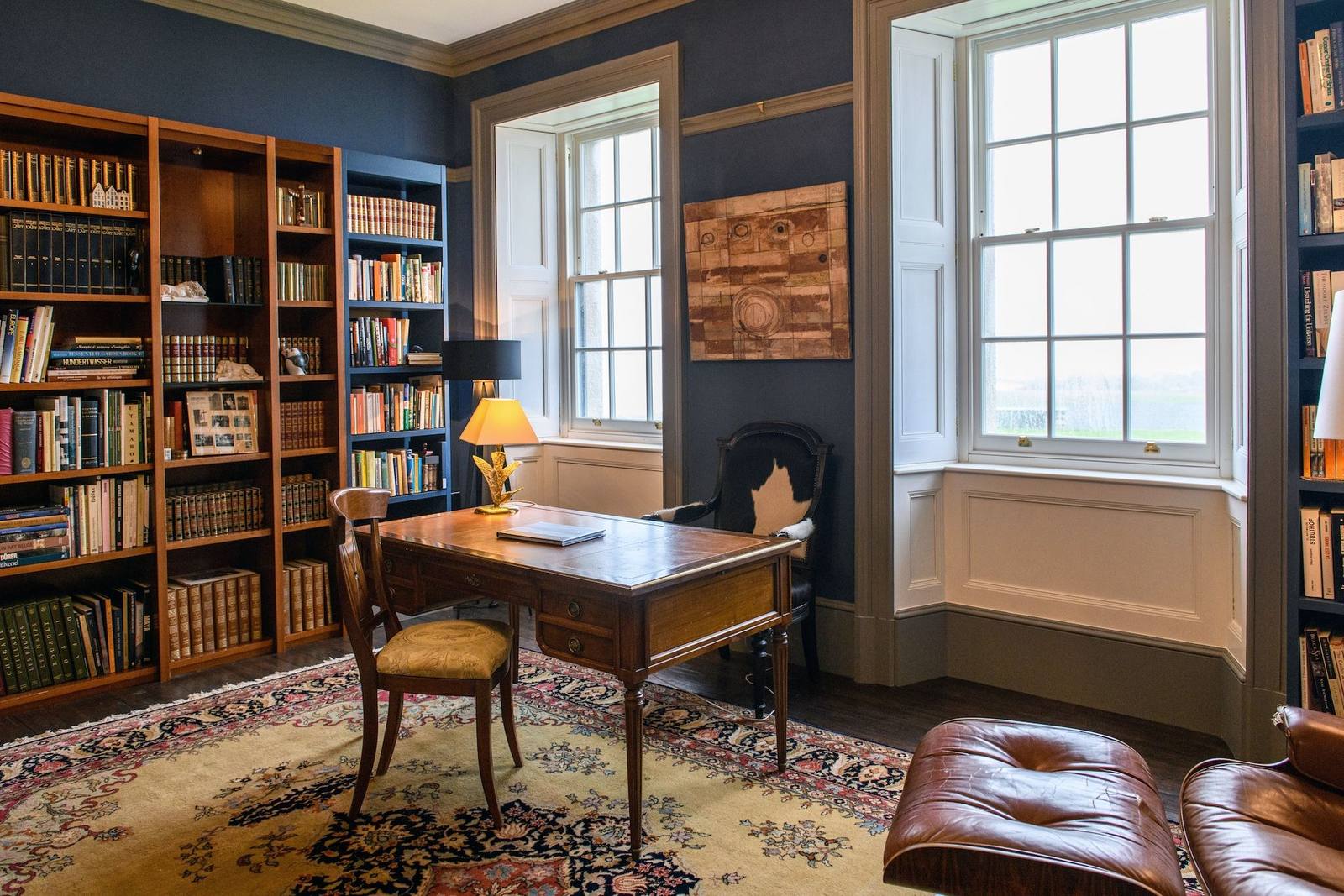
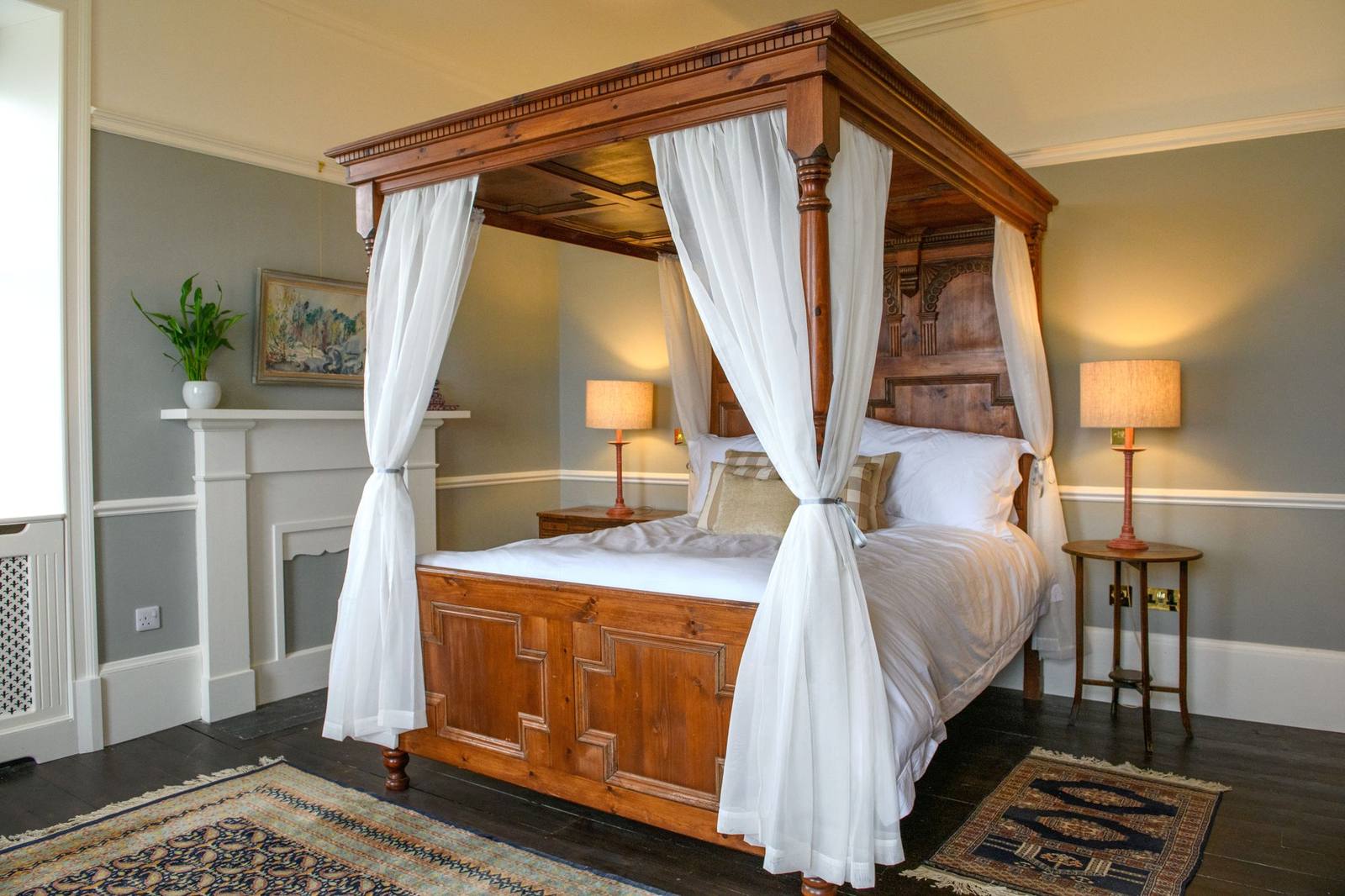
The restoration was done the slow way. Cement repairs were stripped from the harling and the lime relaid; the Caithness stone slates came off the roof and went back on, with locally salvaged slates where needed; all fifty-three windows were replaced. Original floors, doors and plaster castings were kept wherever possible. A walled garden was added, the lochan dredged, and the rooms finished in Farrow & Ball, with Scottish and French furniture. Today the house is let in its entirety, as an exclusive-use stay.
Five centuries. One enquiry.
North & Noble will help you choose the right house for your party, your dates and your occasion.
Enquire with North & NobleThe Scotland Collection · in partnership with North & Noble