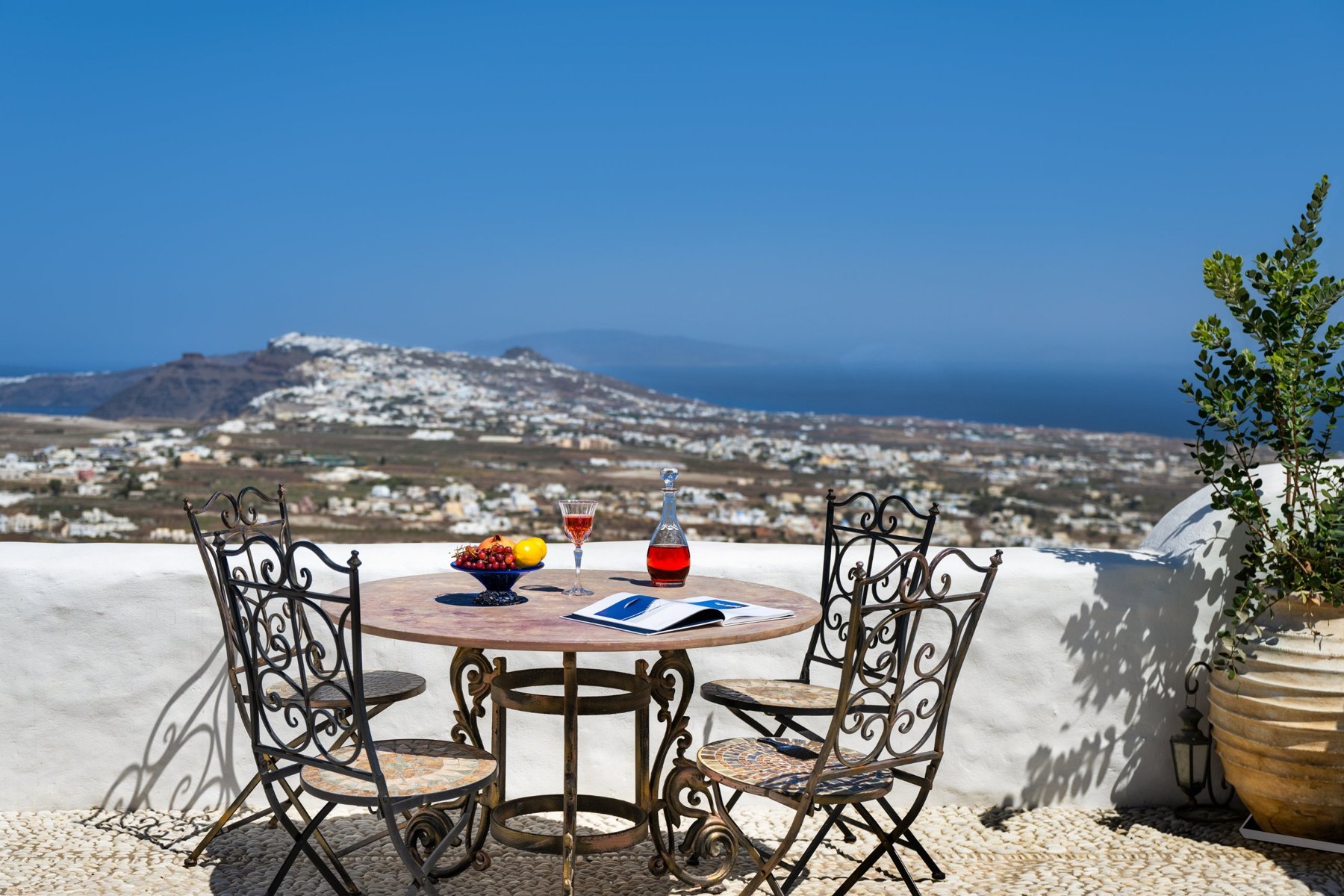
1584The year the Kastelli, one of the island’s Venetian castles, was completed, and the period in which the main building of Santa Croce was built.
Before it was a home, Santa Croce was a watchtower. Built in the Middle Ages under Venetian rule, it stood at the edge of Pyrgos, below the fortress that still crowns the village. Built from volcanic stone across three levels, with two gun holes in the upper room, the main building of the Villa once formed part of the defensive fortifications at the edge of the medieval village, probably linked to the Kastelli itself by a passage beneath the village.
As the centuries passed and the threat of pirates faded, the tower changed with the life around it. Around 1830, when Santorini's wine trade was flourishing, it was extended into a traditional luxury residence, with living rooms, terraces, storage spaces and a large underground cellar. What had once guarded the village became the aristocratic home of a prosperous family whose life was tied to the island's wine.
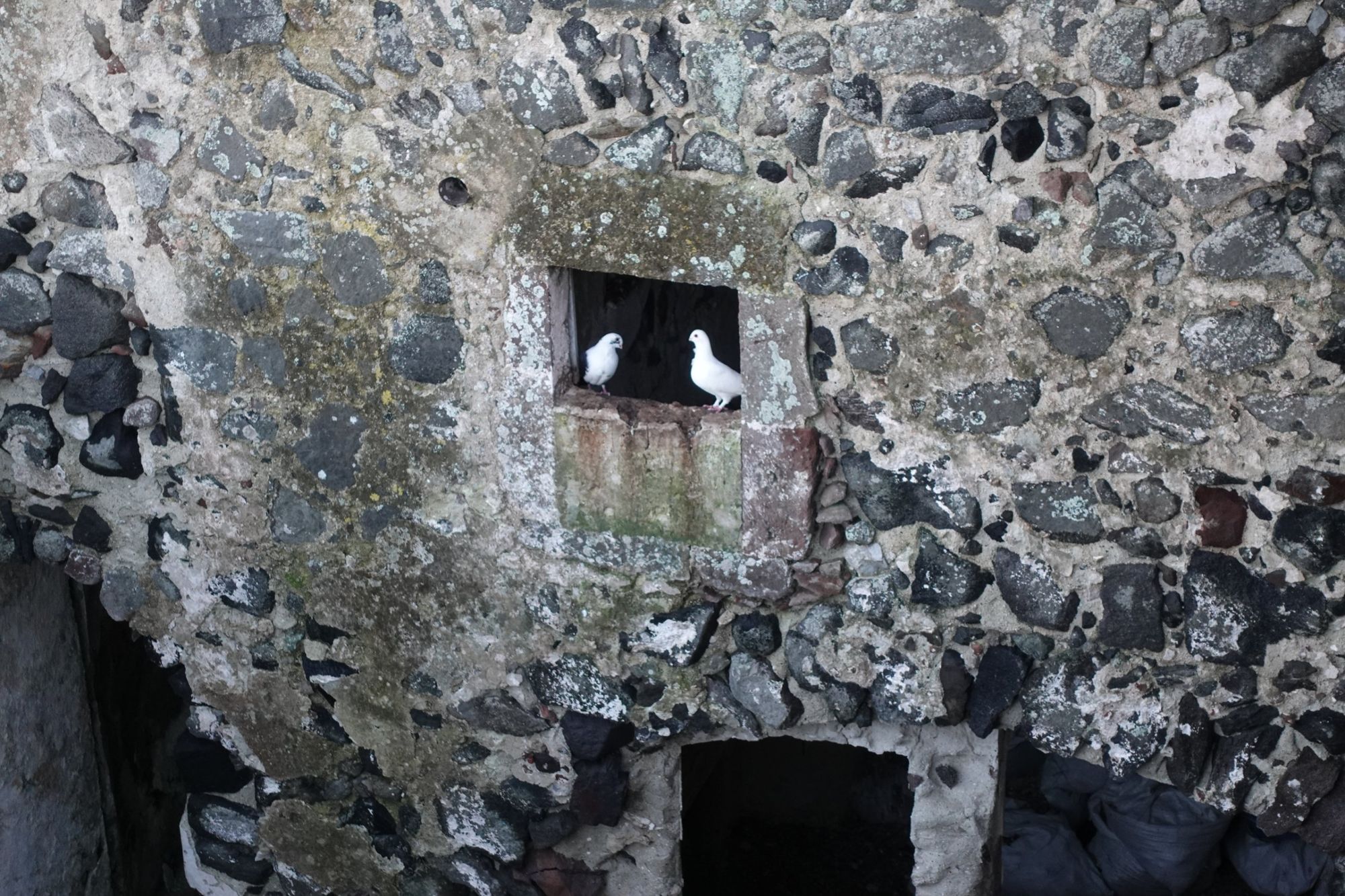
1956The year the earthquake brought the house down. It then stood in ruins for sixty years.
Pyrgos sits at the top of Santorini, the island's highest village, wound around the old Venetian castle known simply as the Kastelli. Most visitors see it for an hour: a climb through white lanes, a photograph of the panoramic views over the whole island and back to the bus. Villa Santa Croce invites a different kind of stay, one that allows you to settle into the rhythm of village life, until the view becomes more than a landscape and the place itself becomes part of your story…
In 1891, the house passed to the daughter of a Greek sea captain who enlarged it, giving it the more elegant character of the time. The old defence tower remained at its heart, its stone walls carrying the memory of a very different Santorini. For centuries, the house grew with the village, gathering new memories. Until one August morning, when the earth moved beneath it…
The devastating earthquake of 1956 left much of Pyrgos damaged and this house a heap of volcanic stone. It stayed abandoned that way for six decades, all its treasures, amongst which the precious red volcanic stones called pori which ornamented the windows were stolen and dilapidated…
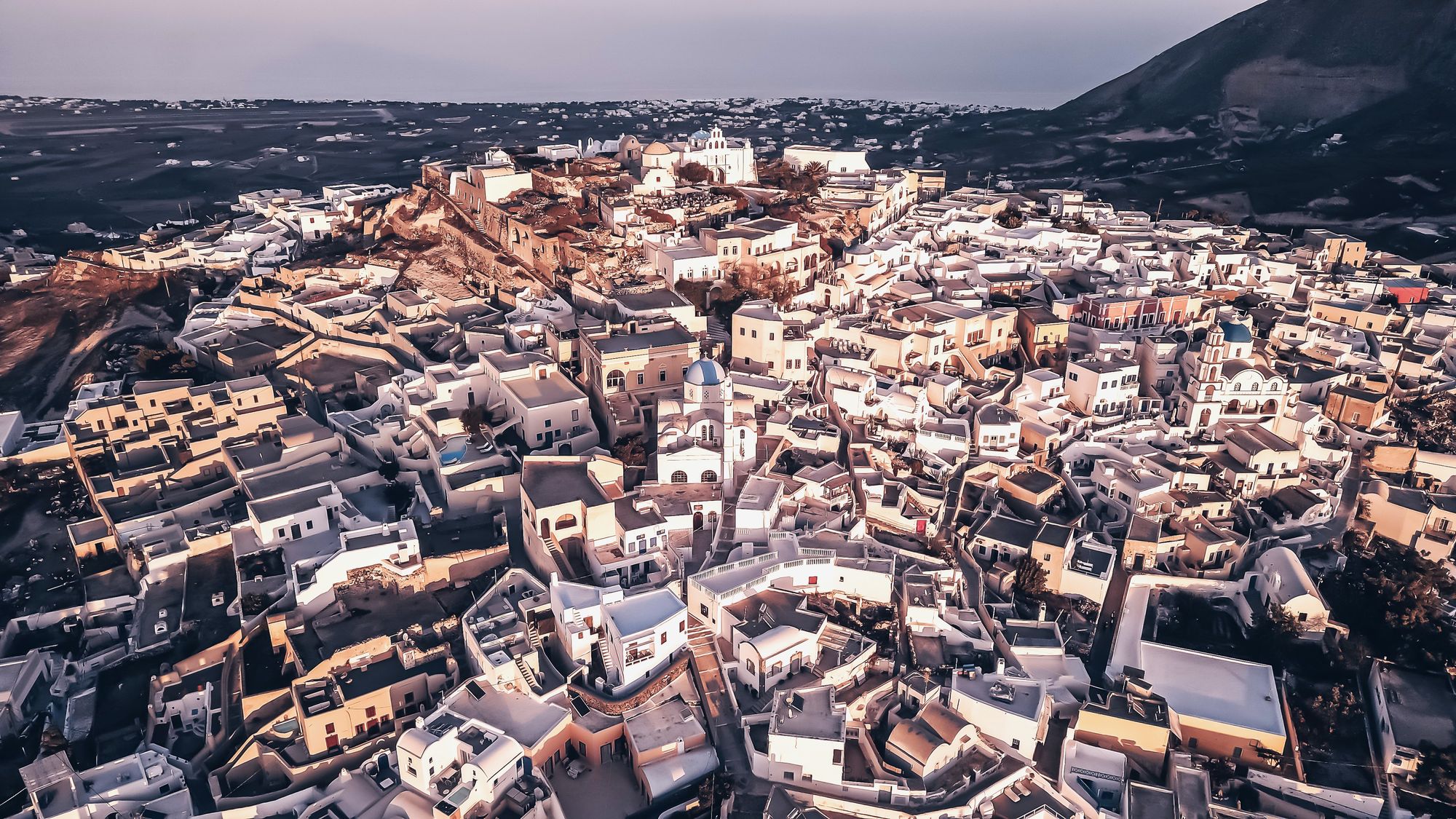
Rebuilt in the Stone of the Island
In 2017, the present owners fell in love with the spirit of this extraordinary place and acquired what time had left behind: a ruin, a mountain of volcanic stones, and, beneath the rubble, the faint outline of the rooms that had once made it a home.
Their original ambition was modest: to restore the ground floor and the sole surviving room on the upper floor. Yet the house stands in the historic quarter beneath the Kastelli, a protected area thanks to its exceptional Byzantine heritage. Every stage of the restoration and reconstruction therefore required the approval and supervision of the relevant department of the Greek Ministry of Culture. The guiding principle was uncompromising: the house had to be rebuilt exactly as it once stood, honoring its original form, materials and architectural character.
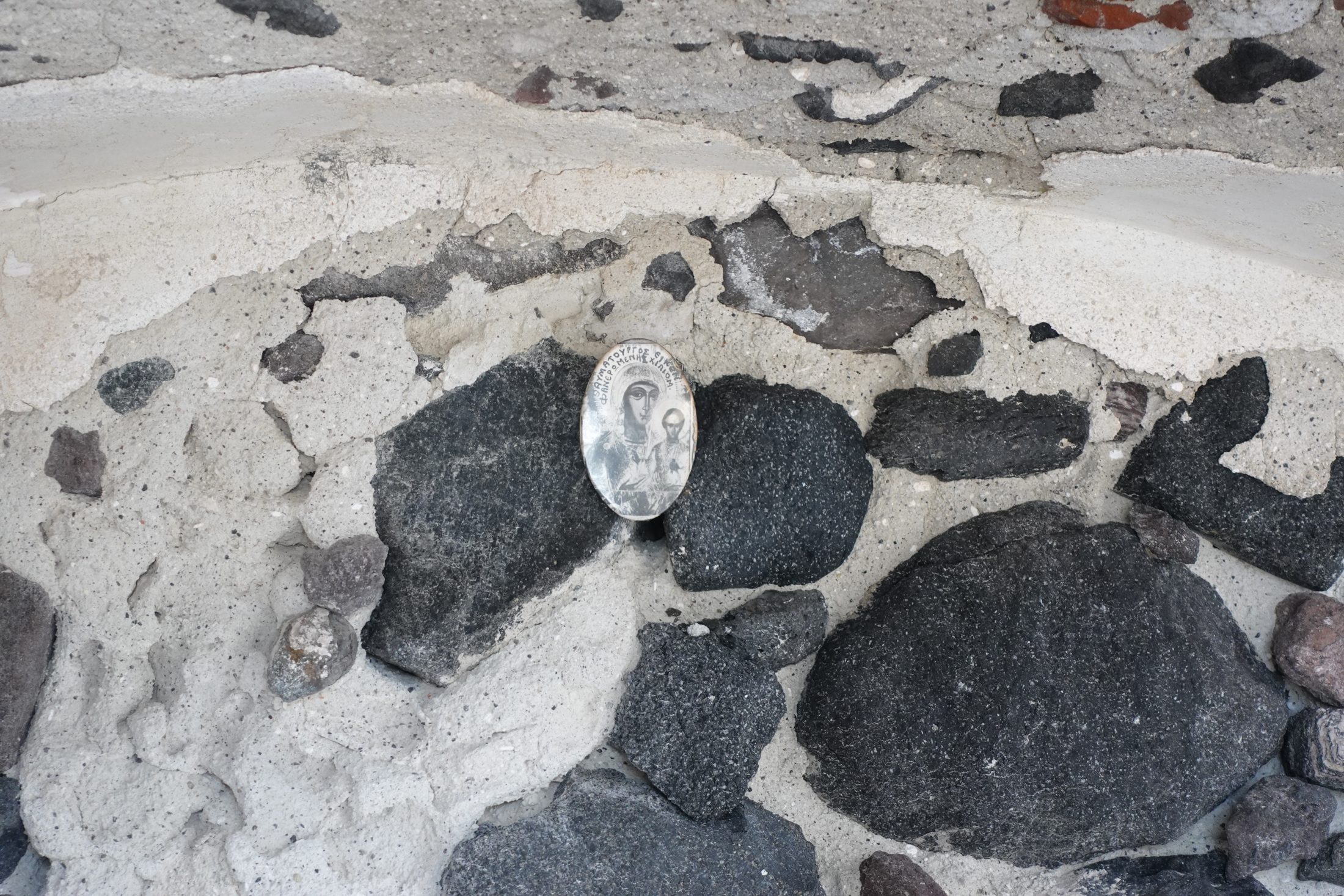
One precious remnant demanded particular care: the delicate cross-vaulted ceiling of the surviving room, known as the Madonna Room. Its name recalls the icon that once hung on the wall, looking over the house and offering protection during the long years of reconstruction. To dismantle and rebuild the vault would have risked losing its original substance forever. Instead, following the advice of a static engineer specialising in historic monuments, it was carefully preserved and reinforced with carbon fiber sheets, allowing this fragile piece of the house's history to endure.
Two years passed in the pursuit of permits alone. Meanwhile, the site was cleared, traditional craftsmen were sought, and the painstaking work of bringing the house back to life began. Living abroad, the owners travelled to the island every few months to oversee the transformation. Some elements had to be rebuilt two or even three times before they met the exacting standards of authenticity and craftsmanship they had set for themselves. From the first stones cleared to the house's revival, the journey took eight years.
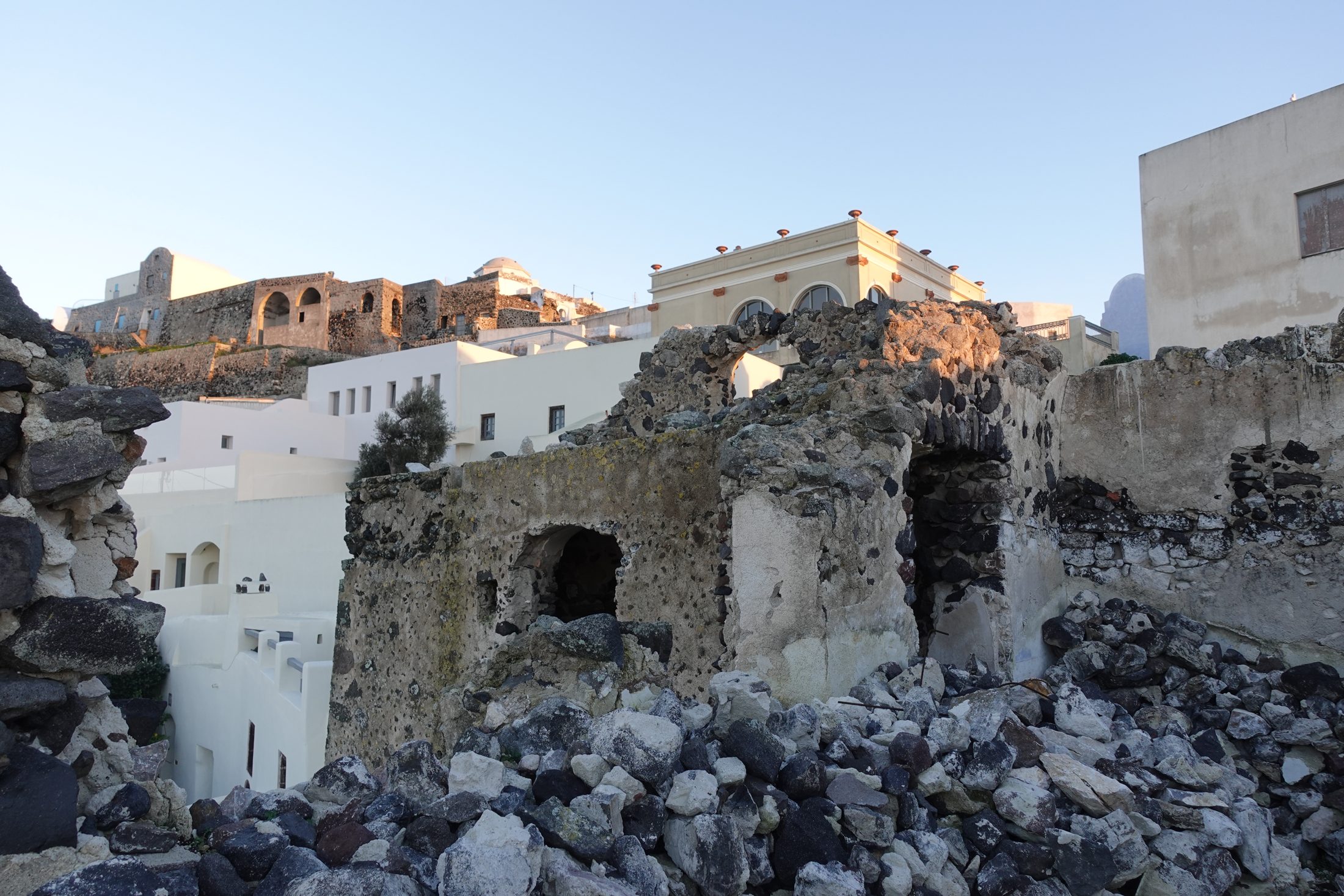
The restoration was entrusted to traditional craftsmen, who worked with the materials of Santorini itself: the island's precious red pori stones, volcanic rock, pumice, lime and ash, alongside salvaged stones wherever they could be reclaimed. Nothing that could be honored was casually discarded. The ground-floor kitchen was renewed beneath a graceful cross-vaulted ceiling fashioned from stone, lime and pumice. In the master bedroom, a small fragment of the original north-eastern wall, barely 40 centimeters high, was deliberately left untouched. Its rough, dark surface stands in quiet contrast to the fresh white plaster around it: a subtle, enduring reminder of the ruin from which the house emerged, and of the craftsmanship that brought it back.
Not everything of value had been lost to the decades of abandonment. A few remarkable objects survived, carrying their own stories into the house's new life. An iron safe made by Perreymond in 1835 has found a second purpose as a bar; a two-meter-long wooden bread chest has become a bench on the patio. Rather than serving merely as decorative reminders of the past, these remnants have been given a new purpose in everyday life.
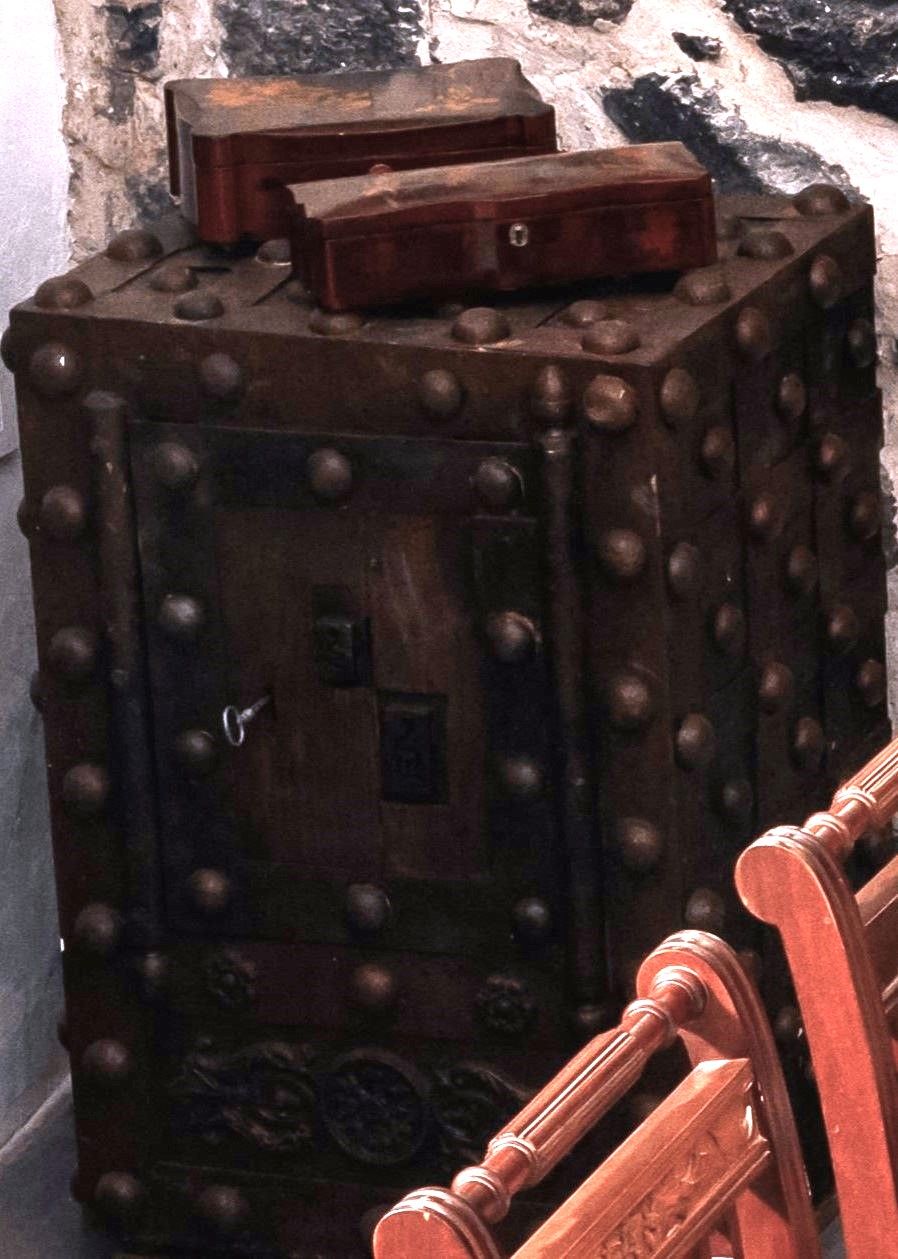
And so the house continues to tell its story not through its architecture alone, but through the objects that have outlived generations, abandonment and disaster. Each has been given a new purpose without losing the memory of its former life.
This is the essence of Santa Croce: not a reconstruction of the past, but its continuation. Built from the stones of the island, it has found a new life while remaining faithful to its soul.
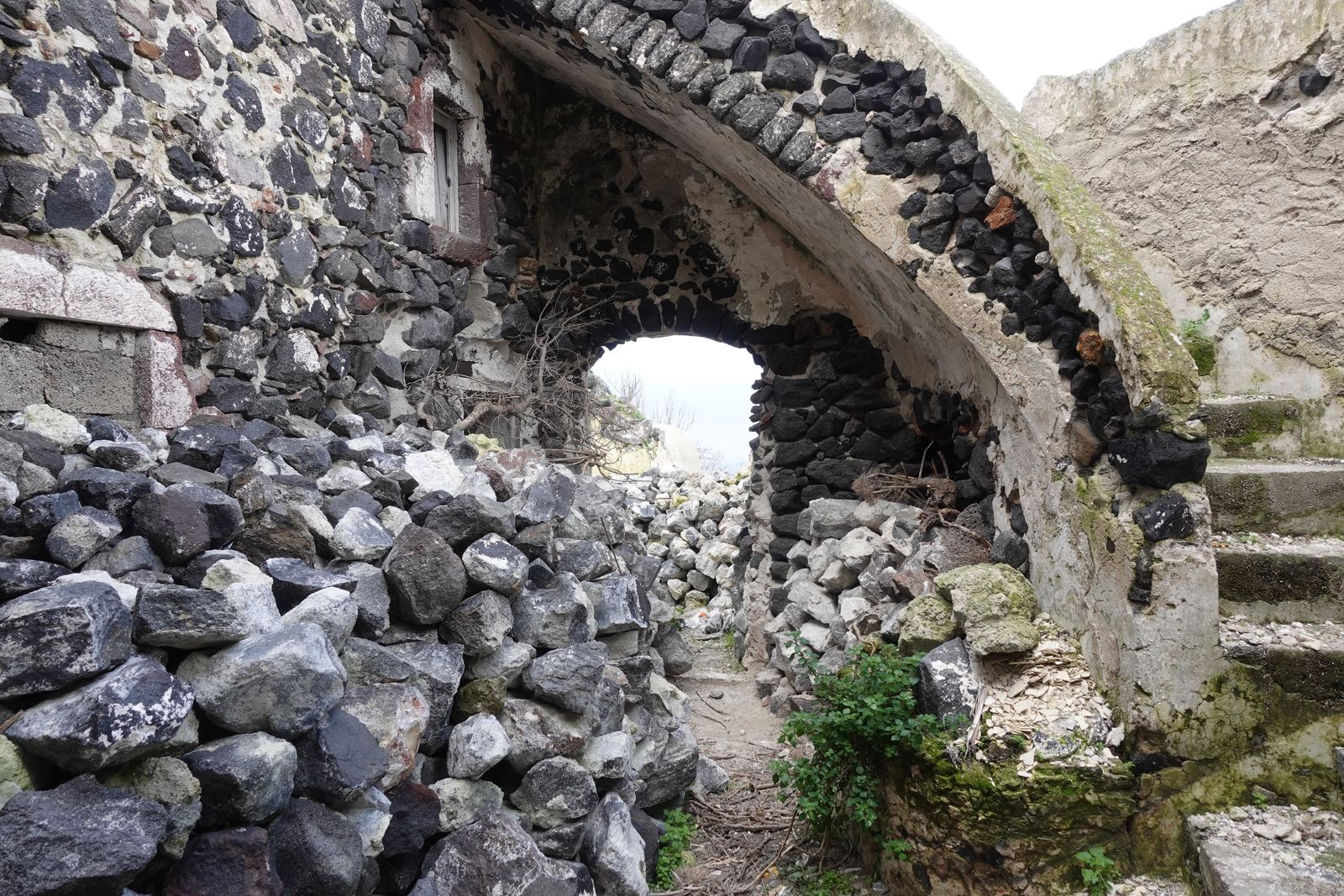
Before
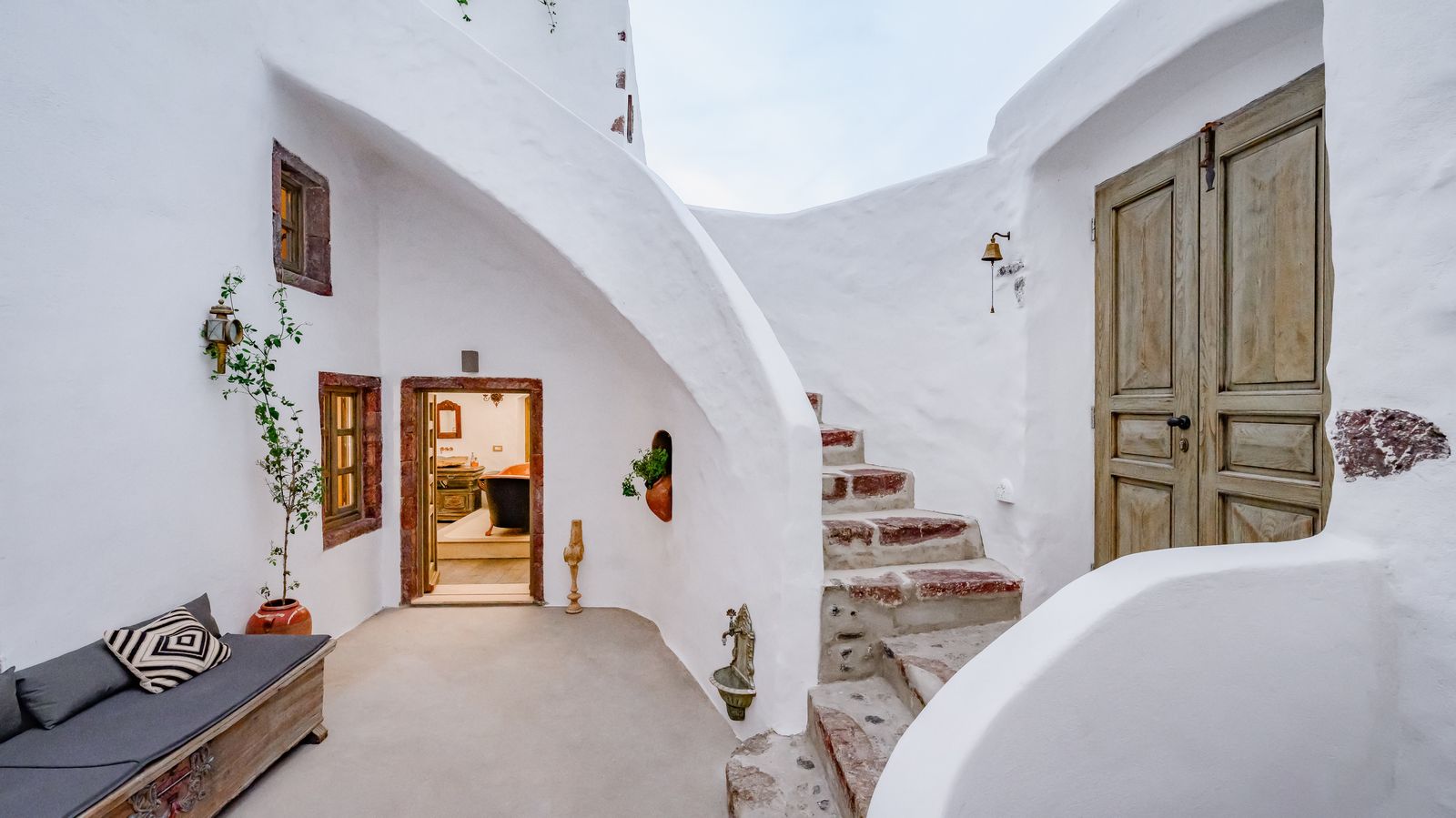
Today
Four levels, one Private residence
Villa Santa Croce, member of the Historic Hotels of Europe, offered exclusively to one party at a time, accommodating up to ten guests. Once you arrive, the entire residence is yours: approximately 240 square metres of interior space and a further 100 square metres outdoors, arranged over four levels. A shaded patio, panoramic terraces, a sundeck and a pool carved into the volcanic rock create a succession of spaces for gathering, relaxing or simply enjoying a little privacy.
The Villa welcomes up to ten guests across five double beds, set within uniquely conceived sleeping spaces that defy convention.
As a thoughtful touch reflecting Santa Croce's commitment to sustainability, on every double bed, beside the slippers, guests find two small natural cloth bags, each holding three towels and a bar of the owner's own handmade soap, cold-made in the traditional way with herbs and 90% olive oil.
Santa Croce has retained the distinctive layout of its original architecture, with two main floors that can be enjoyed together or used as two largely independent living spaces, while the property is always reserved exclusively for one party.
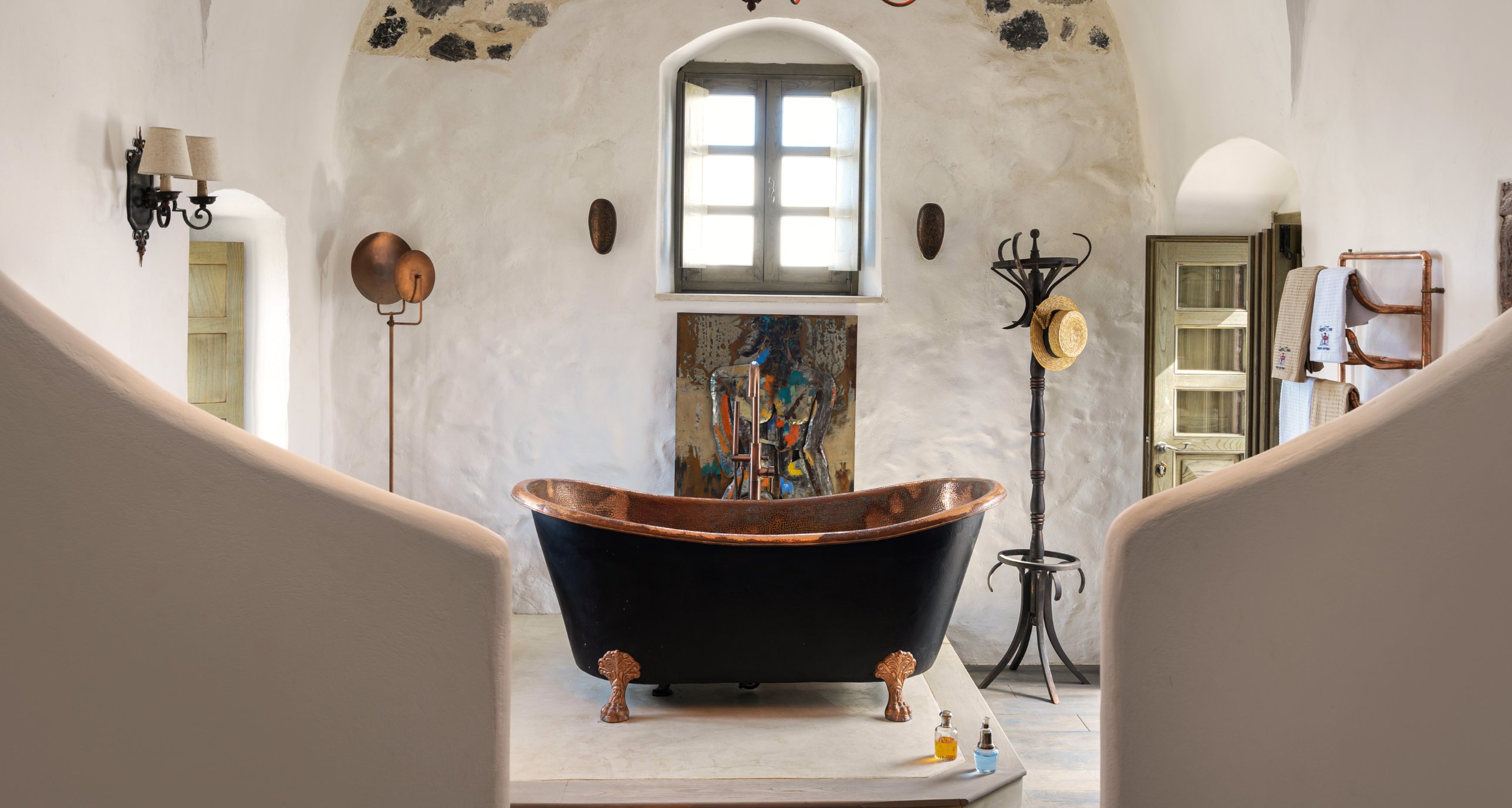
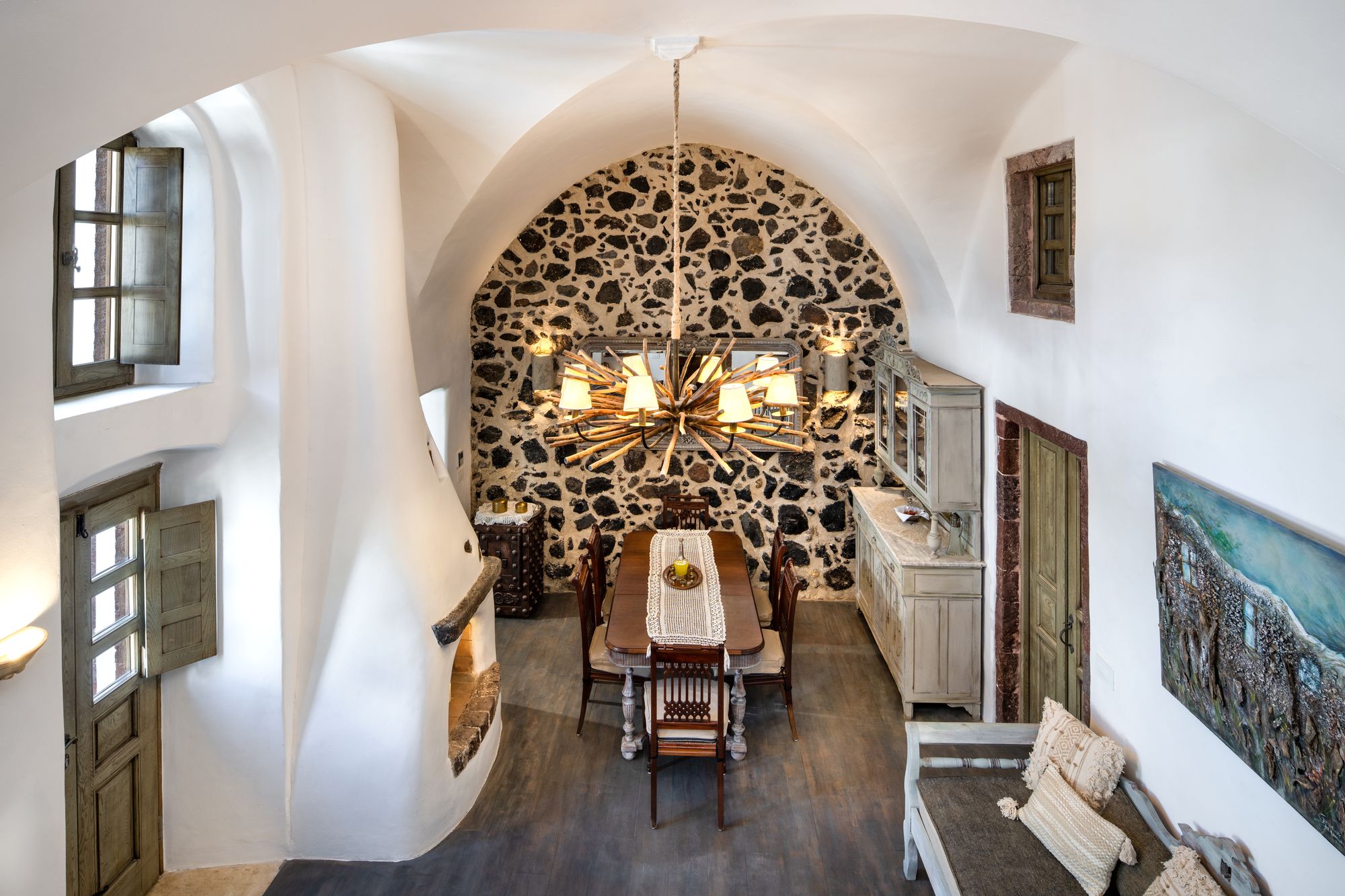
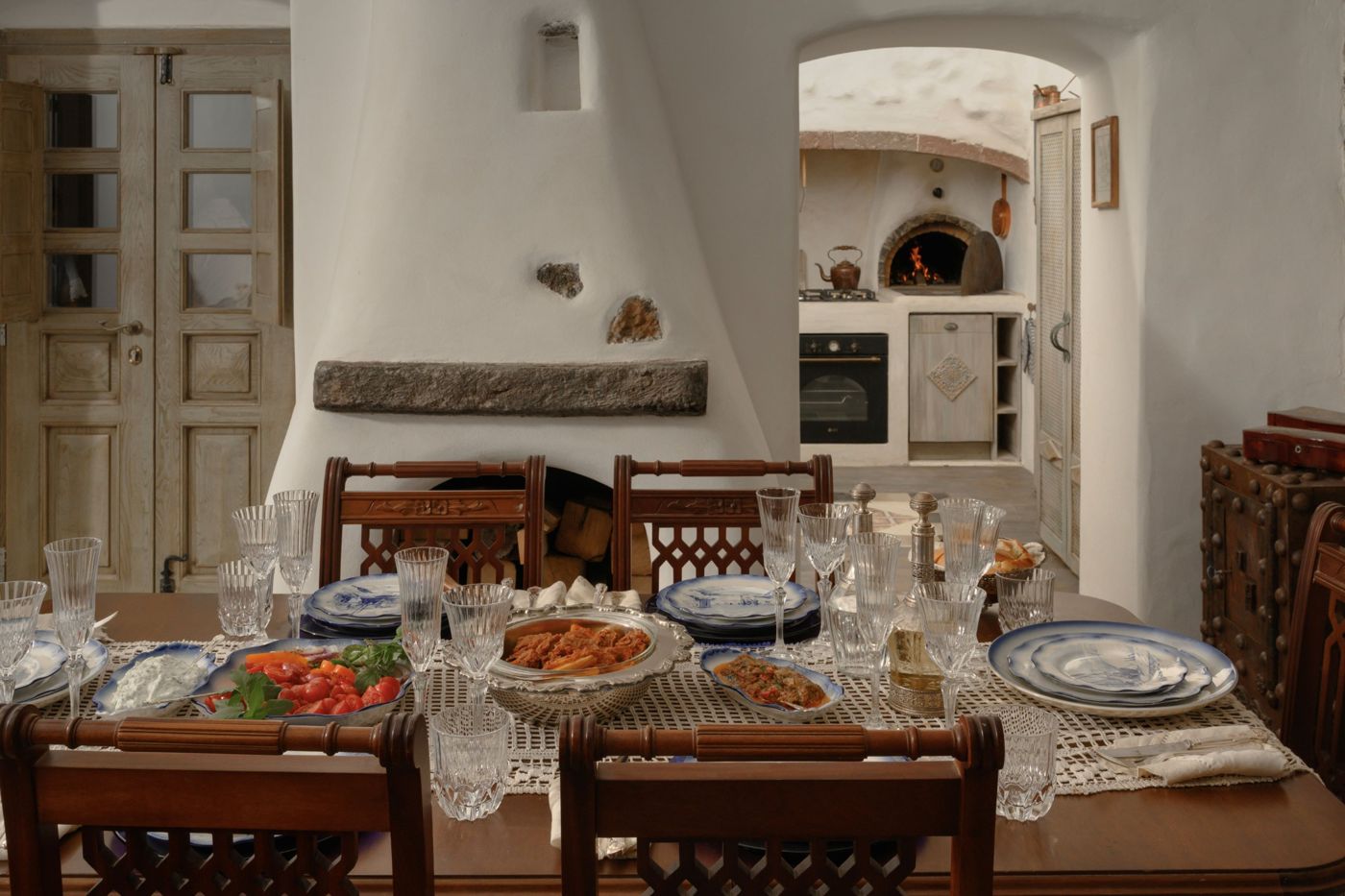
The ground floor is the heart of the house. A generous living and dining room unfolds beneath a high cross-vaulted ceiling, with a fireplace adding warmth to the space. The kitchen, built around a traditional wood-fired oven, pays tribute to the island's heritage. Nearby, the master bedroom, with its bronze double bed and handcrafted furnishings, is elevated by a sculptural copper bathtub, positioned to frame sweeping views across Santorini.
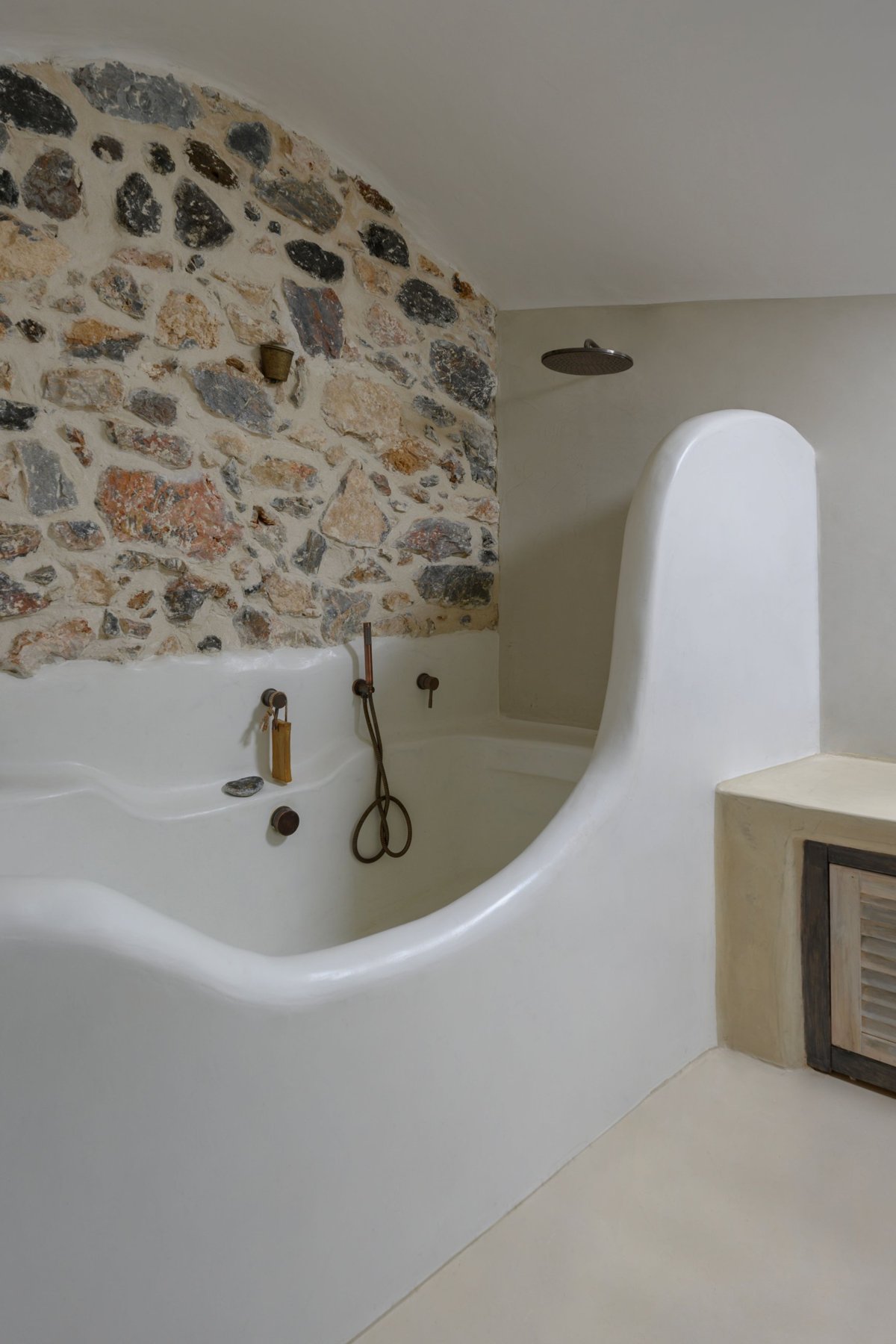
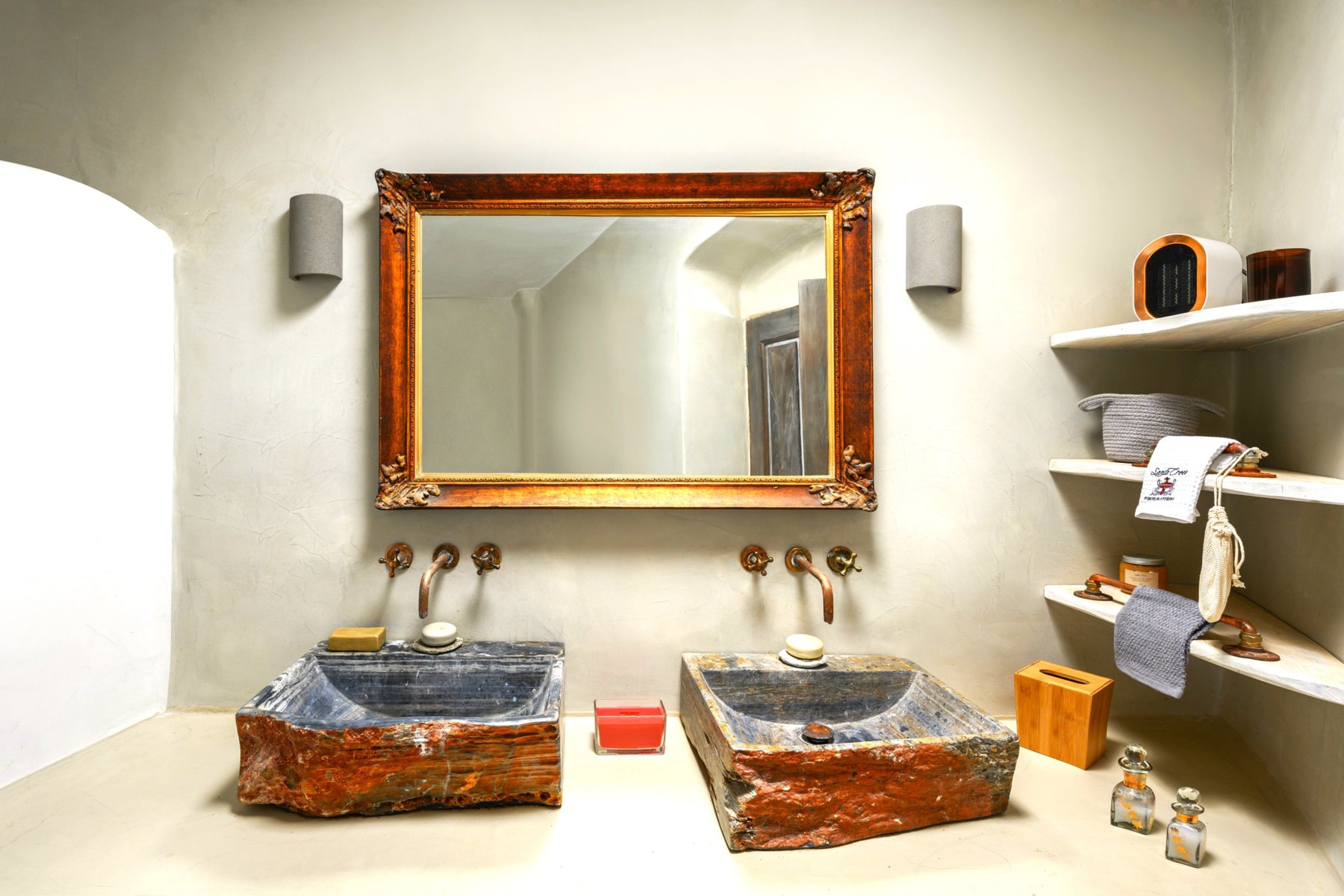
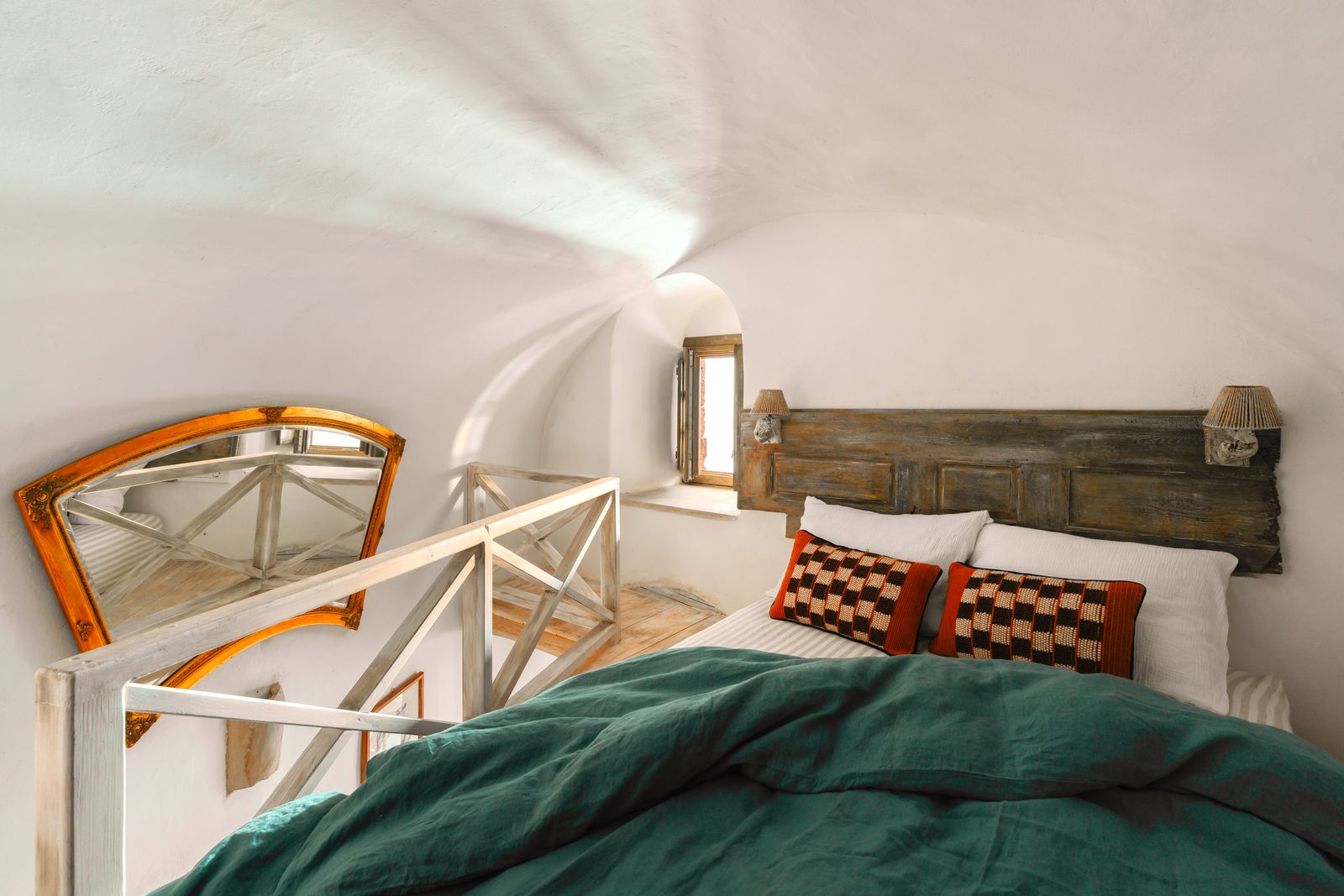
On the ground floor, two intimate mezzanines, once used for storing food, have been transformed into charming sleeping alcoves, each with a double bed tucked beneath a curved ceiling approximately 1.7 metres high. Cosy and secluded, they are particularly popular with children and with anyone who appreciates a tucked-away retreat. Taller guests may find the master bedroom or the double bedroom upstairs more comfortable. The first floor offers a second, largely self-contained living space, with its own kitchen and sitting room. A double bedroom preserves sections of its original exposed stone walls, while a spacious mezzanine provides additional sleeping space. The bathroom features an unusually generous bathtub, inviting long, unhurried moments of relaxation.
Outside, a jacuzzi awaits on the terrace. Another flight of stairs leads to the rooftop, where the panorama opens across the island's volcanic landscape, the volcano and the Aegean Sea. As evening falls, the lights of Fira and the distant villages create a different kind of spectacle, best enjoyed in the quietness of the Santorini night.
At Santa Croce, the experience is one of space, privacy and discovery. Each level unfolds its own character, offering spaces to gather and share, and quiet corners in which to withdraw, unwind and enjoy timeless intimacy.
A Hidden Retreat Beneath the House
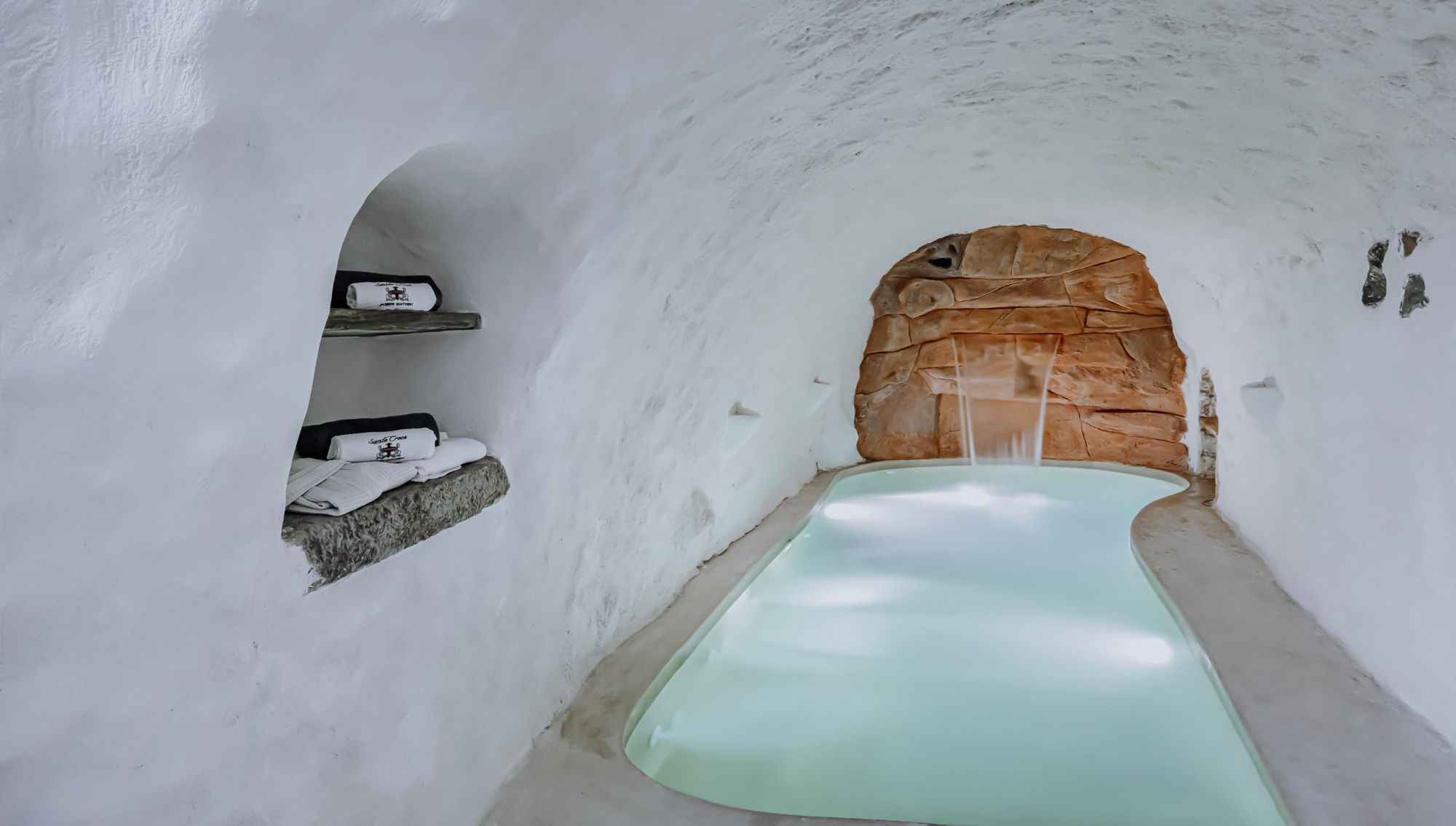
The most unexpected space at Santa Croce lies beneath the house itself. A worn stone staircase descends from the patio into a natural underground cave, where a heated indoor pool extends beneath the low, sculptural arches of white volcanic rock, with a jacuzzi corner at one end.
When the restoration began, the cave was little more than a dusty hollow, filled with builders' sacks. Today, turquoise water contrasts with the rugged stone, creating a secluded sanctuary where the sounds of the village fade away.
This hidden retreat makes Santa Croce a place to enjoy throughout the year. The house welcomes guests in every season, from the warmth of summer to the quiet of Christmas. When the air turns too cool for the terraces, the cave offers a sheltered, warm haven for swimming, unwinding and enjoying the slower rhythm of island life.
“It was never simply about restoring the house, but rather about bringing a forgotten home, a place with a soul patiently awaiting its resurrection, back to life.”The Santa Croce team
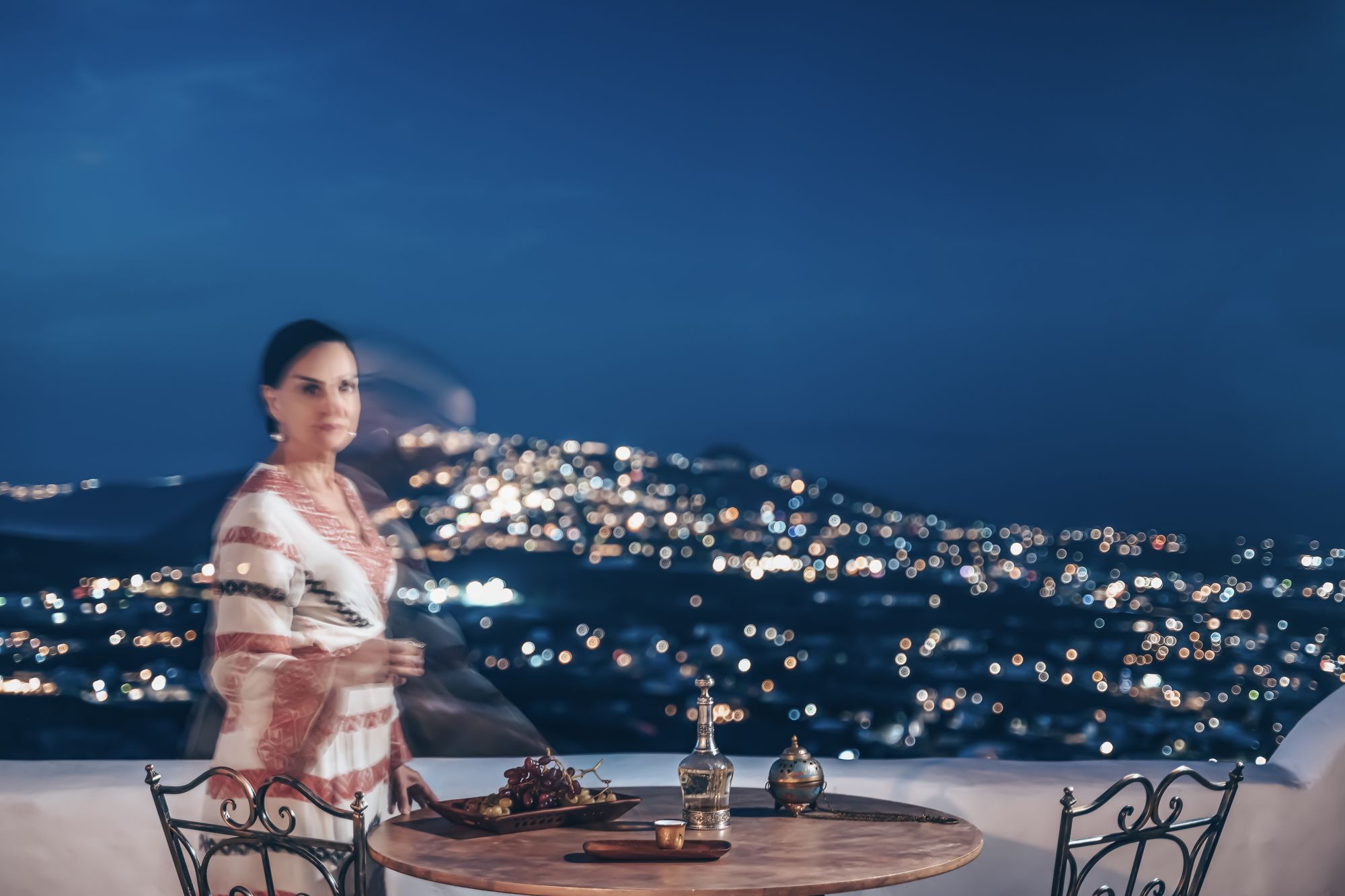
The Santa Croce Sunset Ritual
At Santa Croce, the evening begins with a ritual of its own. An hour before sunset, guests gather on the panoramic terrace to discover the distinctive wines of Santorini through a tasting of organic local varieties. As the light softens over the island and the sea, ancient Greek music and poetry, performed live and improvised in the moment, transform the gathering into an intimate encounter with the island's cultural heritage.
Known as the Santa Croce Sunset Ritual, this signature experience may continue with dinner prepared in the traditional wood-fired oven downstairs, bringing together local flavours, music and conversation in a setting unlike any other.
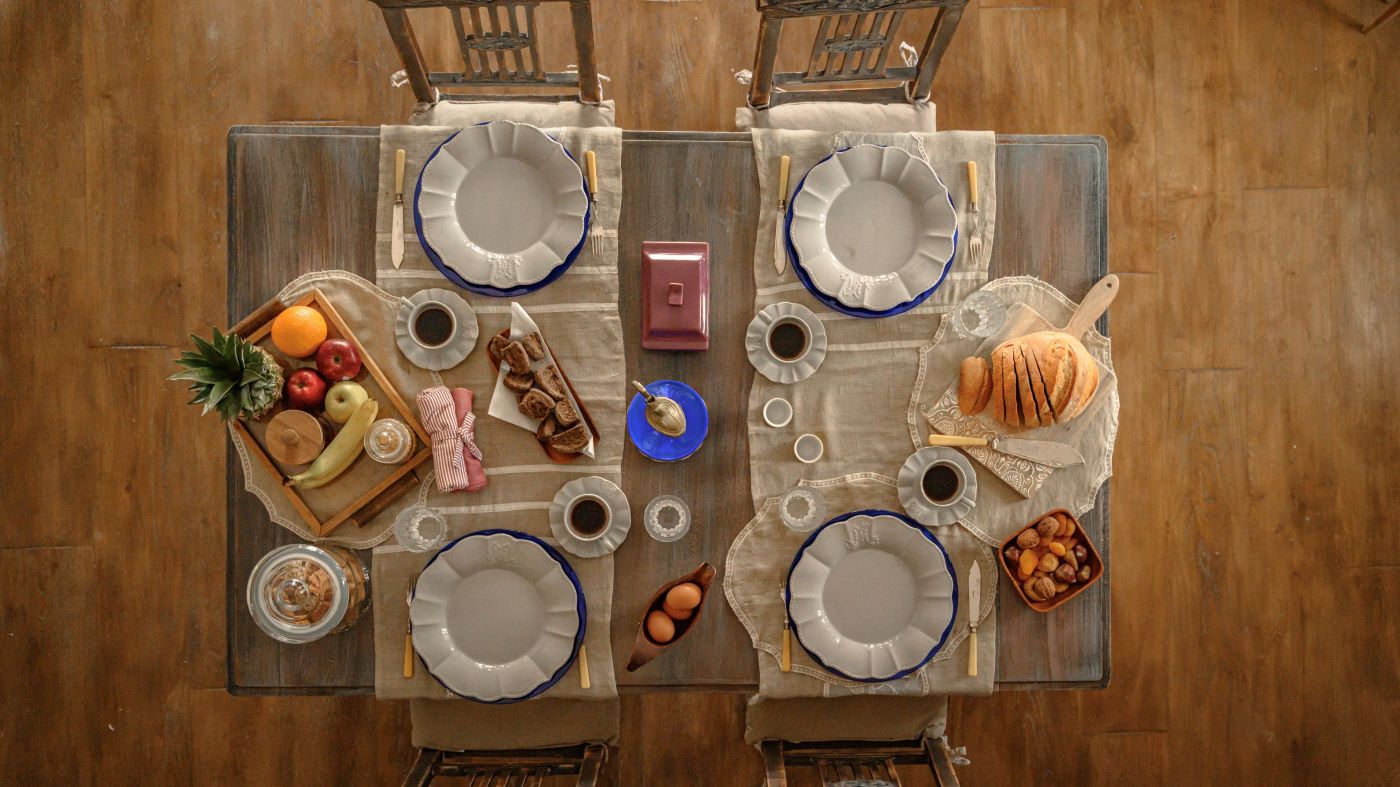
Beyond this daily ritual, each stay is tailored to the people who come together at the house and the experience they wish to share. Santa Croce's 'Experience Designer' creates bespoke itineraries, from private-chef breakfasts and dinners to hands-on cooking experiences centred on the island's traditional dishes and open-fire techniques. Guests may also enjoy massages, copper baths infused with essential oils, yoga on the terraces, private boat excursions, wine tastings and guided walks. Breakfast, half-board with a private cook, airport and port transfers, daily turndown and a butler service can all be arranged on request. Through its cultural patronage the house also welcomes artists to stay, create and exhibit their work. For those drawn to a slower pace of life, extended stays of a month or more are welcomed, offering the opportunity to embrace the rhythms of island living.
The approach is simple: tell the team who is coming and what brings you together, and the days can be shaped around your interests, whether you seek discovery, celebration, reconnection or quiet time away.
At the heart of this philosophy lies a belief in authentic local life, experienced at a gentler pace. Santa Croce was the first retreat venue in Santorini to receive the Mindful Escape Tourism Recognition, founded on five principles: connection, slowing down, simplicity, silence & space, and authenticity.
Privacy, tradition and spirituality are central to the house's character. More than a place to stay, Santa Croce offers an invitation to experience Santorini with greater depth and intention, making room not only for rest and pleasure, but also for reflection and reconnection.
Before you book
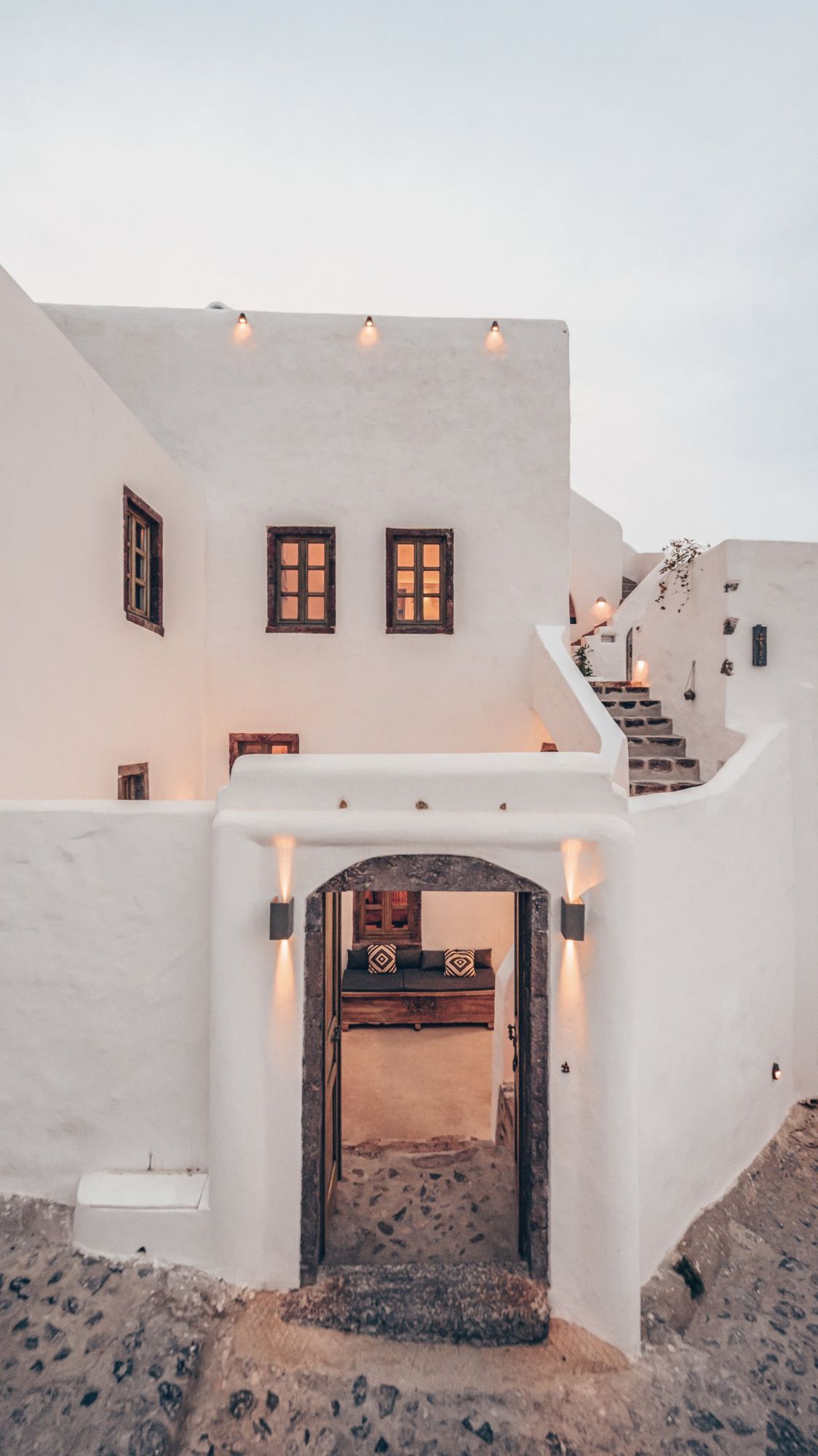
Santa Croce is part of Pyrgos, a medieval hilltop village that is discovered on foot. Its narrow lanes, stone steps and winding paths are integral to its character, and the house is no exception: cars cannot reach the front door. The nearest car park is approximately a three-minute walk uphill, with a gentler route through the village taking around six minutes.
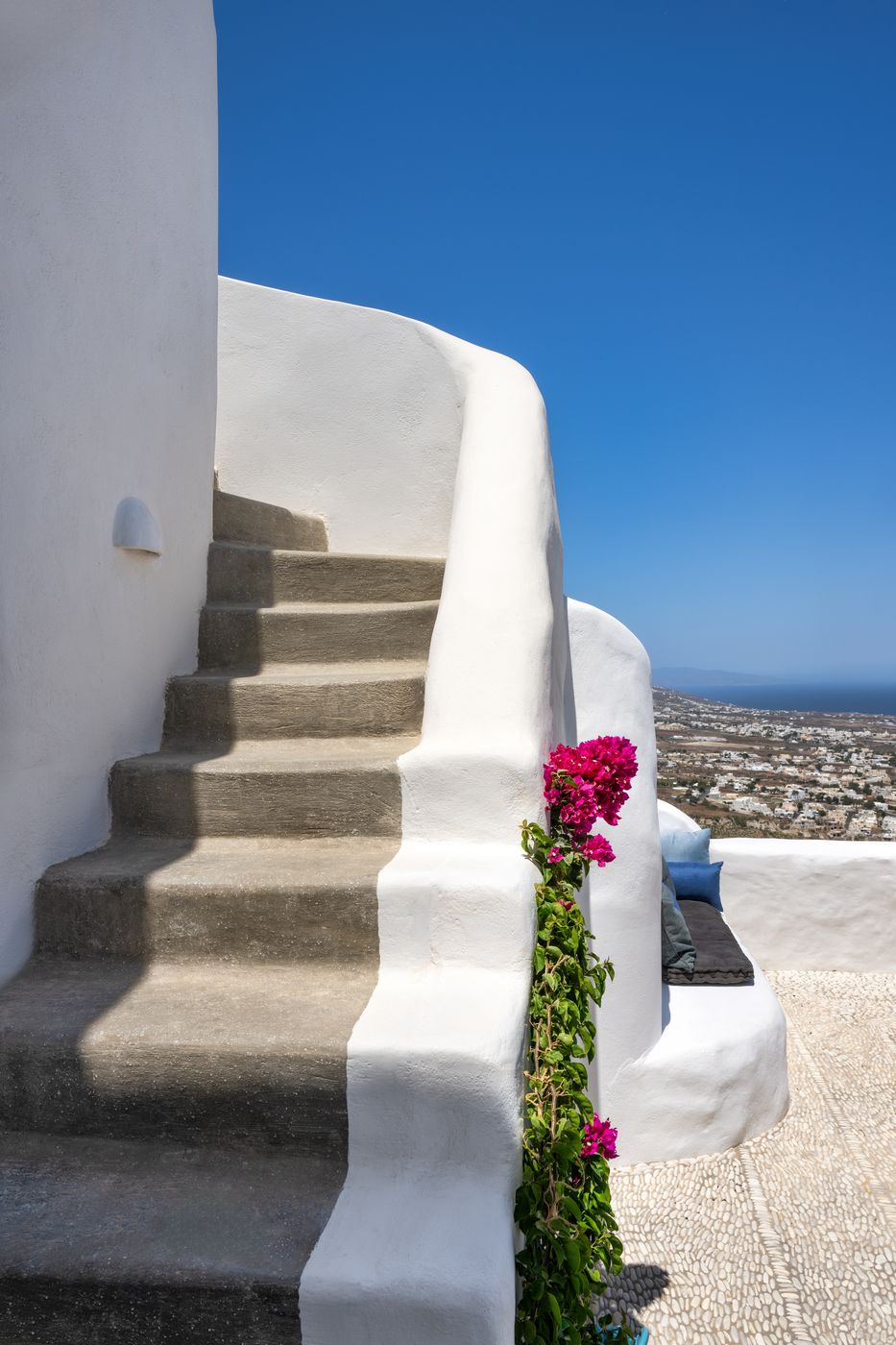
Inside, the house unfolds over four levels connected by traditional stone staircases. The mezzanine sleeping alcoves, with their low, curved ceilings, add to Santa Croce's distinctive character but may not suit everyone.
Because of the village's historic setting and the house's traditional architecture, Santa Croce is not suitable for guests with reduced mobility. We believe it is important to be clear about this before booking, so that every guest can make an informed choice.
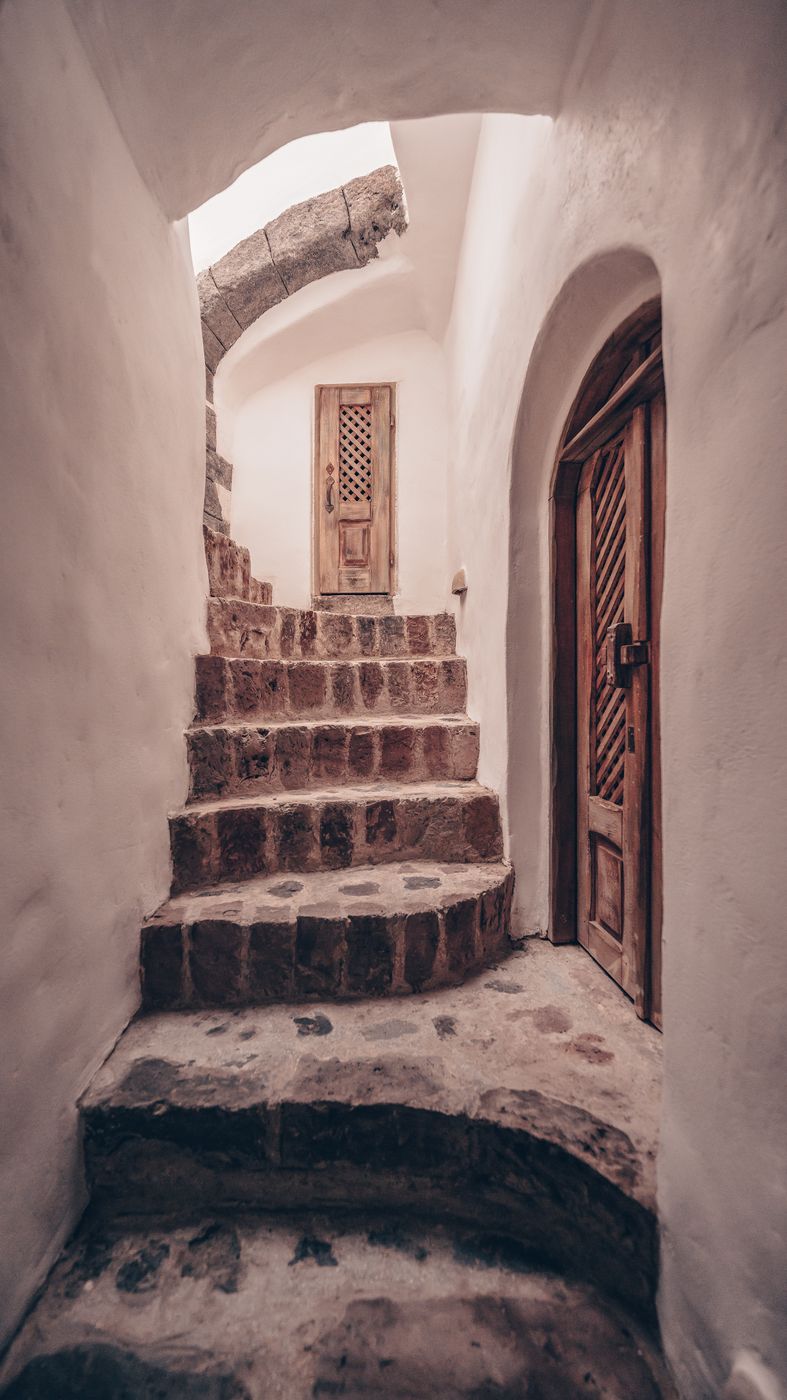
For those comfortable with steps, however, moving through the house is part of its charm. Each ascent reveals a new perspective, another intimate corner or another view across the rooftops and volcanic landscape of Santorini.
Why we chose Santa Croce
Many places in Santorini offer extraordinary views. Few offer a history you can inhabit. Santa Croce was painstakingly rebuilt by hand, stone by stone, with love and passion over several years.
That devotion is woven into every detail; from the vaulted traditional ceilings and carefully preserved objects to the pool carved into the rock. Santa Croce is a home for those who wish to discover the soul of a village rather than simply photograph it, and who understand that the deepest connections take time.
At a glance
- Where
- Pyrgos (Pyrgos Kallistis), Santorini 84700, Greece, beneath the Kastelli
- Size
- Around 240 m² inside and 100 m² of terraces, over four levels
- Sleeps
- Up to 10, in five double beds over two floors featuring a master bedroom, a double room and three mezzanines
- On site
- Heated cave pool with jacuzzi corner, outdoor jacuzzi, roof terrace, two kitchens including a wood-fired oven, fireplace
- The stay
- Exclusive use by one group, open all year, long and monthly stays possible
- Getting there
- Car-free lanes; parking a 3 to 6 minute walk away. Not suitable for guests with reduced mobility
- Best for
- Families and friends who like history, walking and slow evenings on a terrace with panoramic views over the Aegean Sea
Questions travellers ask
What makes Historical Villa Santa Croce different from other accommodations in Santorini?
Historical Villa Santa Croce is a restored historic multi-level Venetian residence in Pyrgos, Santorini, carefully renovated under the supervision of the Greek Ministry of Culture. It preserves authentic Venetian and Cycladic architecture while offering refined modern comfort. The villa offers 240 sqm of interior space for up to 10 guests, expansive terraces, a cave pool, and an outdoor jacuzzi across a four-level layout designed for both privacy and shared living. Unlike newly built luxury villas in Santorini, Santa Croce offers a living heritage experience, where history, architecture, and contemporary comfort come together in a unique cultural stay in Santorini.
What kind of views can guests expect from Historical Villa Santa Croce in Pyrgos?
From its terraces and sundeck, Historical Villa Santa Croce offers panoramic 360-degree views over Santorini and the Aegean Sea. Guests enjoy sunrise and sunset views, sea panoramas, and island-wide perspectives throughout the day. Located in Pyrgos, the highest village in Santorini, the villa provides one of the most elevated and scenic viewpoints on the island.
How private is a stay at Historical Villa Santa Croce?
Privacy is a defining feature of the villa. Historical Villa Santa Croce is rented exclusively to one group at a time, with no shared spaces. Guests enjoy complete privacy, discretion, and tranquillity, making it ideal for couples, families, or private groups seeking an exclusive villa rental in Santorini.
Where is Historical Villa Santa Croce located in Santorini?
Historical Villa Santa Croce is located in Pyrgos, one of the most authentic medieval villages in Santorini. Its central location offers easy access to beaches, wineries, archaeological sites, and cultural landmarks, while providing a peaceful alternative to Fira and Oia.
Why choose Pyrgos as a location in Santorini?
Pyrgos is one of Santorini’s most authentic and picturesque villages. It offers a slower pace of life, traditional character, and panoramic views, while remaining centrally located. From Pyrgos, guests can easily reach beaches, wineries, archaeological sites, and major attractions within a short drive, making it an ideal base for exploring Santorini.
How do guests arrive at Villa Santa Croce?
Historical Villa Santa Croce is easily accessible by car from Santorini Airport (JTR) and Athinios Port. Guests can arrange private transfers, taxis, or car rentals in Santorini via the concierge service. Detailed arrival instructions are provided in advance, and a personal meet-and-greet service ensures a smooth and stress-free check-in experience.
Who welcomes guests upon arrival at the villa?
Guests are personally welcomed by a dedicated concierge at Historical Villa Santa Croce. The concierge introduces the villa, shares its story, and remains available throughout the stay. The service is discreet, warm, and highly personalised, ensuring guests feel at home from the first moment.
What services and personalised experiences are offered at Villa Santa Croce?
Historical Villa Santa Croce is an experience-led mindful escape retreat in Santorini, defined by its signature concept: The Santa Croce Sunset Ritual – Awakening Senses, Embracing History. Guests enjoy curated experiences including private wood-fired dining, guided cultural tours, wellness sessions, wine and gastronomic tastings, and artistic workshops. Tailor-made island itineraries are also available, all adapted to each guest’s rhythm in Santorini.
What is the Santa Croce Sunset Ritual?
The Sunset Ritual at Historical Villa Santa Croce is a signature immersive experience combining wine tasting, live ancient Greek music, poetry, and storytelling. Guests are invited to participate by interacting with musical instruments, creating a mindful, sensory experience rooted in cultural connection. As the sun sets over Santorini, the experience concludes in silence, offering a rare moment of presence. An optional private dinner in the traditional wood-fired oven may follow.
Does Villa Santa Croce offer wellness and relaxation spaces?
Yes. The villa features a cave-style indoor pool, jacuzzi, and tranquil terraces, ideal for wellness, meditation, and relaxation. These spaces support a slow-living experience in Santorini, encouraging guests to unwind and reconnect.
Are massage and spa treatments available at Villa Santa Croce?
Yes. Historical Villa Santa Croce offers in-villa massage and spa treatments in complete privacy. Guests can enjoy personalised wellness experiences in the comfort of their private villa.
Can Villa Santa Croce host weddings or private events?
Yes. Historical Villa Santa Croce is an exclusive venue for intimate weddings, elopements, anniversaries, and private celebrations in Santorini. Its historic architecture, panoramic views, and privacy create a unique setting for memorable events.
Do you offer bespoke wedding or event planning services?
Yes. The villa collaborates with trusted local partners to offer bespoke event planning in Santorini, including décor, catering, photography, music, and tailored guest experiences.
Who is Santa Croce ideal for?
Historical Villa Santa Croce is ideal for travellers seeking a private luxury villa experience in Santorini. It welcomes couples, families, and small groups, as well as guests seeking calm, privacy, slow living, heritage, architecture, and an authentic mindful escape.
Is Santa Croce open year-round and does it offer monthly retreat stays?
Historical Villa Santa Croce is open year-round, offering long-stay and monthly retreat experiences in Santorini, including winter and festive seasons. During the off-season, the island becomes quieter and more atmospheric, allowing for a deeper connection with its authentic rhythm and slow living experience.
Is Villa Santa Croce suitable for guests with limited mobility?
No. Cars cannot reach the villa, the nearest parking is a three- to six-minute walk, and the house is spread over four levels joined by traditional stone stairs. Because of the village's historic setting and the house's traditional architecture, it is not suitable for guests with reduced mobility.
How do I book Villa Santa Croce?
Villa Santa Croce is rented to one group at a time and is open all year. Book directly through the villa's online reservation system at santacroce-santorini.com, or email info@santacroce-santorini.com.