RAAS Jodhpur
An 18th-century haveli and a modern hotel of hand-cut stone, sitting beneath Mehrangarh Fort in the walled city of Jodhpur.
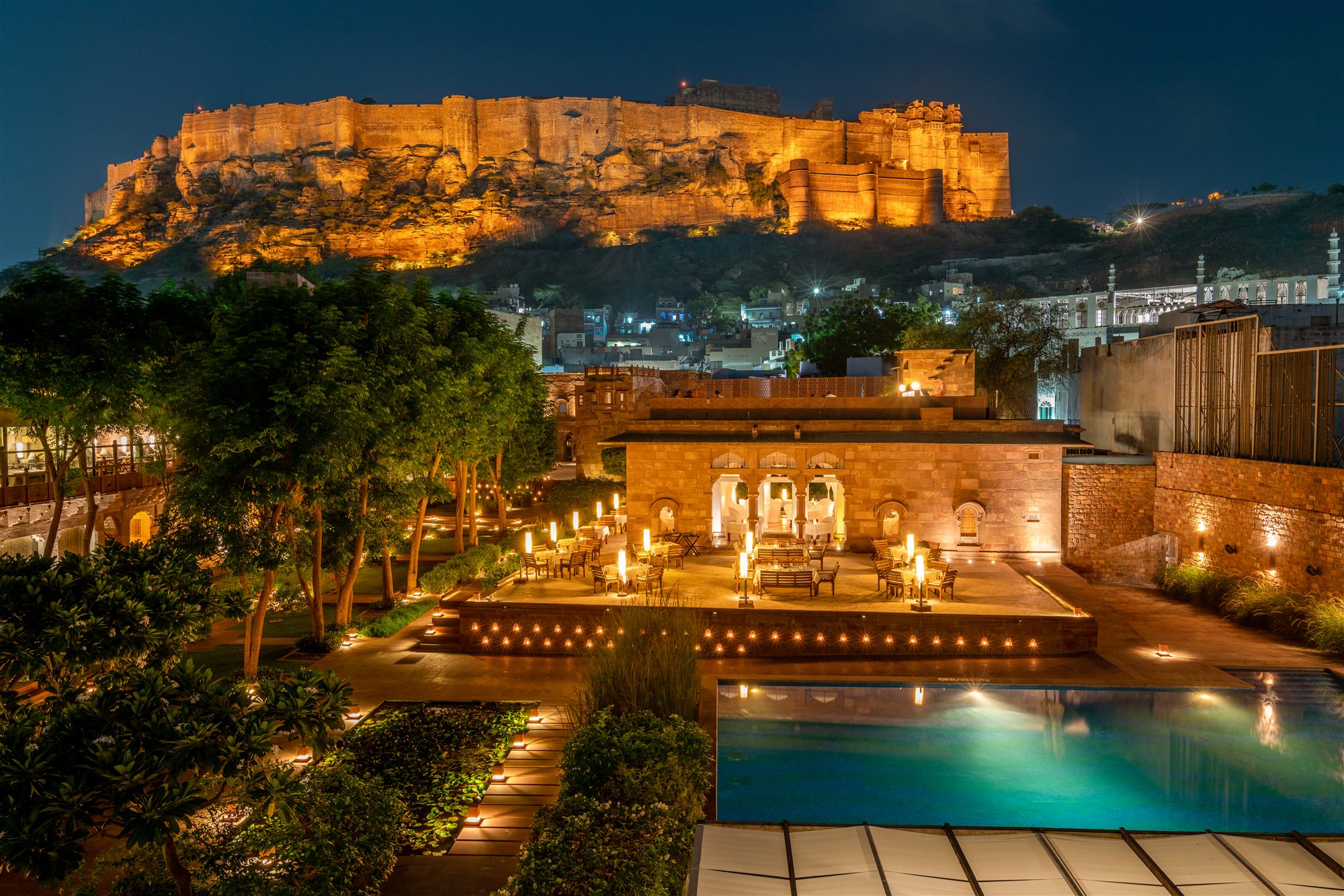
Few hotels can claim a view like this one. Mehrangarh Fort rises straight out of the rock above Jodhpur's old city, and RAAS Jodhpur sits at its foot, inside the walls of the Blue City. By day the fort is a wall of red sandstone; by night it glows gold above the pool, and from almost every room in the hotel it fills the window.
RAAS is a luxury boutique hotel in two parts: a restored nobleman's haveli, which is part of the hotel itself, and new buildings that borrow its stone, its colour and its craft. It has become one of the most admired examples of contemporary Indian architecture, and one of the most compelling reasons to stay in the old city rather than look at it from outside.
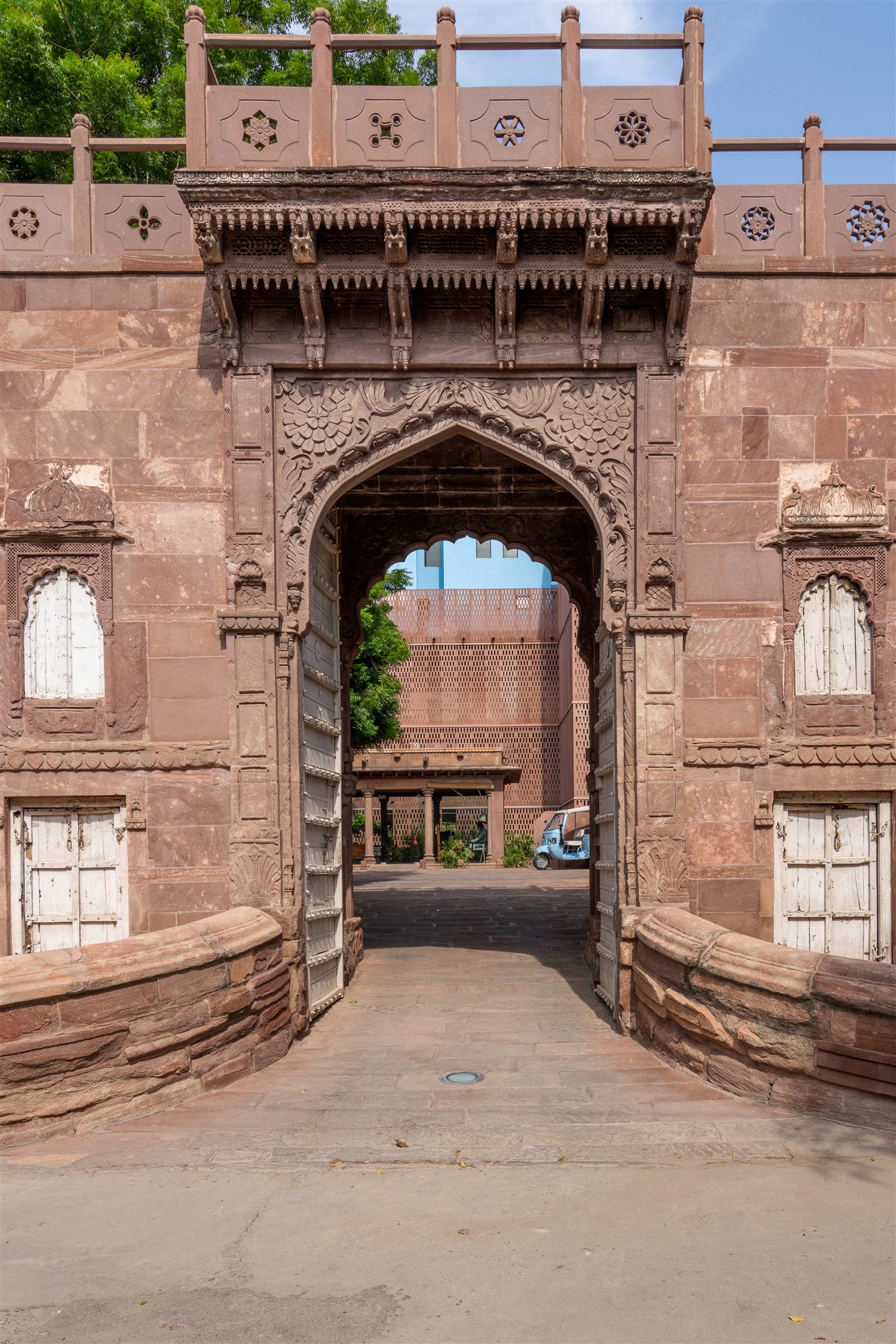
Through the old gate
You arrive the way Jodhpur's nobles once did, through a carved sandstone gateway in the lane beside Tunwarji ka Jhalra, the old city's historic stepwell. One moment there are motorbikes, temple bells and the hum of the old city; the next, a quiet courtyard and the smell of warm stone.
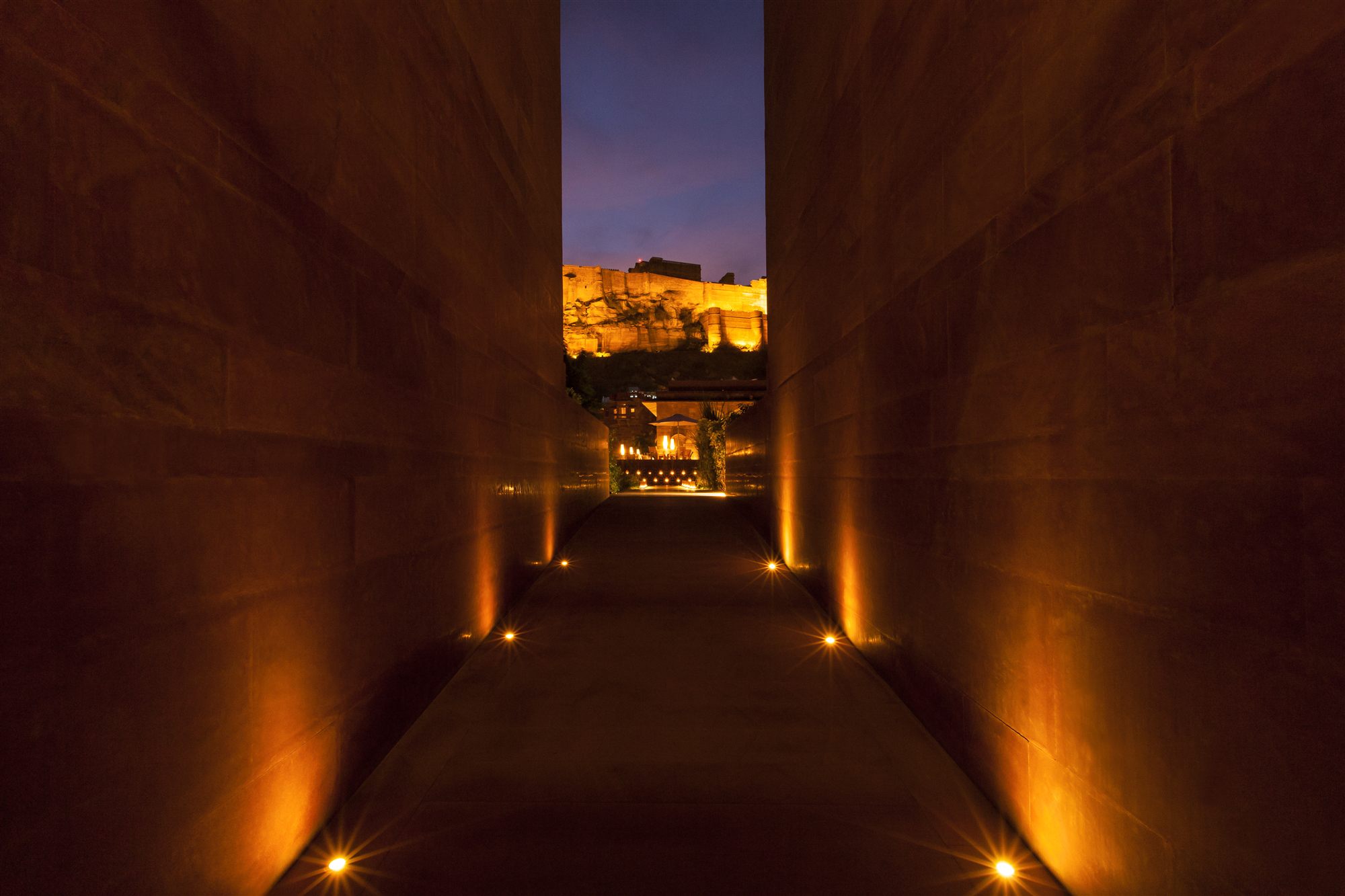
Then the hotel shows its hand. A long passage of red sandstone opens at the far end onto the fort itself, perfectly framed, like a painting hung at the end of a gallery.
A nobleman's house, brought back to life
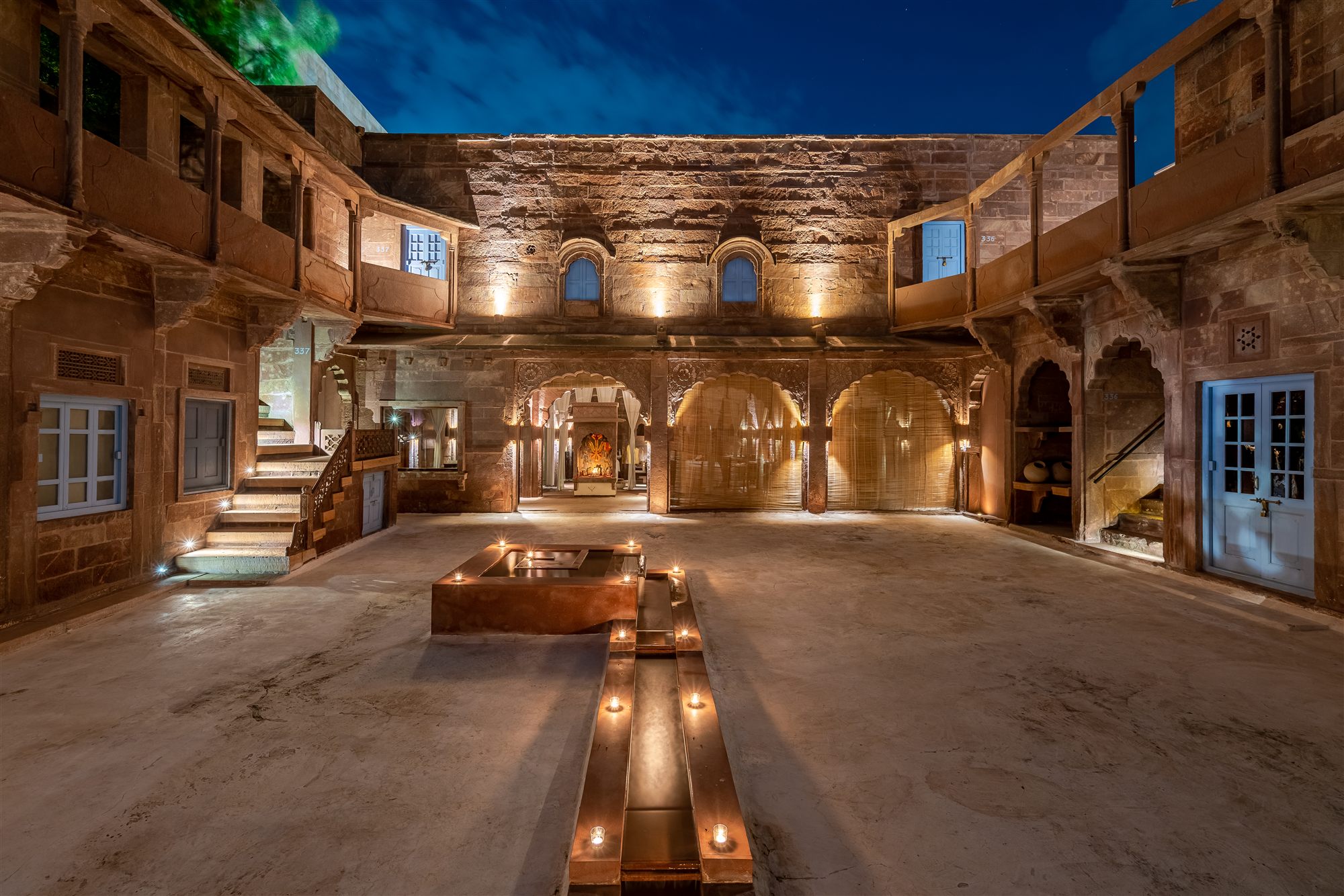
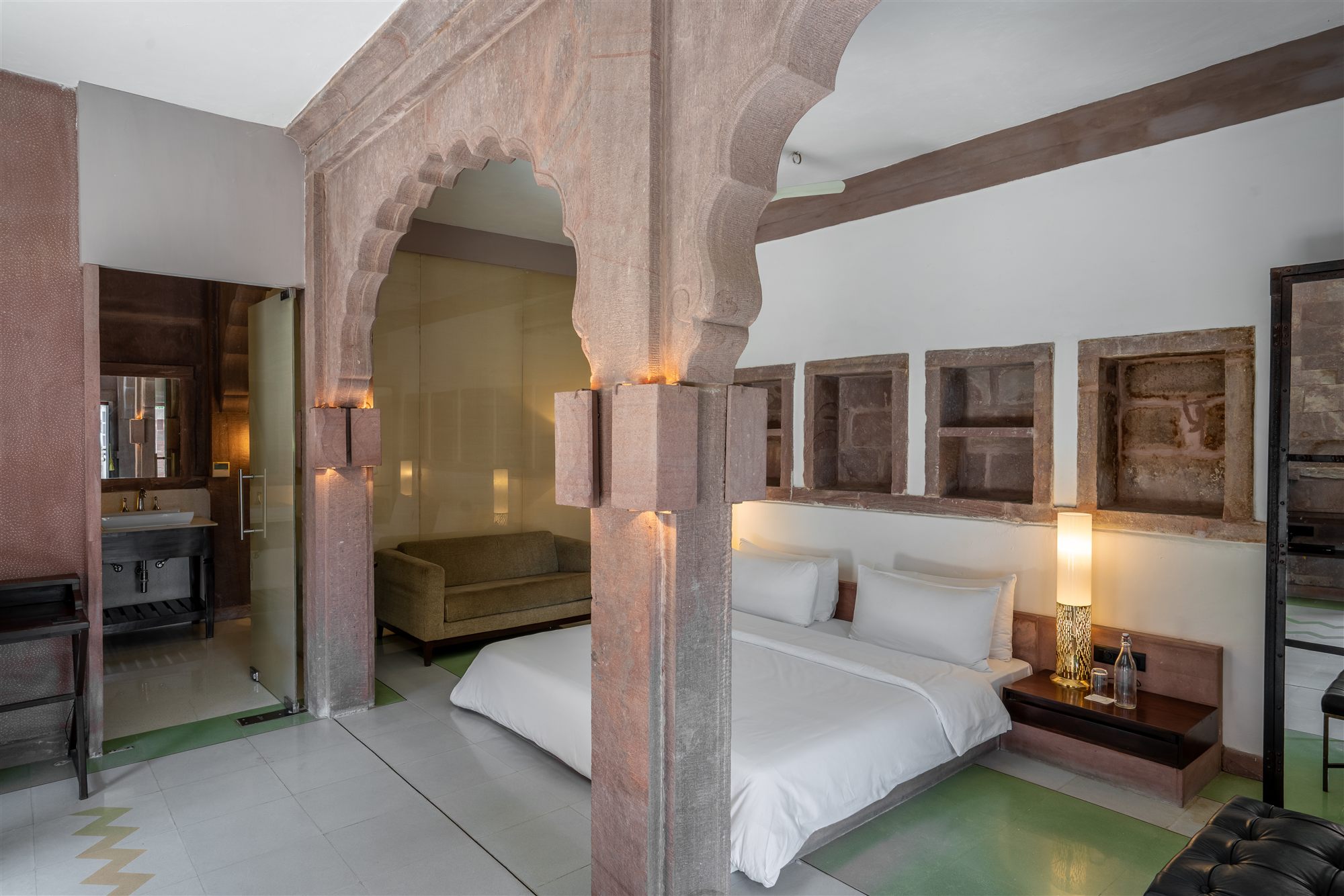
At the heart of RAAS are three 18th-century buildings that once formed the home of a Marwari nobleman. They were restored by traditional craftspeople using the materials of their time, lime mortar and Jodhpur's red sandstone, and today they hold the hotel's three heritage suites, its restaurants and its spa.
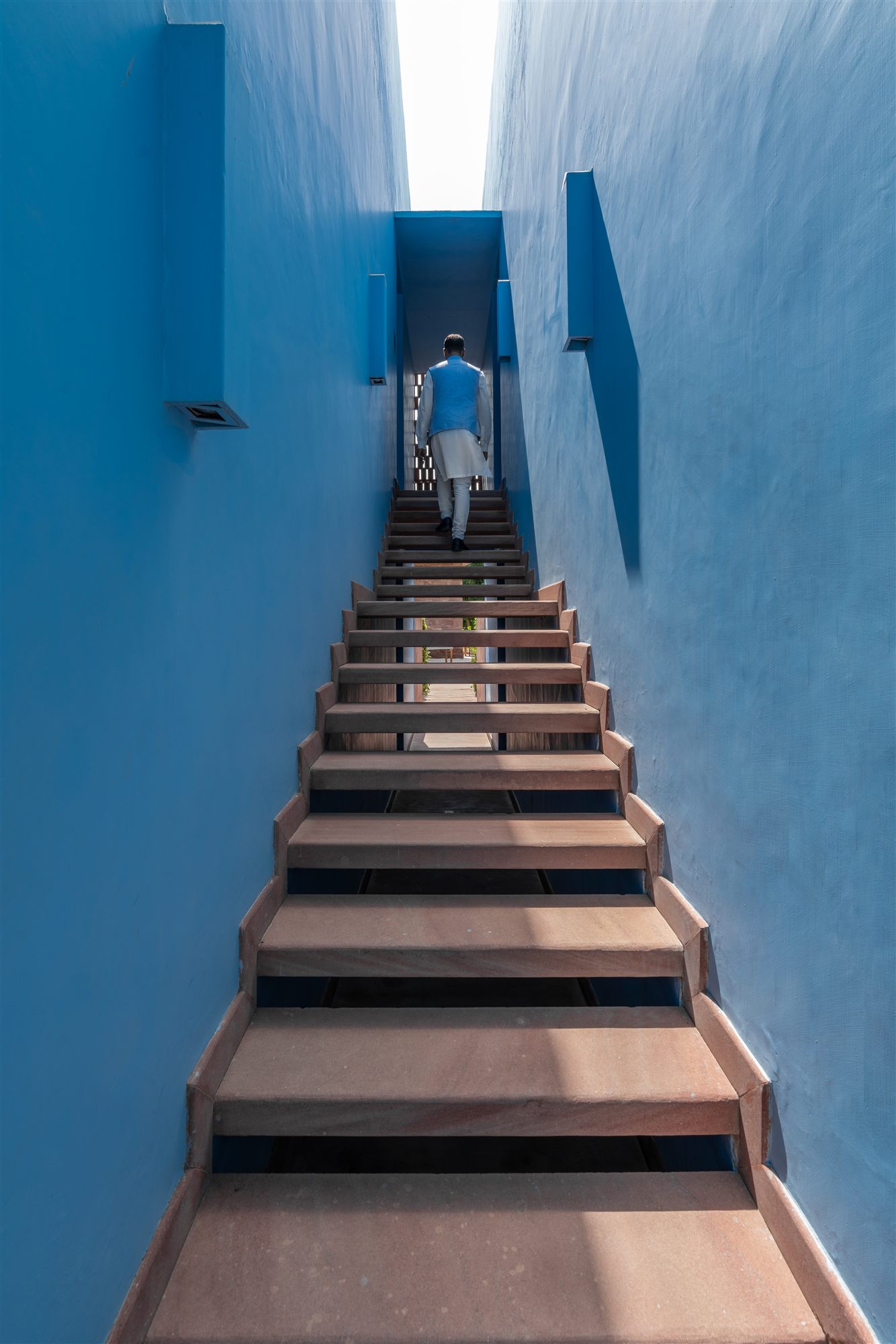
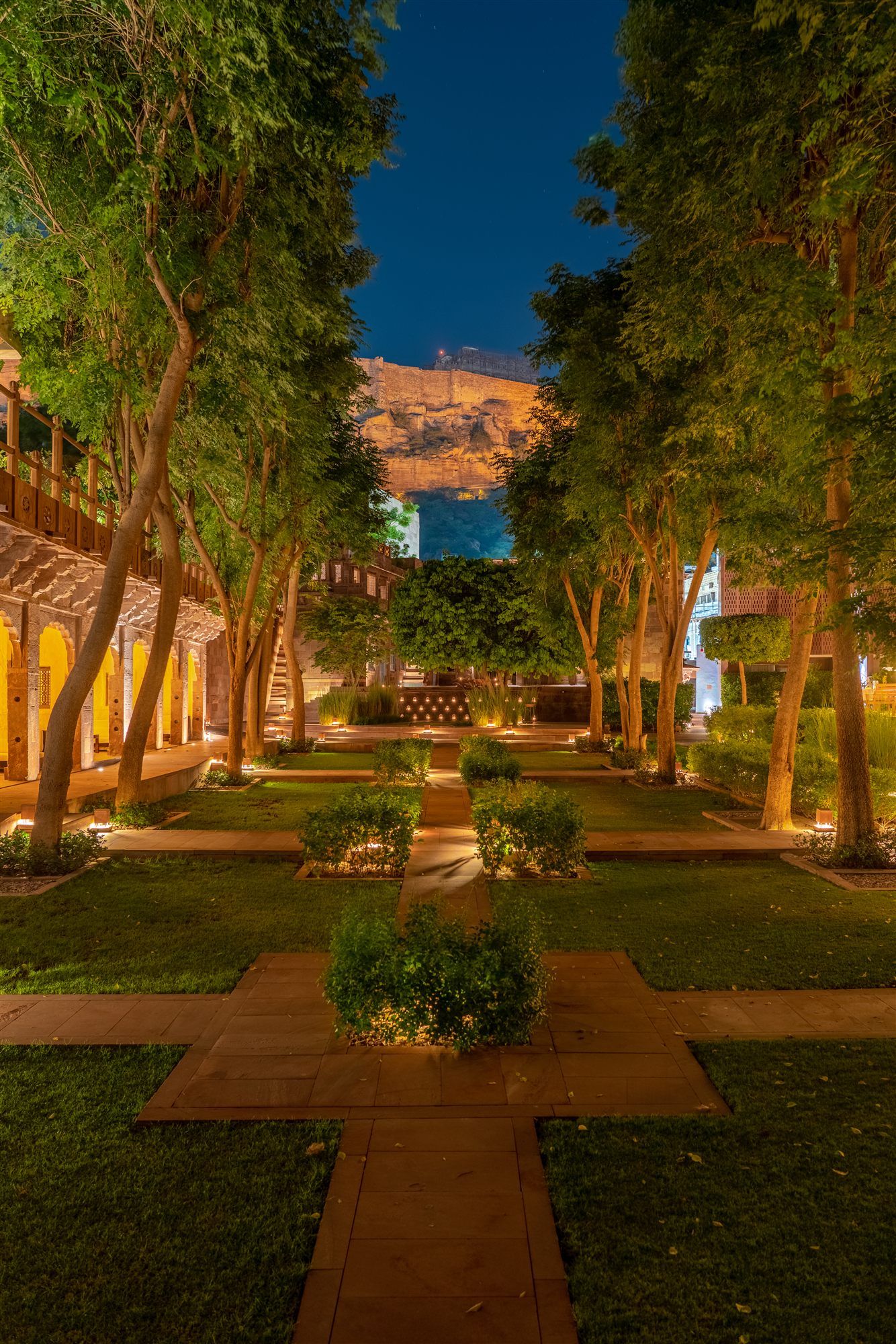
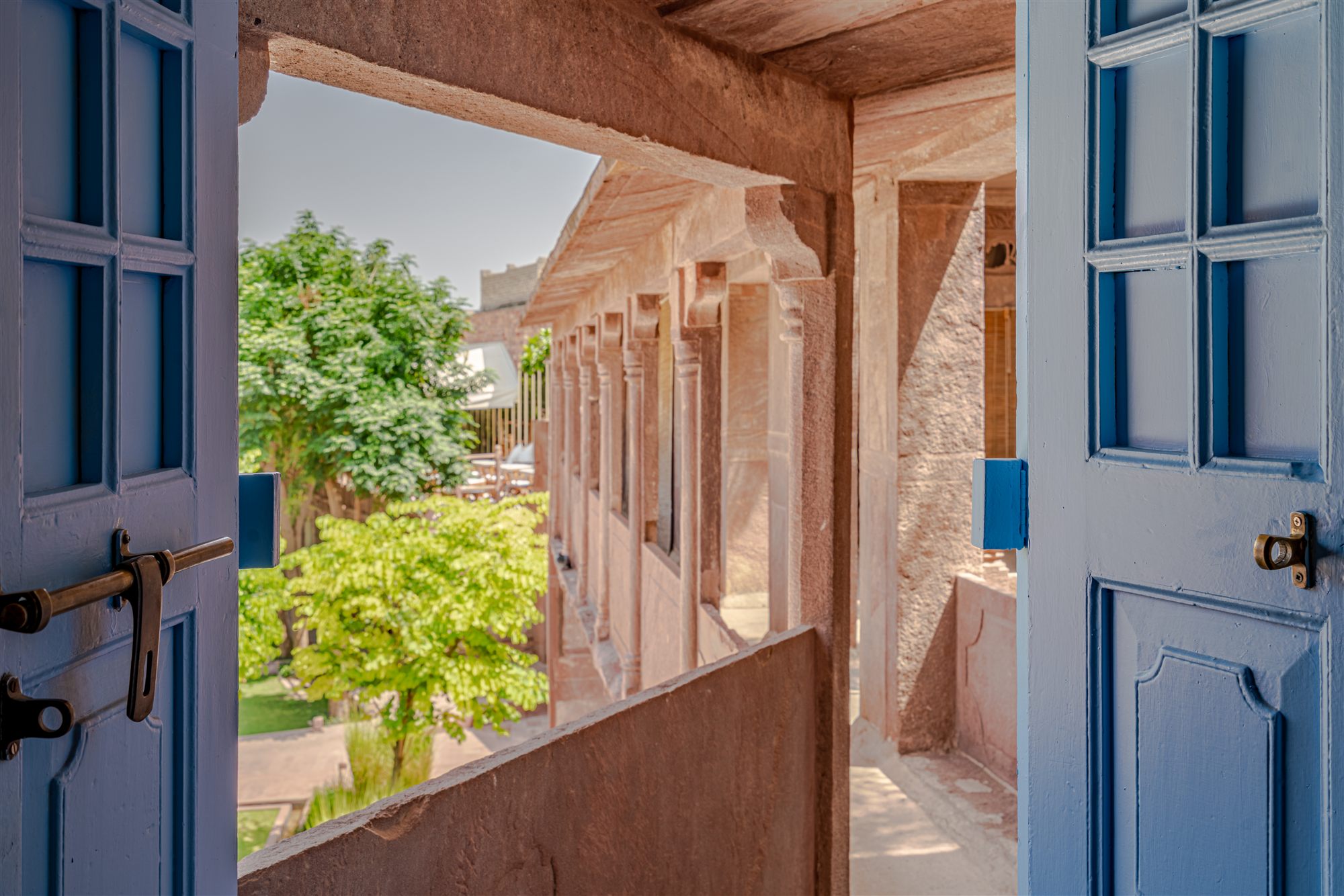
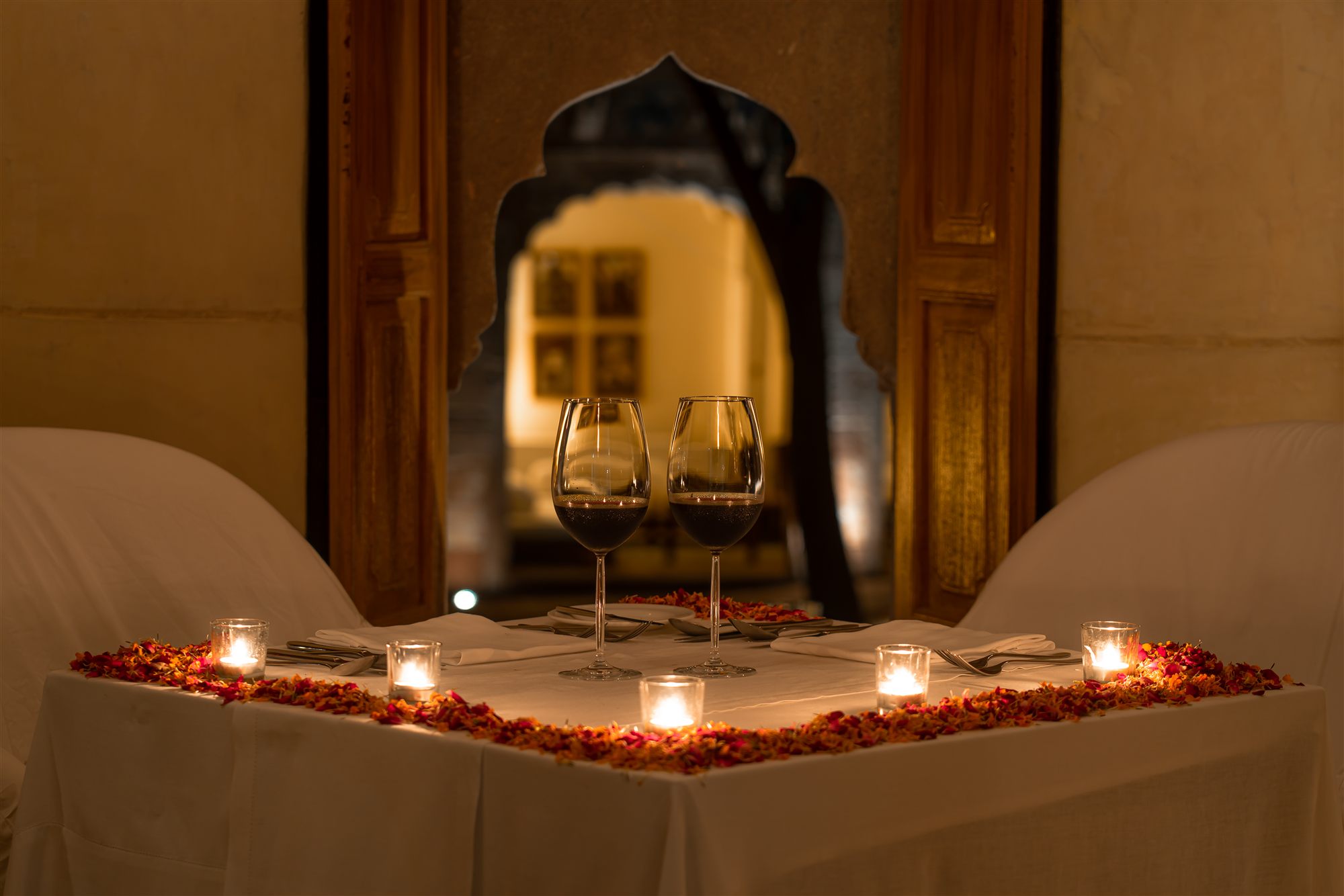
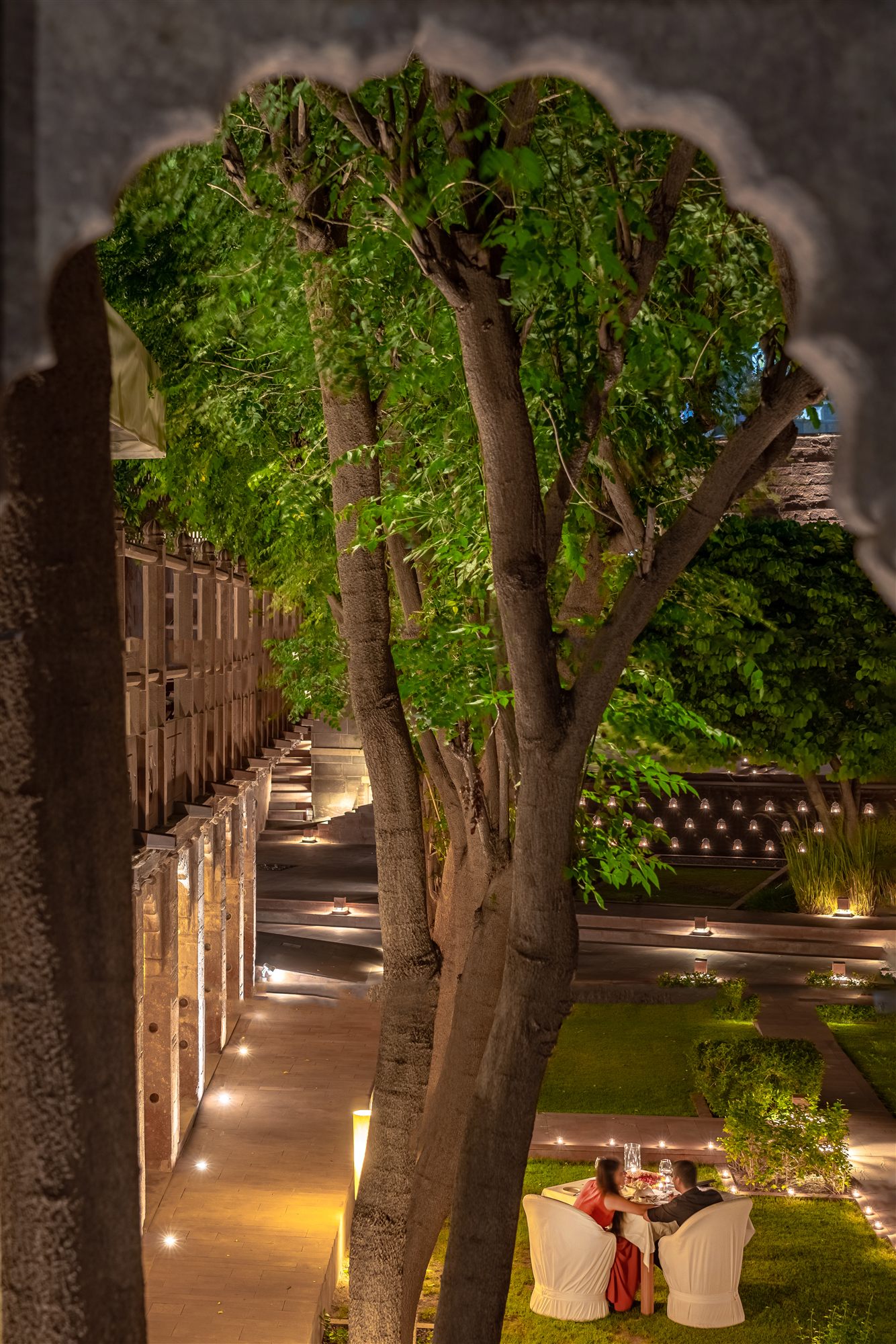
The old courtyard is lit by candles at night. Scalloped arches lead into deep, golden alcoves, carved balconies look down from above, and painted blue doors open onto shaded verandas, the same blue that gives Jodhpur its name.
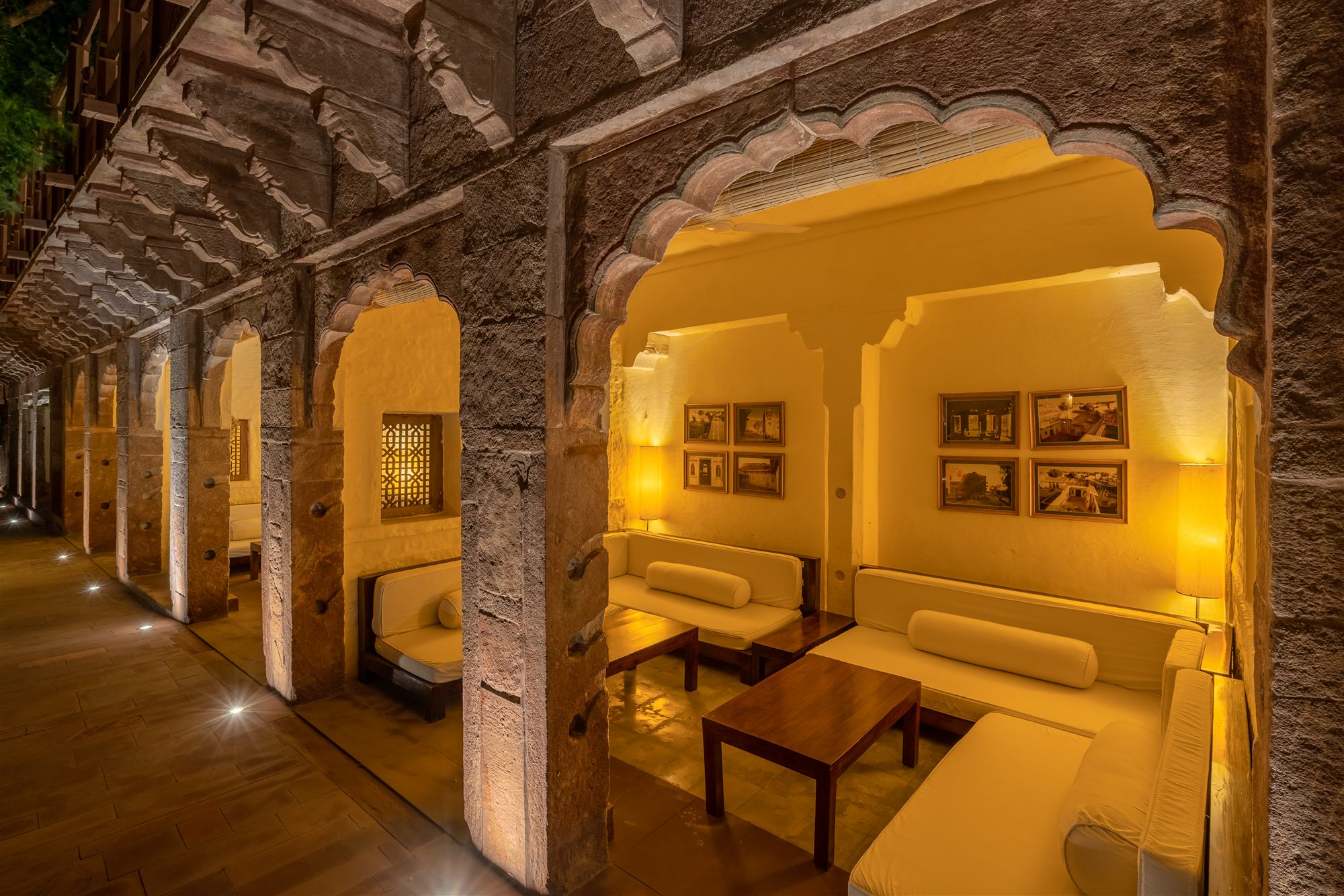
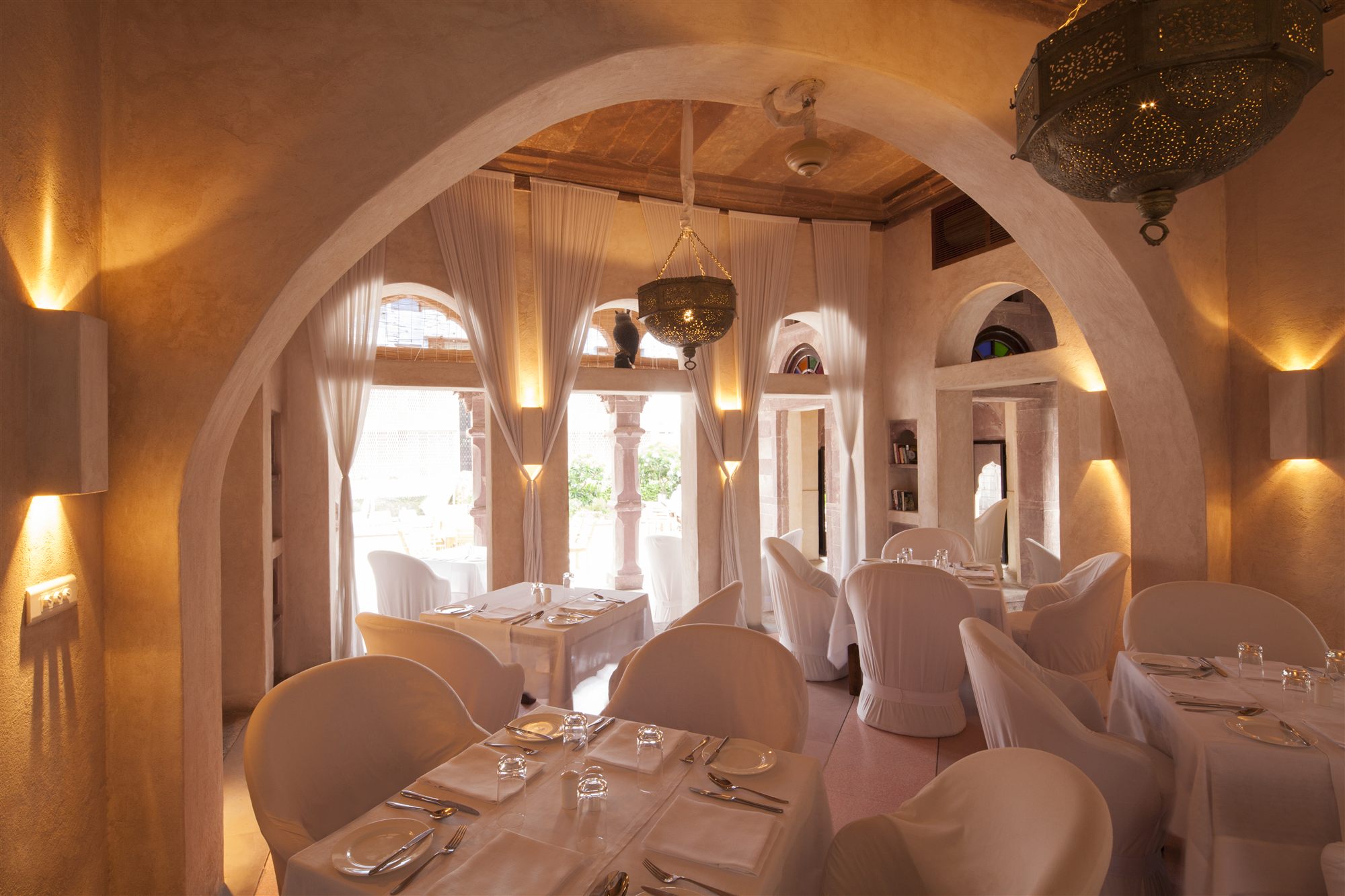
The finest room in the house is the Baradari, the twelve-pillared hall where the nobleman once entertained his guests. It is now the hotel's all-day restaurant: white, arched and softly lit, a place where Rajasthani, Asian and Mediterranean dishes share the table.
A screen of hand-cut sandstone
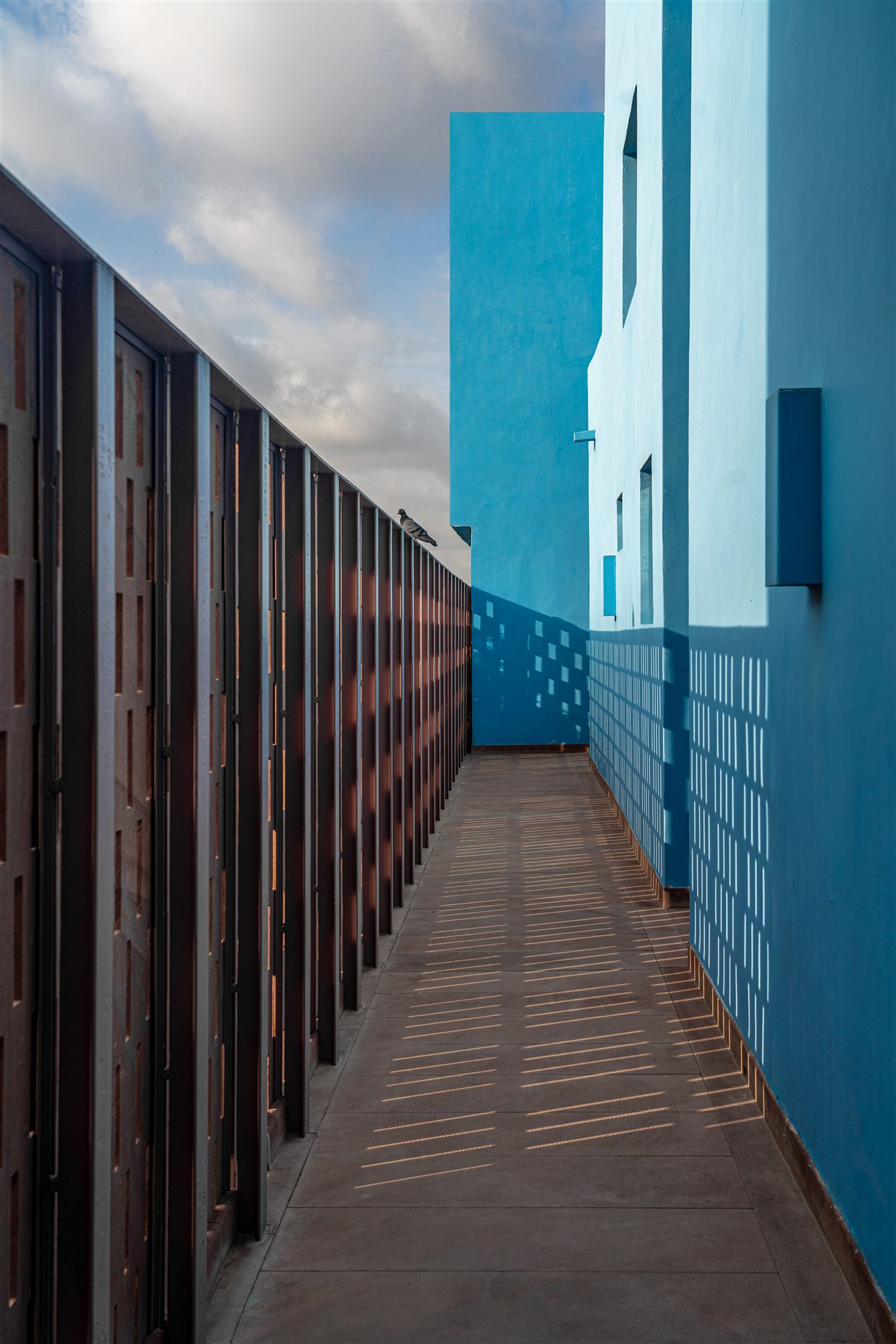
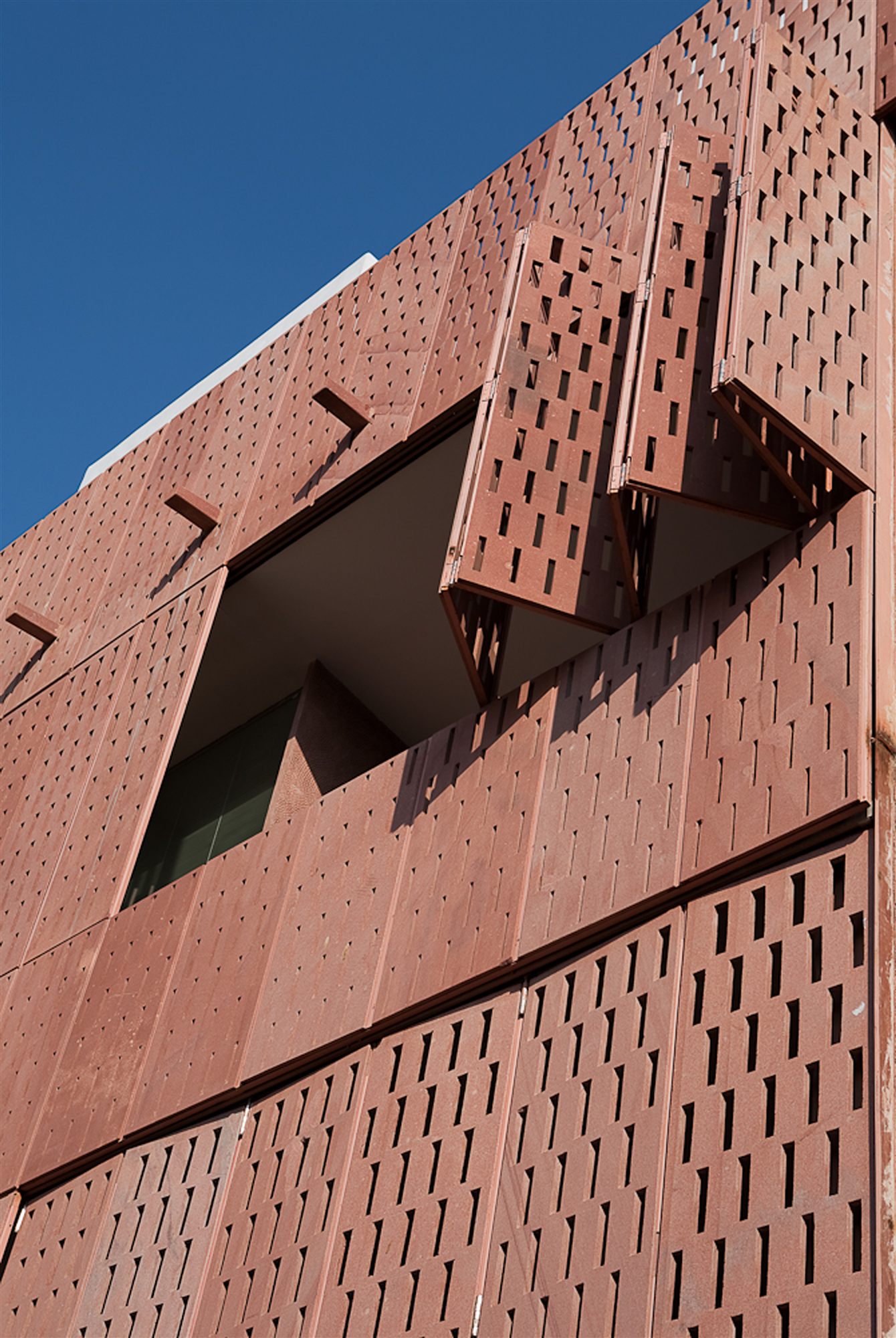
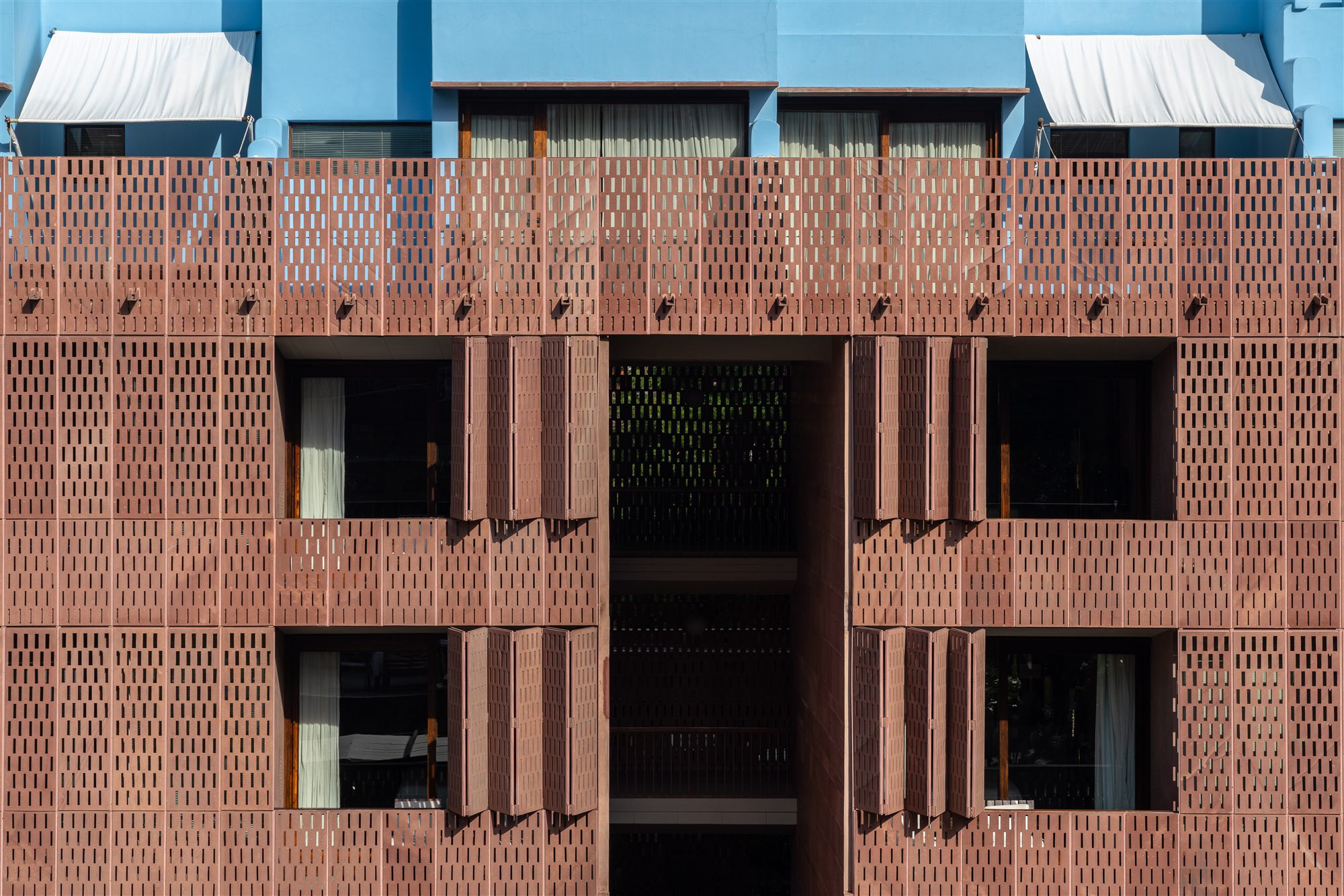
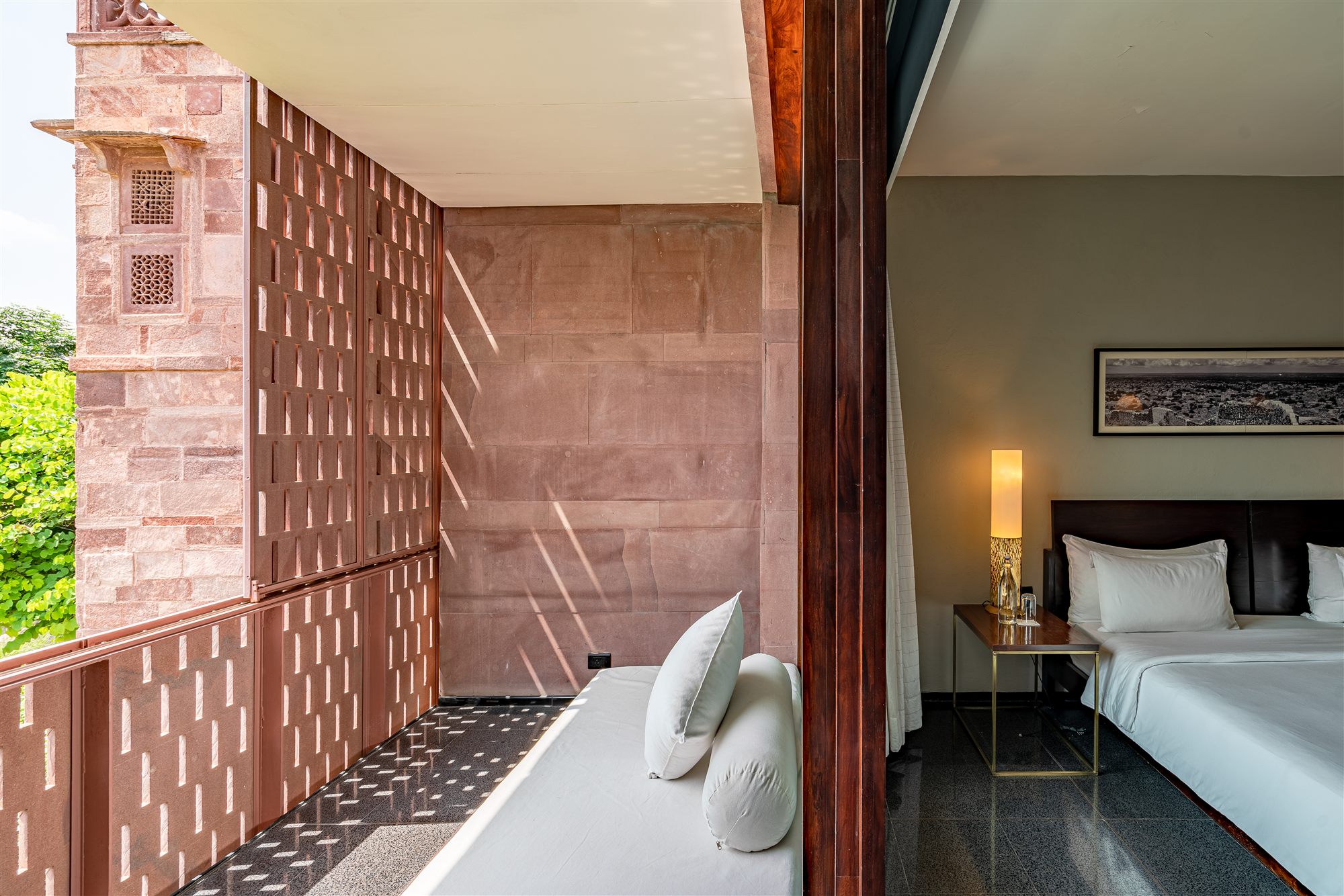
Around the haveli, the architects of Studio Lotus built something entirely new and somehow entirely at home. The new wings are wrapped in screens of local sandstone, cut by hand into thousands of narrow openings, a modern take on the jharokha lattices found across Rajasthan. More than a hundred artisans cut the lattices, poured the terrazzo floors and made the furniture, most of it in teak, with the newer wardrobes in rosewood.
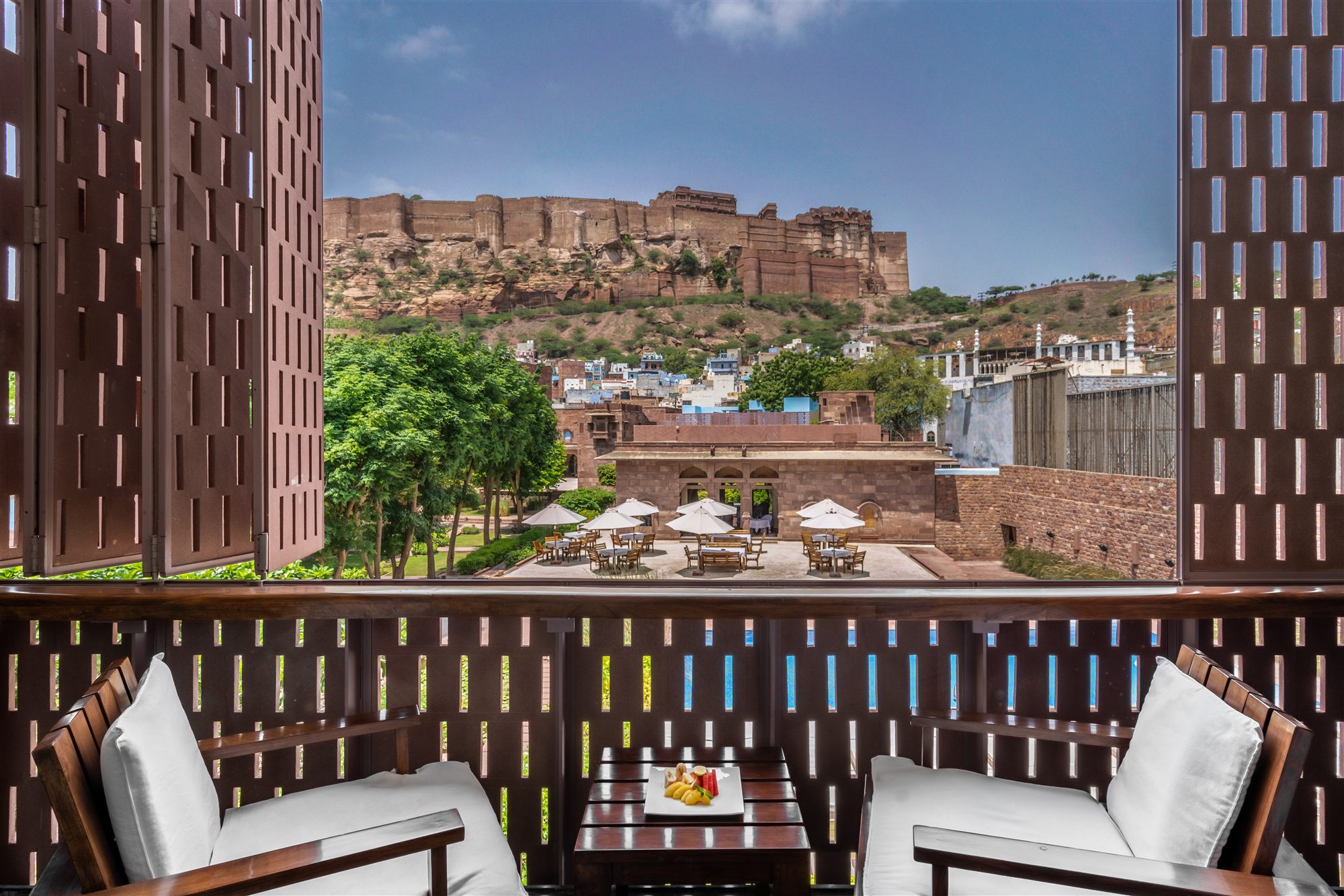
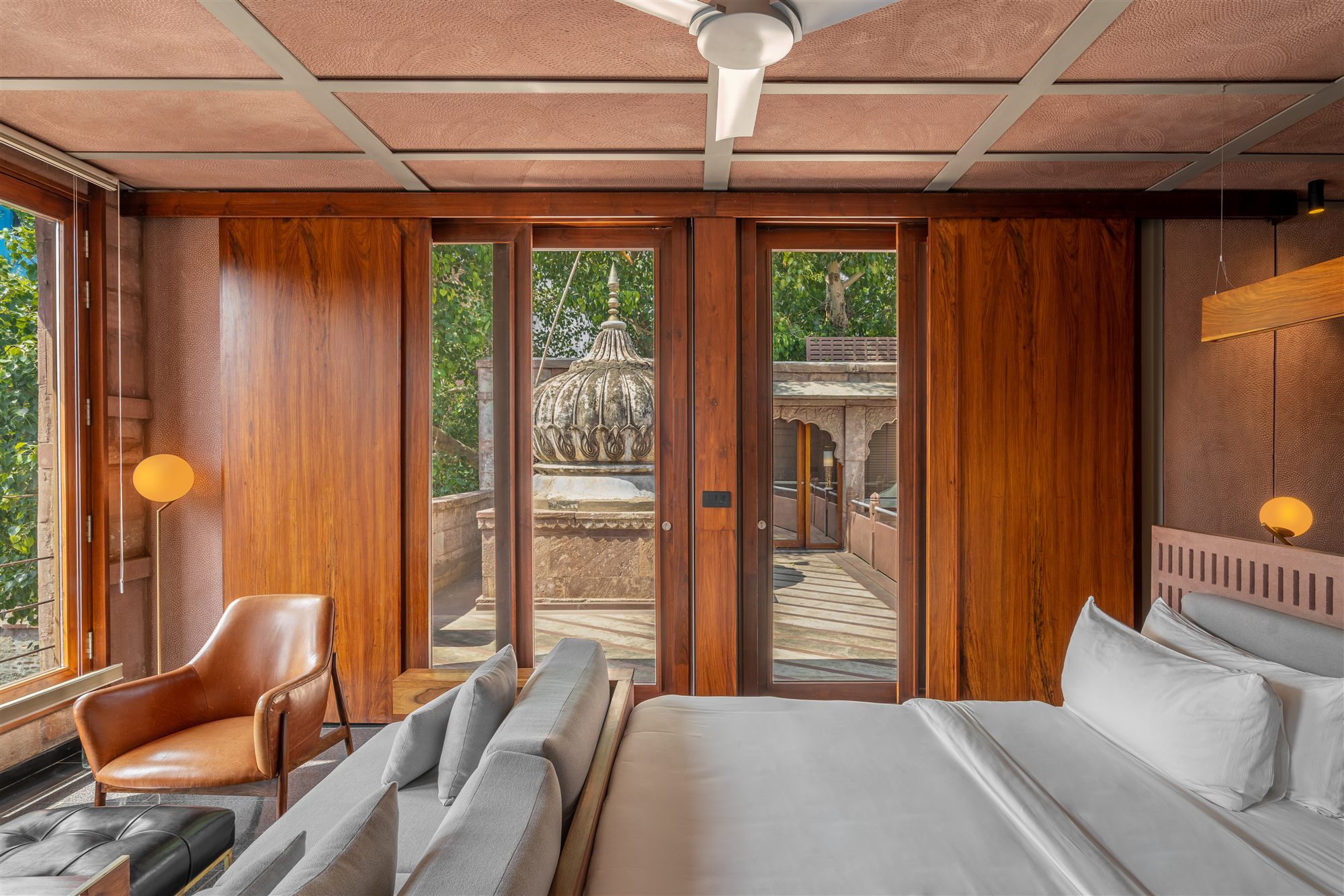
The screens do what Rajasthan's lattices have always done: they cool the rooms, keep out the desert sun and turn the light into pattern. Through the day, the shadows move slowly across floors and walls. And in each room, the stone panels fold away like shutters to reveal the fort.
"Craft reinterpreted in a contemporary context is a key design tool."Ambrish Arora, Studio Lotus
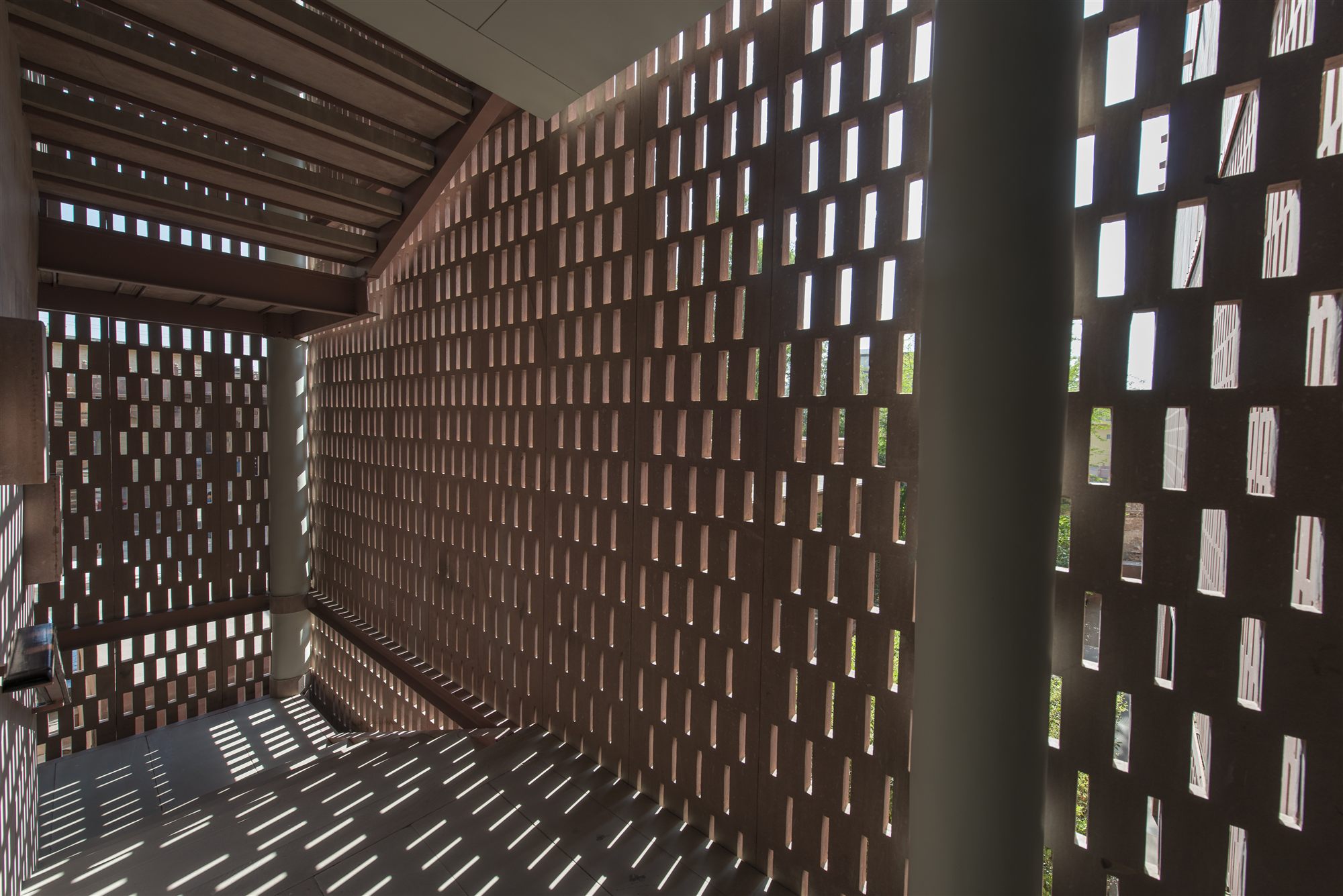
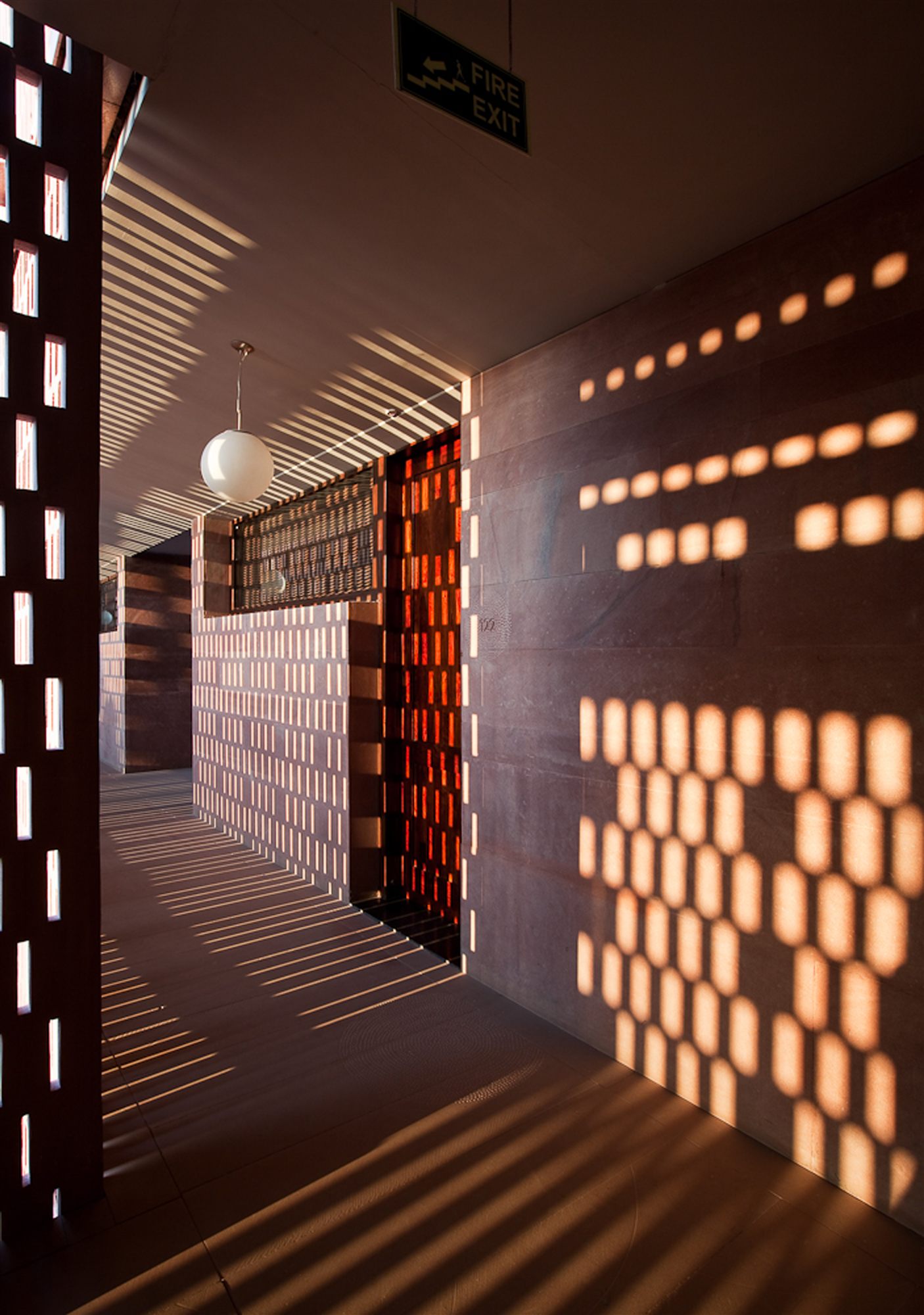
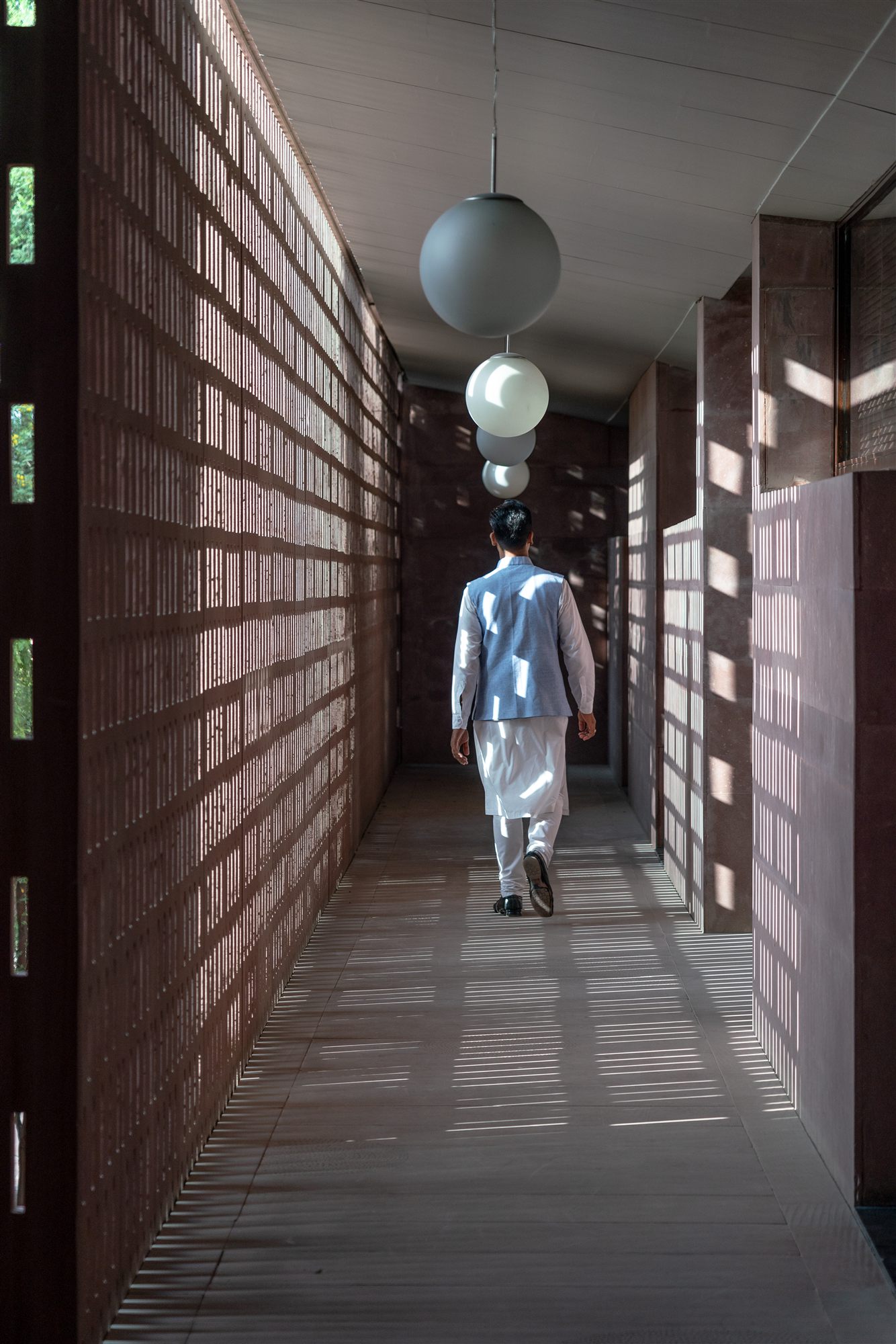
The design has collected some of architecture's highest honours: World's Best Holiday Building at the World Architecture Festival in 2011, the Grand Jury Prize at the Design for Asia Awards in 2012, and a nomination for the Aga Khan Award for Architecture in 2013. Fittingly for a building so tied to its place, around 70 percent of the materials and labour came from within 30 kilometres of the site.
A fort in every window
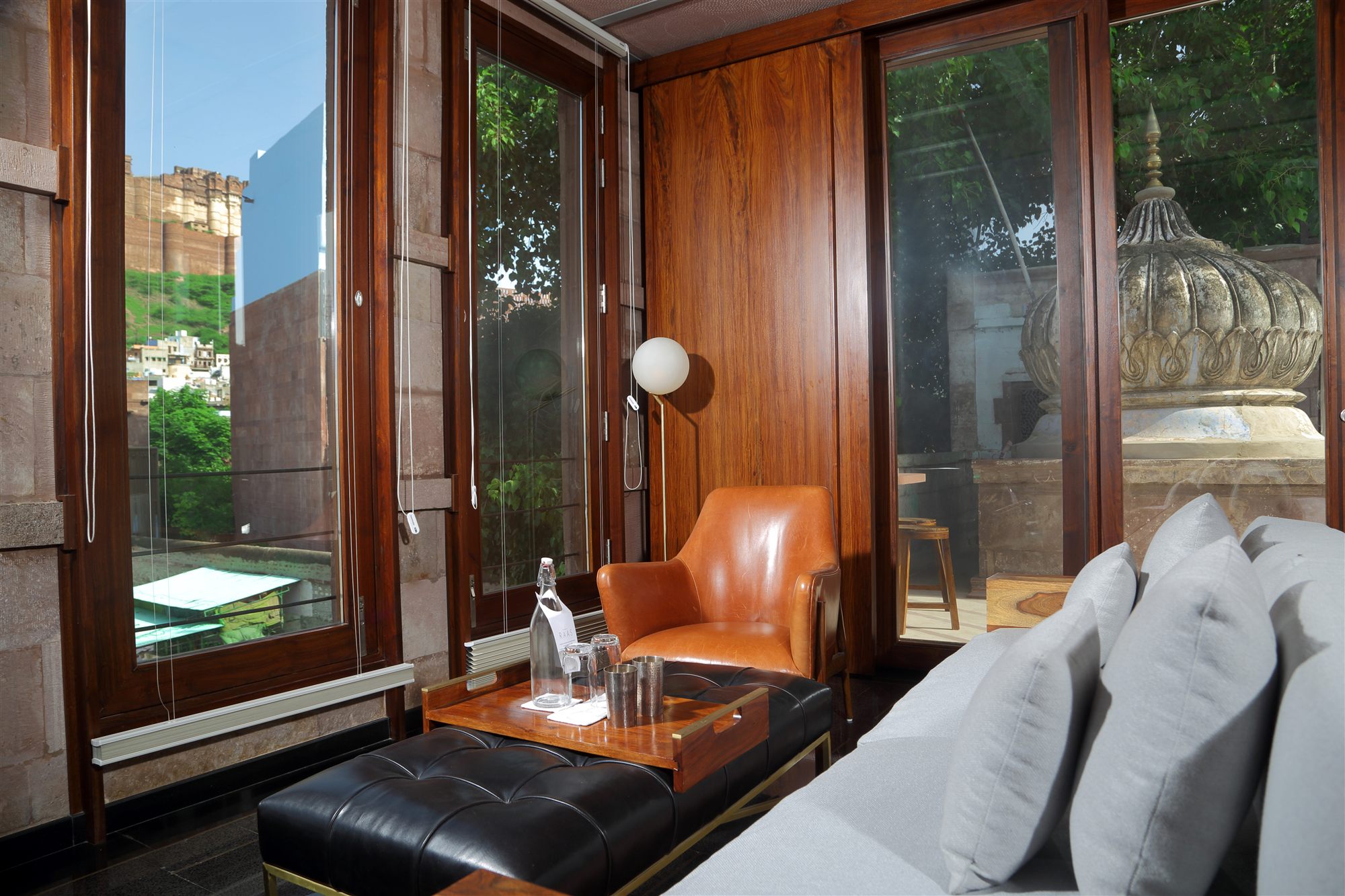
There are 40 rooms and suites, ranging from about 480 to 1,250 square feet, and all but four look out to Mehrangarh. The new rooms are calm and pared back: warm wood, stone-coloured walls, a deep bathtub and a private sit-out behind the lattice, where a daybed faces the fort.
Above an 18th-century stepwell
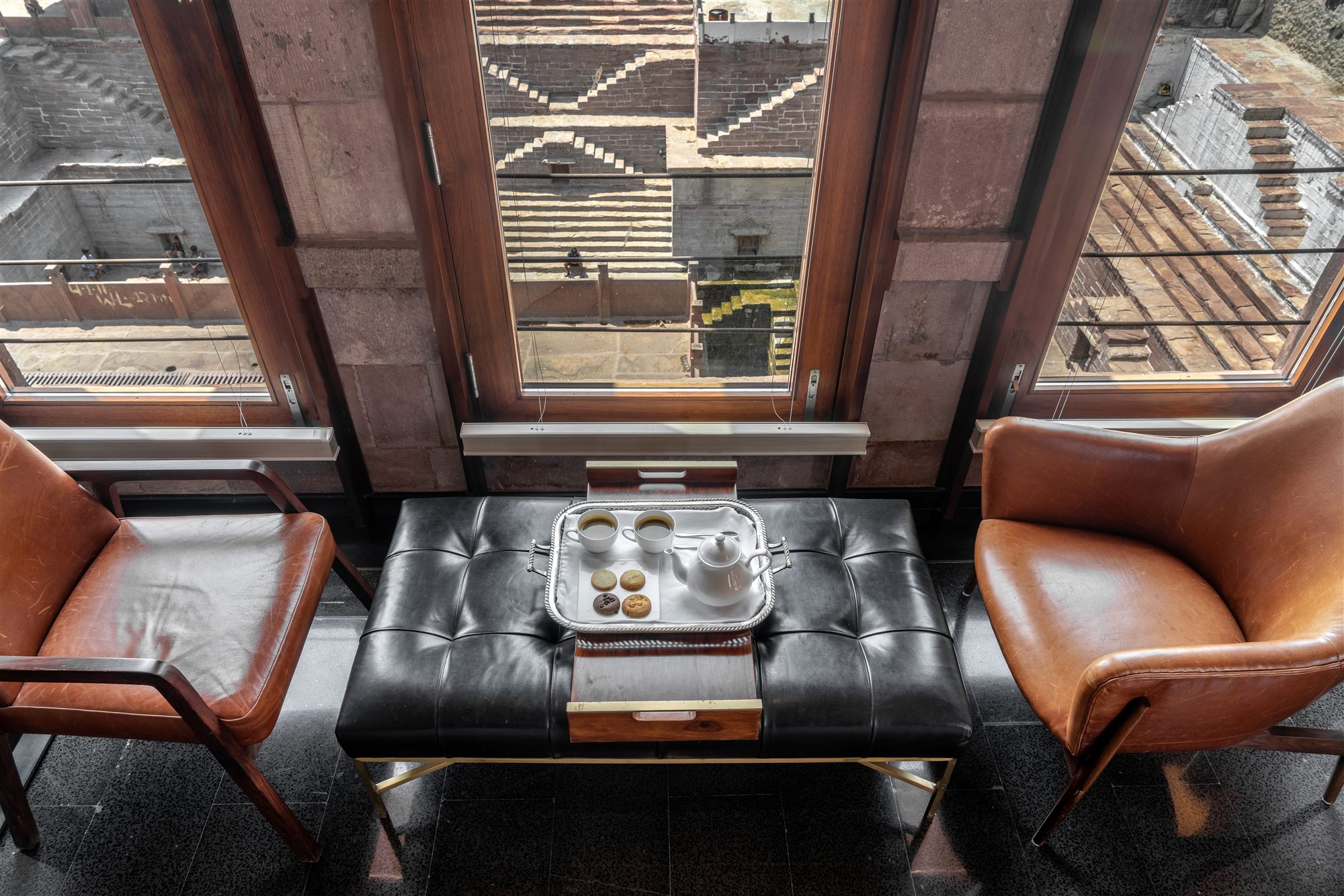
The largest suite in the house, at 1,250 square feet, comes with a second view: alongside the fort, its windows look down onto the descending stone steps of Toorji ka Jhalra, the historic stepwell next door. There is a kitchenette stocked with organic seasonal produce, and a sitting room made for long afternoons.
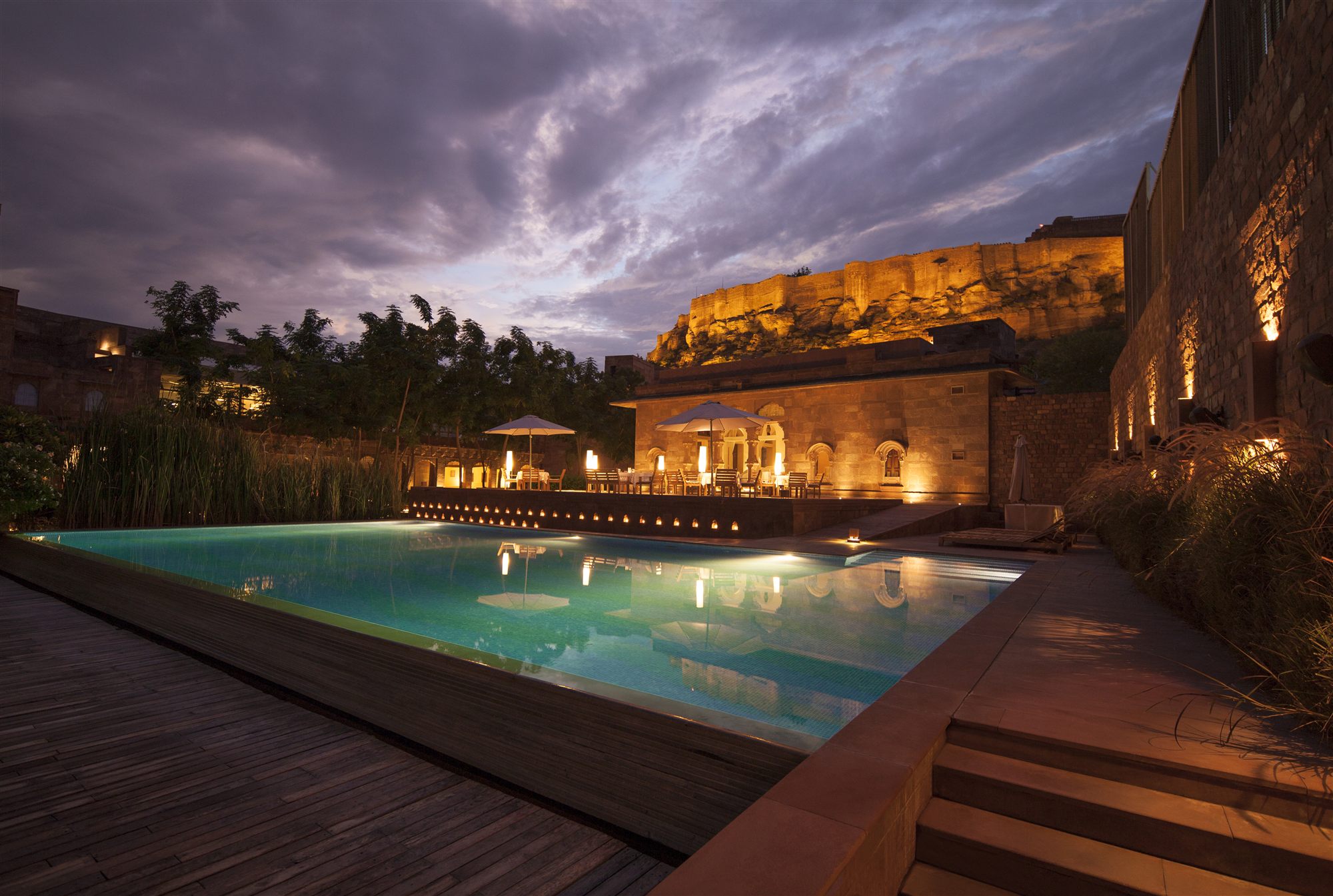
A pool beneath the fortress
In the central courtyard, a long pool lies between the gardens and the haveli. At dusk, when the day's heat lifts and the fort lights up above it, this is the best seat in Jodhpur.
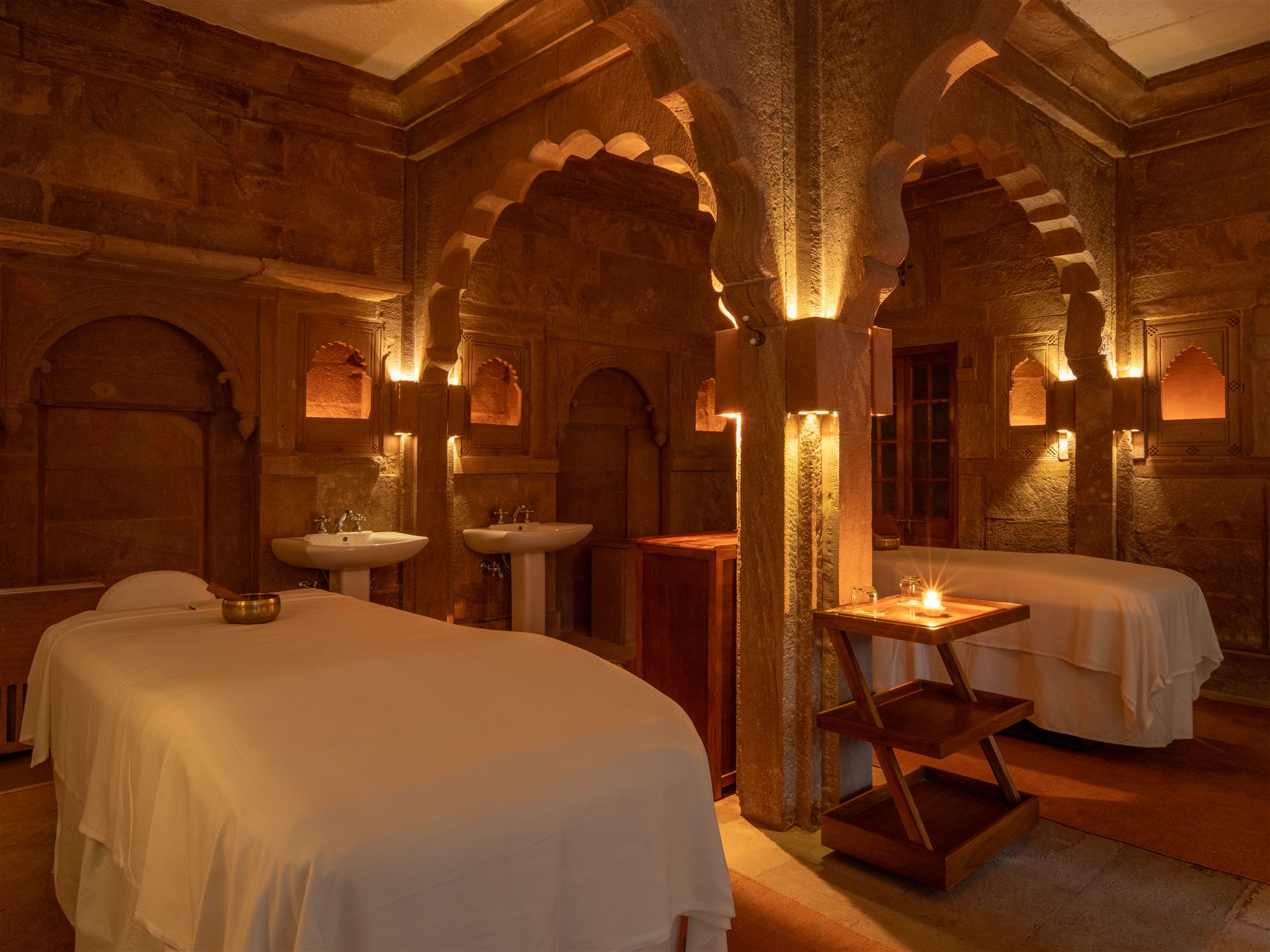
Ancient arches, ancient remedies
Inside the haveli, under carved stone arches lit by small lamps, the spa draws on Ayurveda and Tibetan massage. The products are free of SLES, parabens and sulphates, and the treatment rooms keep the hush of the old house.
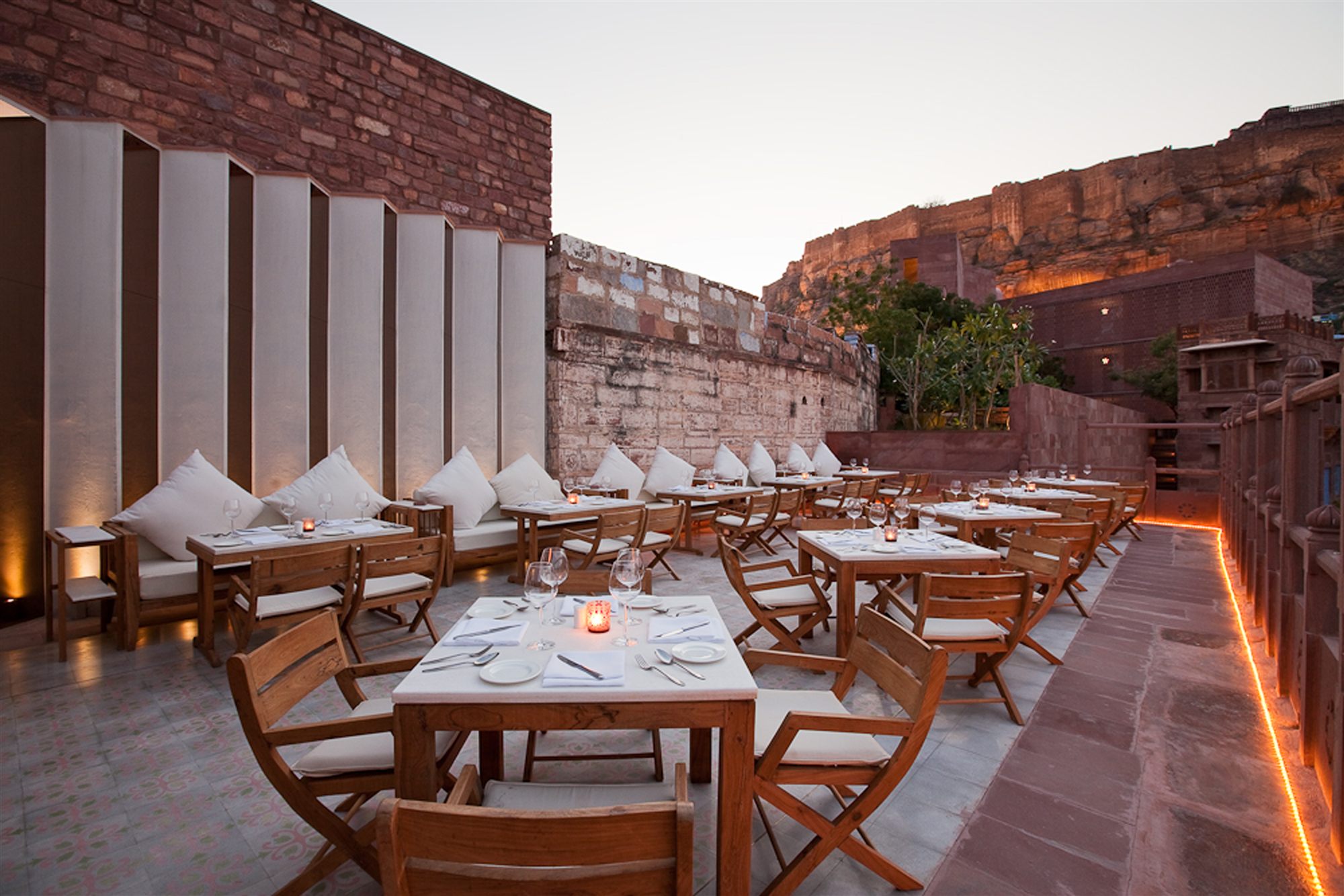
Dinner with Mehrangarh
Darikhana is built above what were once the nobleman's stables, and it is the hotel's open-air dining room, set right in front of the fort. Many of the vegetables come from the hotel's own organic kitchen garden, and the spice blends for its North Indian dishes come from a centuries-old shop in Old Delhi. Try the sesame-coated dahi kebab and the fiery Rajasthani laal maas.
"I always go back to the lessons learnt at home to figure out the perfect blend of spices and flavours."Hitesh Yadav, Executive Chef
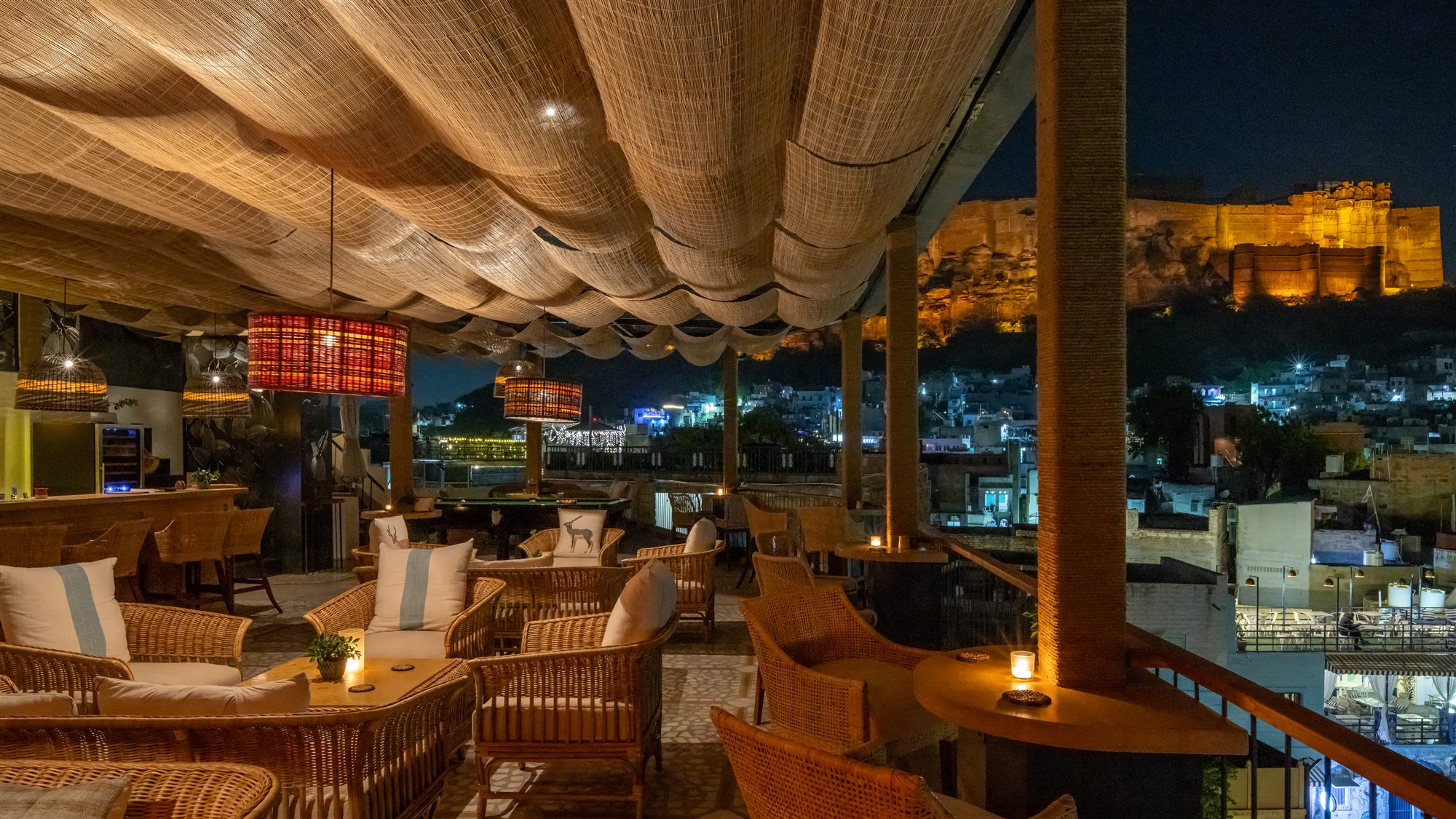
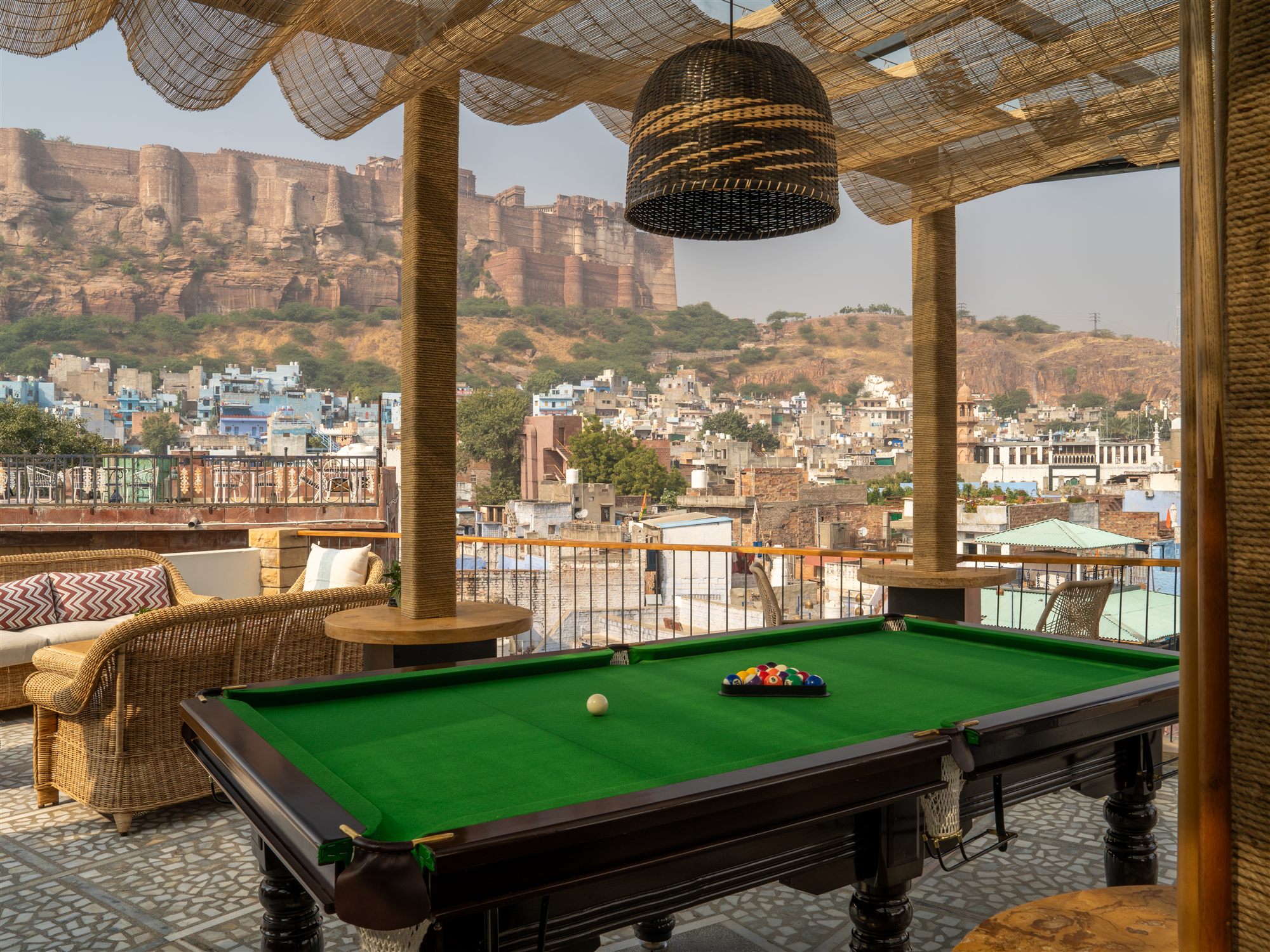
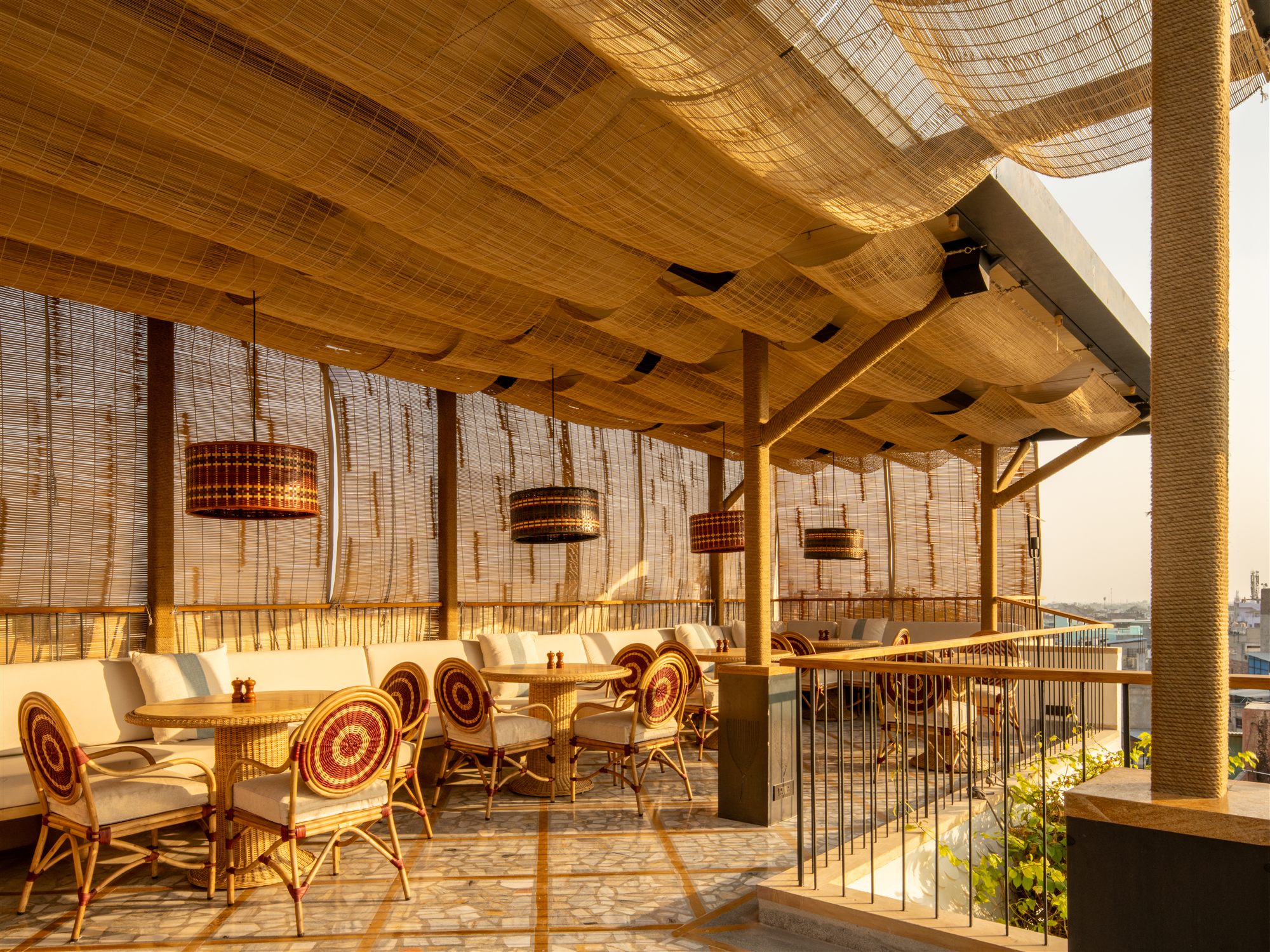
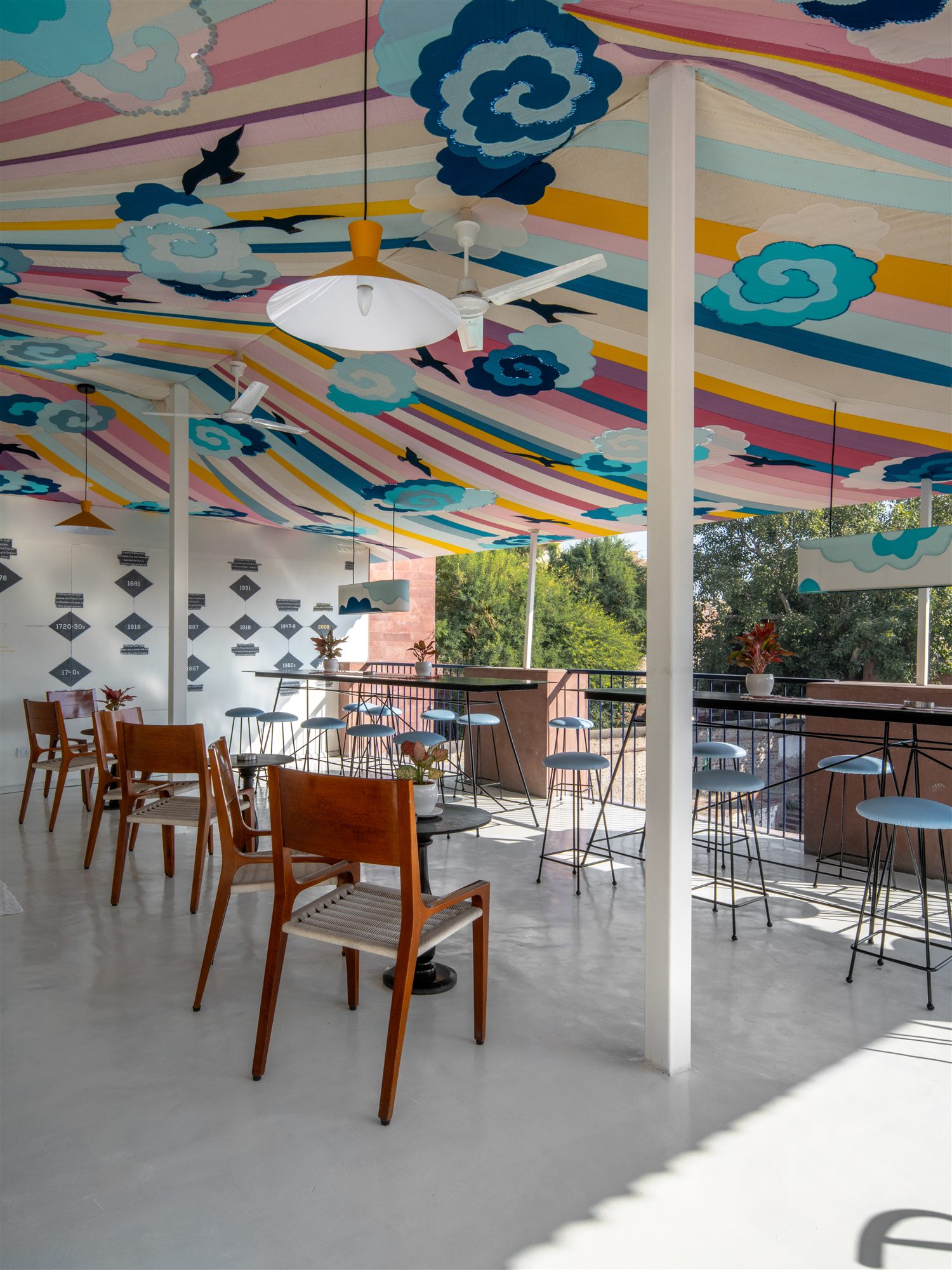
For a sundowner, cross to The Stepwell Hotel Rooftop Restaurant, also run by RAAS. Under billowing canvas and woven lanterns, the rooftop looks out across the blue rooftops of the old city to the fort, and serves Indian and international plates and grills until late. Below, RAAS's second outlet by the stepwell, the Stepwell Café, is all colour, with a painted ceiling of clouds and swallows, good coffee and a view down into the stepwell.
The stepwell they returned to the city
Next door lies Toorji ka Jhalra, a magnificent 200-foot-deep historic stepwell in the heart of Jodhpur. It was built in the 1740s by Maharani Jakanwar Tunwarji, queen consort of Maharaja Abhay Singh, during a severe famine: the work gave local people employment and food, and the finished well became an important source of water for the community. Built from Jodhpur's iconic red sandstone, it descends in many levels of intricate carving, with traditional water-lifting systems along the way. As the modern city grew, it was forgotten and filled with debris. In 2013, RAAS agreed with the city to restore it. The work took three years. More than 400 tractor-loads of waste were removed, and every original sandstone slab was lifted, cleaned by hand and set back in place.
Today the stepwell is one of Jodhpur's best-loved sights. Local women gather to pray here during the festival of Gangaur, the steps host concerts, and the lanes around it have filled with cafés, concept stores and rooftop guesthouses. It is once again a living part of Jodhpur, and a symbol of the city's heritage, traditional engineering, water conservation and royal philanthropy.
For RAAS, the restoration reflects a wider philosophy: that preserving heritage is not only about protecting the past, but about giving historic places a meaningful life in the present. RAAS describes the project as returning the stepwell to its former glory and creating a new space for the community. It was also the first hospitality brand in Rajasthan to remove single-use plastic from its properties, back in 2016.
Into the Blue City
RAAS keeps three electric rickshaws for guests, the easiest way through lanes too narrow for cars. The hotel can arrange a moonlit evening at Chokelao Bagh, the garden below the fort, or a private trunk show from Bibaji, the bangle maker to many of India's royal families. There are guided tours of the city's local delicacies, from street-side kachoris to sweet shops that have been frying for generations, and walks through the spice market, its sacks of chillies, cumin and turmeric piled high. Or simply walk out of the gate, into streets washed in every shade of indigo.